Get in touch with Blue Membrane Company

RO Membrane Manufacturer, Reverse Osmosis, Nanofiltration & Seawater Systems
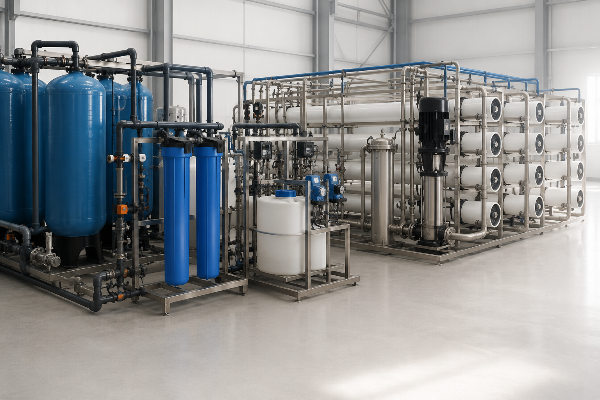
Blue Membrane designs and produces spiral-wound RO, nanofiltration and UF membrane elements, and the complete brackish-water and seawater RO systems built around them, for water treatment plants worldwide.
Why Source RO Membranes From a Real Manufacturer, Not a Reseller
A reverse osmosis (RO) membrane manufacturer makes the semipermeable thin-film composite membrane element itself, the spiral-wound part at the core of every membrane filtration and water purification system, the layer that actually separates dissolved salts from water. Most of the pages that rank for “RO membrane manufacturer” don’t make anything; they resell Dow FilmTec, Toray or Hydranautics elements and republish the original maker’s datasheet.
That distinction matters more than country of origin. A field study of membrane autopsies attributes a large share of premature failures to production defects and, far more often, to inadequate pretreatment and fouling, not to which flag is on the box.
In fact, unlike a reseller that forwards a brand’s datasheet, a manufacturer can trace every rejection figure to the line and wet-test that recorded it, so a bad batch is caught in QC before it fails in your pressure vessel, the reason regulators require RO element testing to the ASTM D4194 method. government source
So the useful question isn’t “Chinese or Western?” It’s “who published the test data, and can they trace it to a production line?” Blue Membrane can. We publish stabilized salt rejection and flux for every model, and we make the elements in-house.
The Membrane-Source Provenance Test
Before you commit to any membrane supplier, including us, run these four questions. A genuine manufacturer clears all four; a reseller usually clears none.
01 Per-model data
Do they publish stabilized rejection and flux for each specific model, or only a generic “up to 99.x%”?
02 Test conditions
Are the test feed, pressure, temperature and pH stated (so the numbers are reproducible)?
03 Traceability
Do the elements come off their own line, or through two to three handling layers?
04 Interchange scope
Do they state both the standard dimensions and the operating limits a drop-in swap depends on?
Want to see how we answer all four for your feed water?
Get the Membrane Selection Guide
Blue Membrane Product Lines, Elements & Complete Systems
Selecting the right RO membrane depends on matching feed water, required performance and system compatibility, whether you need a single element or a complete industrial reverse osmosis system. Unlike a catalog that lists other brands, every line here is one we make and publish data for. Each is a spiral-wound element built the way the patent literature describes.patent source
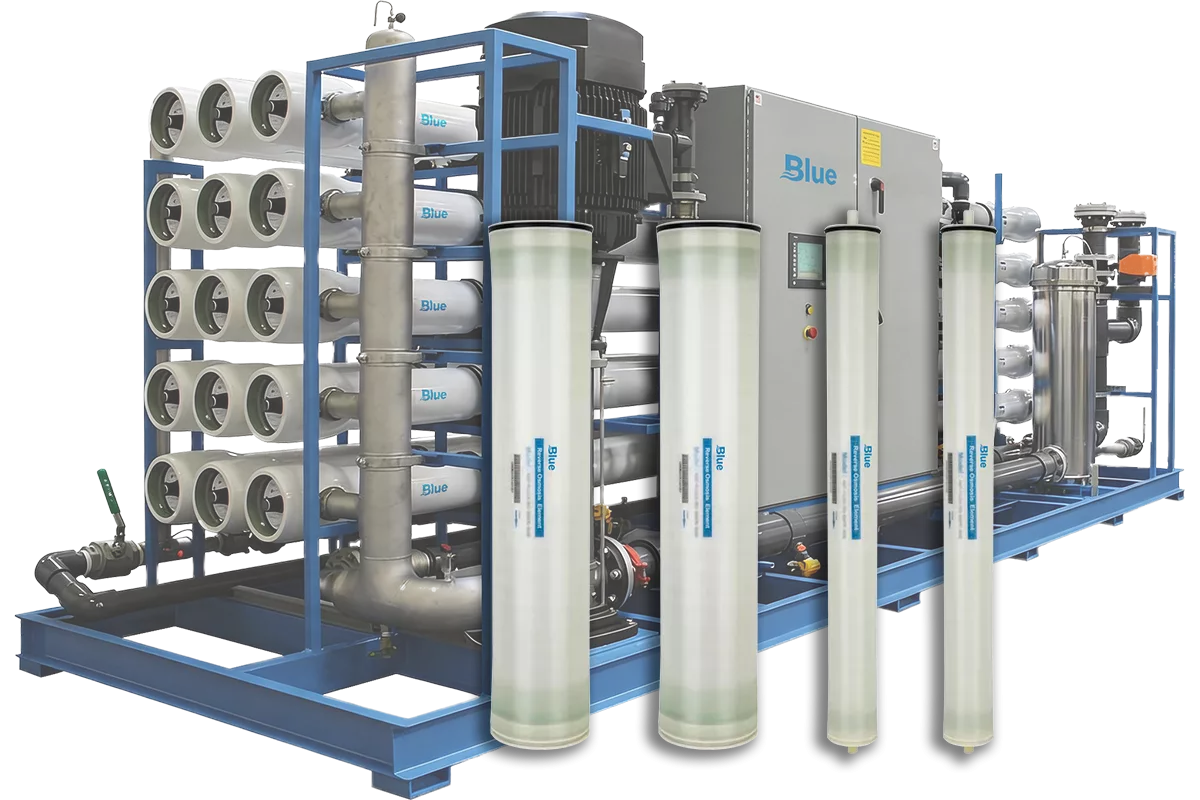
Four product lines cover the membrane element and the finished system. Each links to full specifications, available sizes and datasheets. Element output is rated in gallons per day (gpd) — a standard 8040 seawater element produces on the order of 7,500 gpd, and our reverse osmosis systems match the elements with the right high-pressure pump, flow rate and low-energy recovery for the duty.
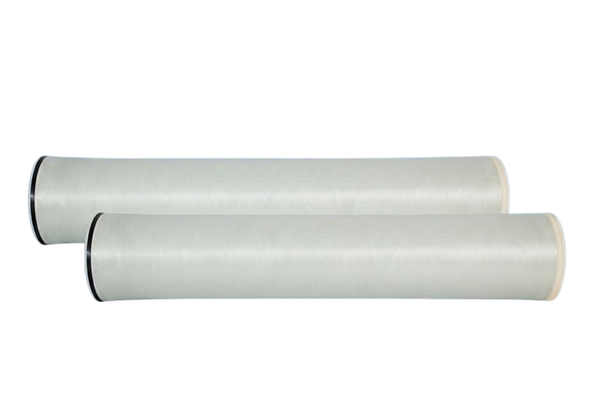
C1 · C2 · Z1 · Z2 · H1 · H2 (4040 / 8040)
Industrial RO Membrane Elements
Spiral-wound RO elements for pure-water, brackish-water and seawater duty, plus fouling-resistant and low-pressure / ULP variants. Published rejection 99.5%–99.8%.
RO Membrane Elements →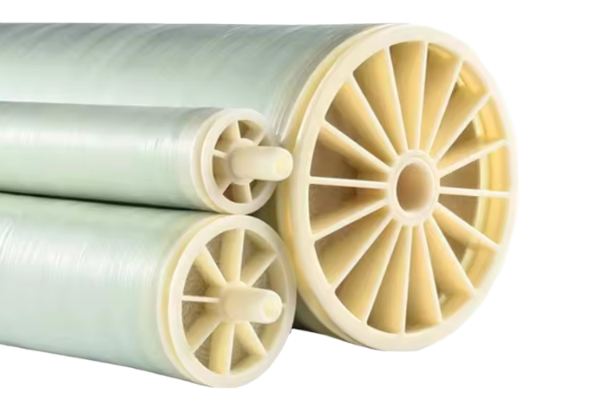
N1 · N2 · N3 · AR-NF
Nanofiltration Membrane
NF elements for softening and partial desalination, high divalent-ion (MgSO₄) rejection at low pressure, including alkali-resistant grades for caustic streams.
Nanofiltration Membrane →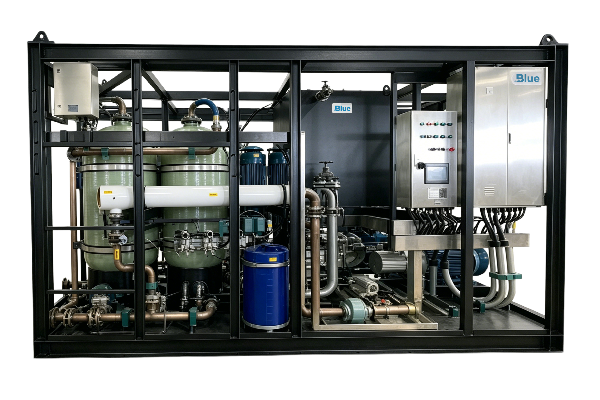
Containerized · Skid · Marine · Portable
Seawater RO Systems
Complete SWRO systems built around our H-series seawater elements, containerized and skid-mounted plants, marine water makers and portable desalination units, with energy recovery and duplex 2205 high-pressure piping.
Seawater RO Systems →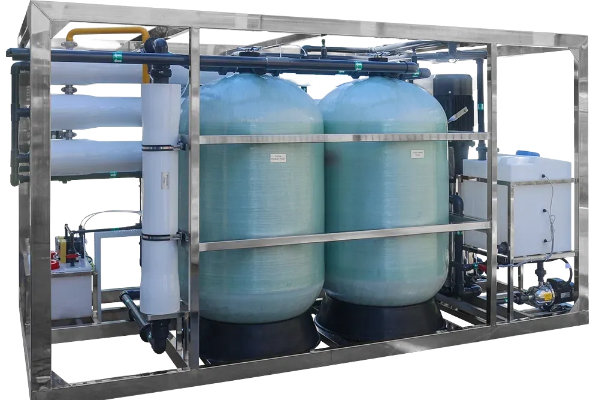
Packaged BWRO
Brackish Water RO Solutions
Packaged brackish-water RO systems built on Z-series elements, sized for well, surface and municipal feed with pretreatment, high-pressure pump and membrane housings matched to recovery.
Brackish Water RO Solutions →Published Membrane Performance Data,
The 9-Model Rejection & Flux Ledger
This is the table resellers can’t publish, because the data isn’t theirs. Every value below is a stabilized single-element result from our own quality control, so you can size and compare before you ever request a quote.
Reverse osmosis is a membrane separation process: a semipermeable membrane holds back dissolved ions while water passes under pressure. The membrane technology and active area set how much water an element makes and how pure it is. Unlike a borrowed OEM datasheet, these figures come off our own wet-test bench, and the Z1/Z2 and H1/H2 pairs are a deliberate flux-versus-rejection trade-off.
| Model | Type | Best-fit feed | Stabilized salt rejection | Avg flux (GFD) | Test solution | Test pressure |
|---|---|---|---|---|---|---|
| C1 | Ultra-low-pressure RO | Low-TDS tap / pure water | 99.5% | 30 ± 3 | 1,500 mg/L NaCl | 150 psi (1.03 MPa) |
| C2 | Low-pressure RO | Pure water production | 99.6% | 30 ± 3 | 1,500 mg/L NaCl | 225 psi (1.55 MPa) |
| Z1 | Brackish-water RO | Brackish / well water | 99.6% | 30 ± 3 | 2,000 mg/L NaCl | 225 psi (1.55 MPa) |
| Z2 | Brackish-water RO | Brackish, higher rejection | 99.7% | 27 ± 3 | 2,000 mg/L NaCl | 225 psi (1.55 MPa) |
| H1 | Seawater RO | Seawater desalination | 99.8% | 21 ± 4 | 32,000 mg/L NaCl | 800 psi (5.52 MPa) |
| H2 | Seawater RO (higher flow) | Seawater, energy-efficient | 99.7% | 27 ± 4 | 32,000 mg/L NaCl | 800 psi (5.52 MPa) |
| N1 | Nanofiltration | Softening / partial desalination | 98.0% (MgSO₄) | 30 ± 3 | 2,000 mg/L MgSO₄ | 100 psi |
| N2 | Nanofiltration | Higher-flux NF | 97.0% (MgSO₄) | 35 ± 3 | 2,000 mg/L MgSO₄ | 100 psi |
| N3 | Nanofiltration | Maximum-flux NF | 97.0% (MgSO₄) | 40 ± 3 | 2,000 mg/L MgSO₄ | 100 psi |
| UF | Ultrafiltration | Pre-RO / suspended-solids | Customizable | Application-set | — | Low-pressure |
Test conditions: single element, 25 °C, pH 7–8, surface velocity ≥ 0.45 m/s. These are standardized laboratory reference values, run on the ASTM D4194 test basis, a short-term measurement under fixed conditions that, per the standard, is “not necessarily applicable to natural waters.” Real-plant rejection and flux vary with your actual feed chemistry, pH, recovery and system design, so treat the Ledger as a comparison baseline, not a plant-performance guarantee.
Operating Limits & Interchangeability
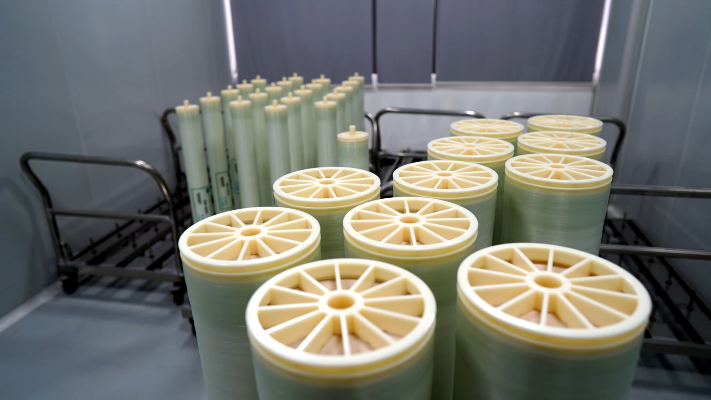
Our elements use the standard spiral-wound form factor, so the mechanical fit is a solved problem, the compatibility that actually needs checking is chemical and hydraulic.
Element fit & operating envelope
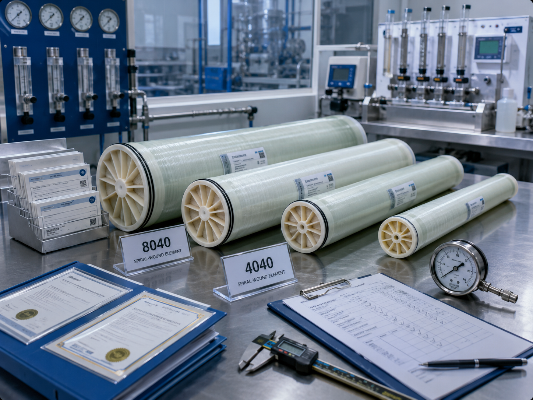
- Standard membrane sizes: 4040 (4″×40″) and 8040 (8″×40″). The 8040 form factor fits nominal 8.0-inch (201 mm) I.D. pressure vessels used across the industry.
- Free chlorine: thin-film composite polyamide has low oxidant tolerance, feed free chlorine must be kept below ~0.1 mg/L (continuous) with proper dechlorination, or the polyamide degrades by N-halogenation and hydrolysis.
- Feed & recovery: matching the standard dimensions is necessary but not sufficient for a drop-in swap. Confirm feed TDS/temperature, operating pressure, target recovery and pretreatment against the element’s rated envelope before replacing an OEM element.
Replacing an existing element and want the operating-envelope check done for you?
Request a cross-reference →
Inside Our Membrane Manufacturing
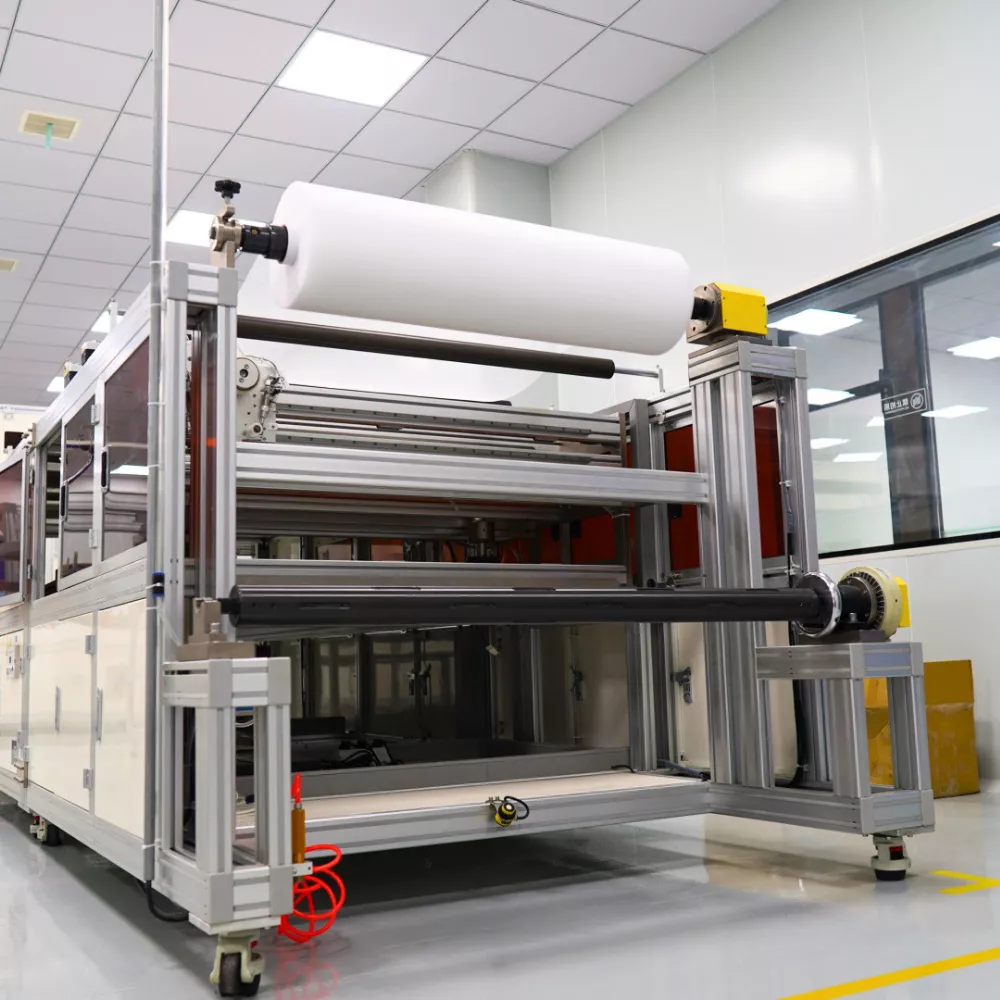
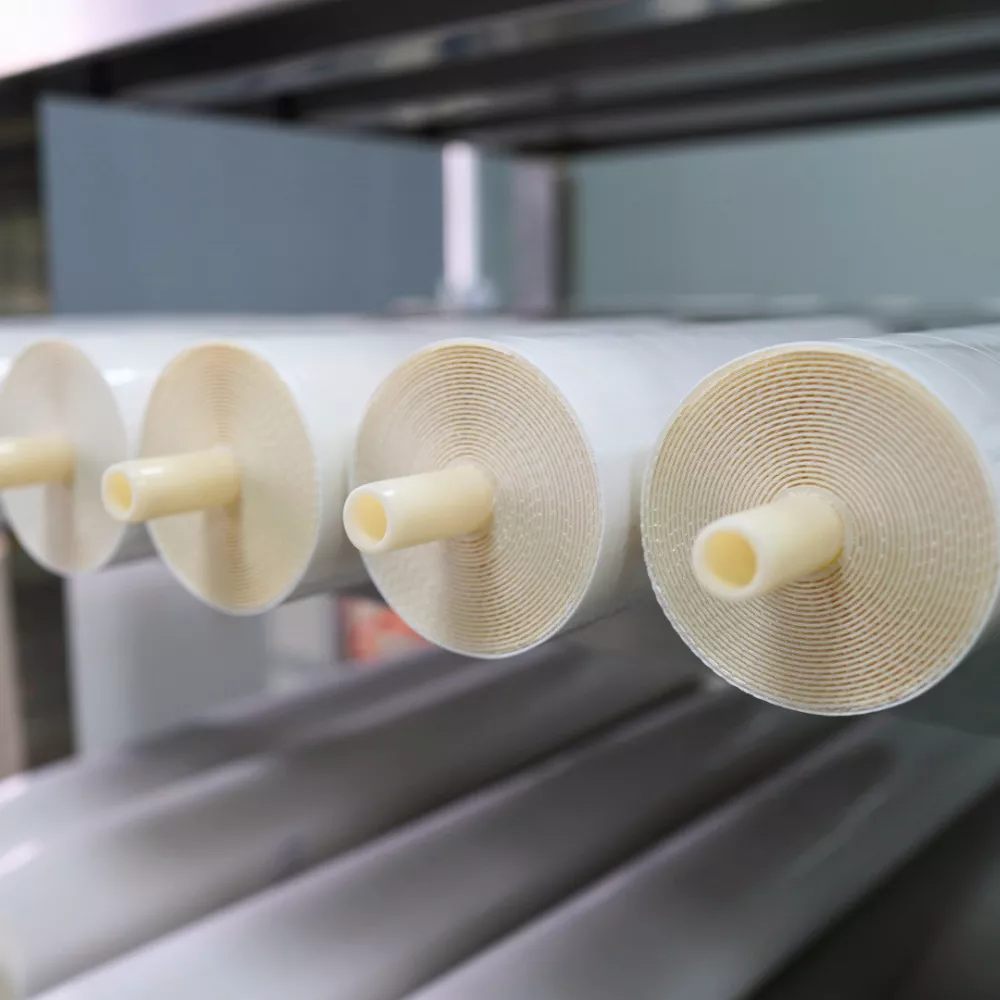
The performance in the Ledger is set on the production floor, not in a catalog. A spiral-wound element is built by wrapping membrane leaves and feed-spacer sheets around a perforated central permeate tube, a construction described in the public patent literature and executed the same way on every one of our lines.
A relabelled OEM element carries no record of how it was cured or wet-tested, so a production defect can surface only after it fails in service, a cost that lands on the operator, not on the reseller. Unlike a distributor that never sees the line, we set and verify each element’s stabilized rejection in-house before it’s boxed.
01
Permeate carrier cutting
02
Feed spacer cutting
03
RO membrane sheet cutting
04
Leaf rolling around the central tube
05
High-temperature curing
06
Y-ring seal installation
07
Wet test & QC (stabilized rejection / flux)
08
Packaging & warehousing
High-temperature curing and the wet-test step are where batch consistency is won or lost. Because the polyamide layer is chlorine-sensitive, in-house curing and handling control matter as much as the base chemistry.
“We treat the wet-test bench as the last gate, not a formality. Every element is run to a stabilized rejection and flux number before it is boxed, the value we publish is the value it recorded, on our line, under stated conditions.” — Blue Membrane Engineering Team
Want the wet-test data for a specific model?
Request the test report →
Applications & Industries Served
The right element depends on the feed and the target water, not the industry label. From seawater desalination to industrial wastewater treatment, the job is the same: turn a difficult feed into clean water at the lowest energy and fouling cost. This maps common duties to the membrane grade that fits.
| Application | Feed & goal | Fitting grade |
|---|---|---|
| Seawater desalination | 32,000 mg/L seawater → potable / process water | H1 / H2 seawater RO + SWRO system |
| Brackish & well water | 2,000–10,000 mg/L → low-TDS product | Z1 / Z2 + packaged BWRO |
| Ultrapure water (electronics / pharma) | Low-TDS feed → very high purity | C1 / C2 low-pressure RO (often after UF/NF) |
| Industrial process & boiler feed | Scaling / high-recovery duty | Z-series RO with antiscalant + pretreatment |
| Wastewater reuse | Fouling-prone secondary effluent | Fouling-resistant RO + UF pretreatment |
| Food & beverage / softening | Selective divalent-ion removal, retain minerals | N1 / N2 / N3 nanofiltration |
Cross-Industry Membrane Core
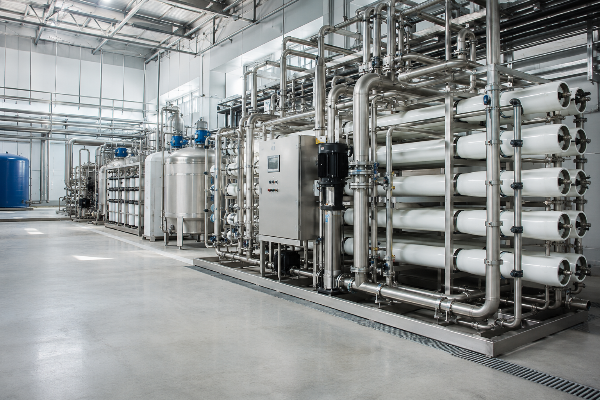
Blue Membrane elements run across commercial and industrial applications and into industrial and municipal water systems, where target water quality drives the choice: food and beverage processing keeps minerals with NF, electronics fabs purify feed to purified-water levels, and coastal plants run water desalination. In each, the membrane is the core of the water filtration system. From high-quality water for electronics to industrial water reuse, reverse osmosis filtration removes dissolved contaminants that conventional media can’t.
Field-reliability note
Failing to use proper pretreatment is the quickest way to foul a membrane. Across membrane duties, the element chemistry sets the ceiling but pretreatment sets the lifetime. Iron, silt and un-quenched chlorine plug or oxidize membranes long before the polyamide itself wears out, which is why we size the pretreatment and recovery with the element, not after it. Unlike catalog pages that print an industry name beside every product, we match the grade to your feed.
Not sure which grade fits your feed?
Get a grade recommendation →
Quality Standards & How to Verify a Membrane Supplier
Certification language is where a lot of buyers get misled, because different marks prove different things. It’s worth separating them before you accept any supplier’s badge, including ours.
A system-level badge printed on an element’s page is where buyers lose money, you pay for a certification that never covered the part you bought. Unlike a supplier that just flashes a logo, the honest version is that we tell you which mark covers the element versus the finished system.
Per-model test reports
Stabilized rejection & flux, ASTM D4194-basis conditions
Element datasheets
Available per model (C / Z / H / N series)
In-house wet-test QC
Every element run before packaging
Standard form factor
4040 / 8040 spiral-wound
What each certification actually covers
- 1. NSF/ANSI 58 certifies a reverse-osmosis drinking-water system for TDS/contaminant reduction and structural integrity, a system-level mark, not proof that a specific element was certified.
- 2. NSF/ANSI 61 covers drinking-water components and materials for health effects, a materials-level mark.
- 3. ISO 9001 certifies the quality management system, not any single product’s performance.
- 4. Marine class rules and national potable standards (e.g. BV classification, GB 5749) apply at the finished-system level for a specific deployment.
Rule of thumb: ask which mark covers the membrane element versus the finished system, and request the certificate, not the logo. Where drinking water is the end use, testing follows published regulatory methods. Where a specific held certification applies to a Blue Membrane product, we provide the documentation on request rather than imply a system mark certifies the element.
Working With Blue Membrane, OEM, Distribution & Procurement
Buying factory-direct removes the reseller margin layer, but it also changes how you should scope the order. These are the levers that drive a membrane quotation, we price against them rather than a single list number.
Every reseller layer between the line and your dock adds cost and lead time. Unlike a distributor reselling a third brand, we quote the commercial RO membrane we make, so the margin and the accountability stay in one place. Test reports and datasheets we supply follow the published ASTM D4194 test method.
What drives your quotation
- Element grade & size C/Z/H/N series, 4040 vs 8040, standard vs fouling-resistant.
- Order structure Spot vs framework, and whether it’s a stand-alone element order or a complete BWRO/SWRO system.
- Private-label / OEM scope Neutral packaging, custom marking and documentation for integrators and distributors.
- Logistics and documentation Destination, incoterms and the certificate/test-report set your project requires.
Digital Engineering Tools
Technical calculators and cross-reference databases to support system design, element matching, and performance estimation.
Blue Membrane Factory & Production Facility
Reverse Osmosis Membrane FAQ
Find answers to technical specifications, compatibility, and quality control processes regarding our spiral-wound elements.
Trending now