Get in touch with Blue Membrane Company

Low Pressure / ULP RO Elements
Low-Pressure & Ultra-Low-Pressure (ULP) RO Membrane Element
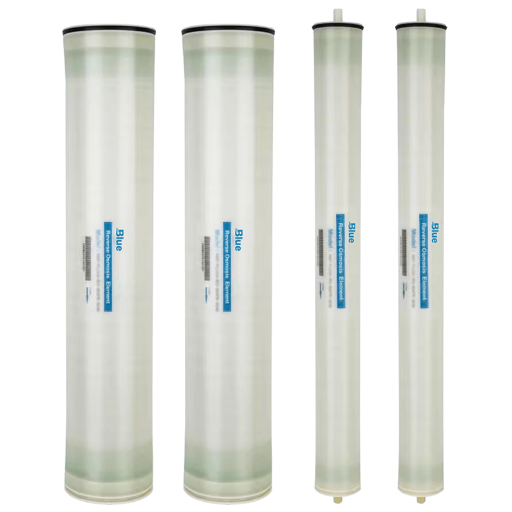
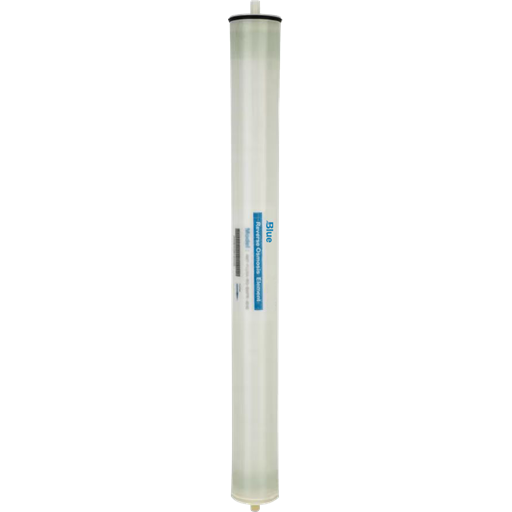
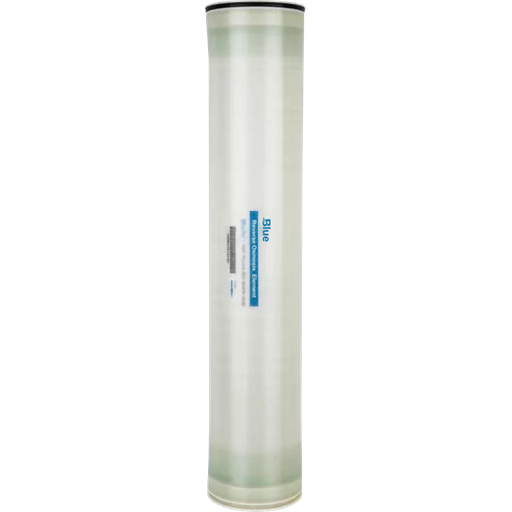
Blue Membrane C1 & C2 series are ultra-low-pressure reverse osmosis elements that hold 99.5–99.6% stabilized salt rejection while running at a lower feed pressure than standard brackish-water elements — cutting pump energy on low-TDS feed water without trading away permeate quality. Available in 8040, 4040, 4021 and 2540, and built to drop into DuPont ECO Pro-400/440 housings.
99.5–99.6% salt rejection
150 / 225 psi test basis
ECO Pro-400/440 drop-in
Get Instant Quote
Cutting RO Energy Cost Without Losing Rejection — Where ULP Elements Fit
Operating Window
Low-TDS Feed
An ultra-low-pressure element is a thin-film composite (TFC) polyamide element engineered to reach effective salt rejection at a lower driving pressure than a conventional brackish-water element. Standard brackish RO typically runs at roughly 150–250 psi (10–17 bar), while ULP and low-energy designs are built to produce the same permeate flow at a materially lower applied pressure. The difference isn’t simply “turning the pump down” — the active layer is thinner and more permeable, so water passes at a lower net driving pressure while dissolved salts stay rejected.
A reverse osmosis membrane separates water from dissolved solids by pushing feed through a semipermeable film at an operating pressure held above the feed’s osmotic pressure — in a full reverse osmosis system, that operating pressure is what the pump and the electricity meter pay for. Seawater desalination demands very high pressure because its total dissolved solids are extreme; brackish and tap-water desalination sit at the low-energy end, where an ultra-low-pressure element still produces clean reverse osmosis water while cutting the pressure a standard element would need.
The reason this matters for cost is physics, not marketing. Net driving pressure equals the applied pressure minus the osmotic pressure of the feed, and osmotic pressure rises about 1 psi for every 100 ppm of TDS in the feed water. On a low-TDS feed — municipal tap, treated surface water, most well water — osmotic pressure is small, so the pump only has to overcome a modest pressure to make water. That’s exactly the operating window where a low-pressure element earns its keep: the pump does less work per gallon, and the electricity bill follows the pressure down. Where a ULP element does not help is high-TDS feed, where osmotic back-pressure climbs and the pressure advantage narrows — a point we quantify honestly in the energy comparison below rather than assert as a blanket saving.
Blue Membrane ULP Series — C1 & C2 Elements in 8040, 4040, 4021 & 2540
The series splits into two families so you match the element to what the application actually rewards. C1 is the energy-tuned family: it’s characterized at a 150 psi test pressure and delivers 99.5% stabilized rejection, which suits low-TDS tap and municipal duty where energy cost dominates.
C1/C2 datasheet — test basis 1,500 ppm NaCl, 25°C, 15% recovery, ±15% tolerance.
| Model | Series | Stable rej. | Min rej. | Permeate GPD (m³/d) | Active area ft² (m²) | Spacer | Test press. | ECO Pro slot |
|---|---|---|---|---|---|---|---|---|
| MB-C1-8040 | C1 energy | 99.5% | 99.3% | 10,500 (39.7) | 400 (37.2) | 34 mil | 150 psi | ECO Pro-400 |
| MB-C1-8040 PLUS | C1 energy | 99.5% | 99.3% | 12,000 (45.4) | 440 (40.9) | 28 mil | 150 psi | ECO Pro-440 |
| MB-C1-4040 | C1 energy | 99.5% | 99.3% | 2,200 (8.3) | 85 (7.9) | 34 mil | 150 psi | — |
| MB-C2-8040 | C2 high-rej. | 99.6% | 98.5% | 10,500 (39.7) | 400 (37.2) | 34 mil | 225 psi | ECO Pro-400 |
| MB-C2-8040 PLUS | C2 high-rej. | 99.6% | 98.5% | 12,000 (45.4) | 440 (40.9) | 28 mil | 225 psi | ECO Pro-440 |
| MB-C2-4040 | C2 high-rej. | 99.6% | 98.5% | 2,400 (9.1) | 85 (7.9) | 34 mil | 225 psi | — |
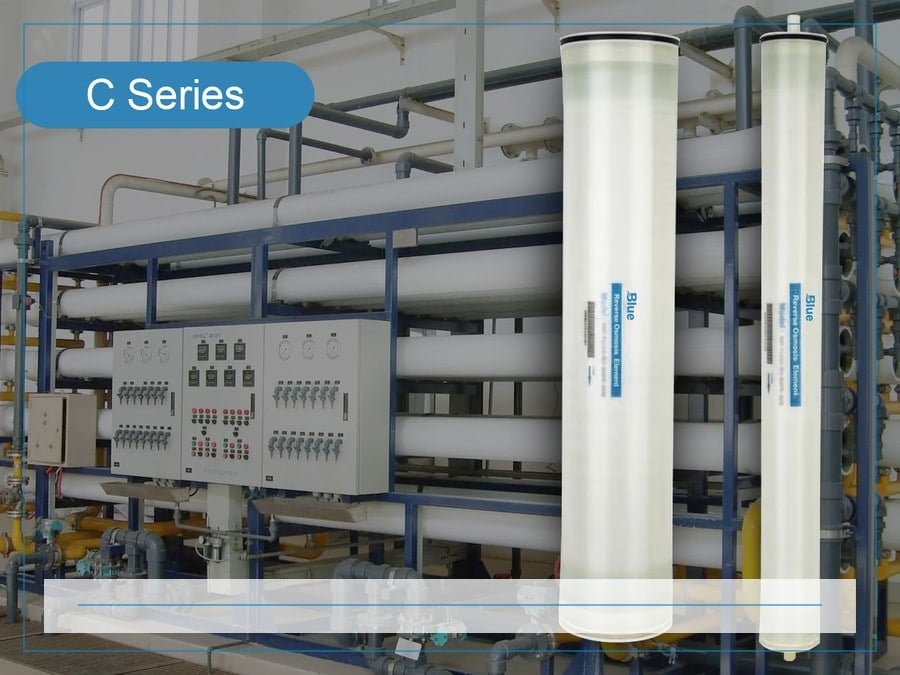
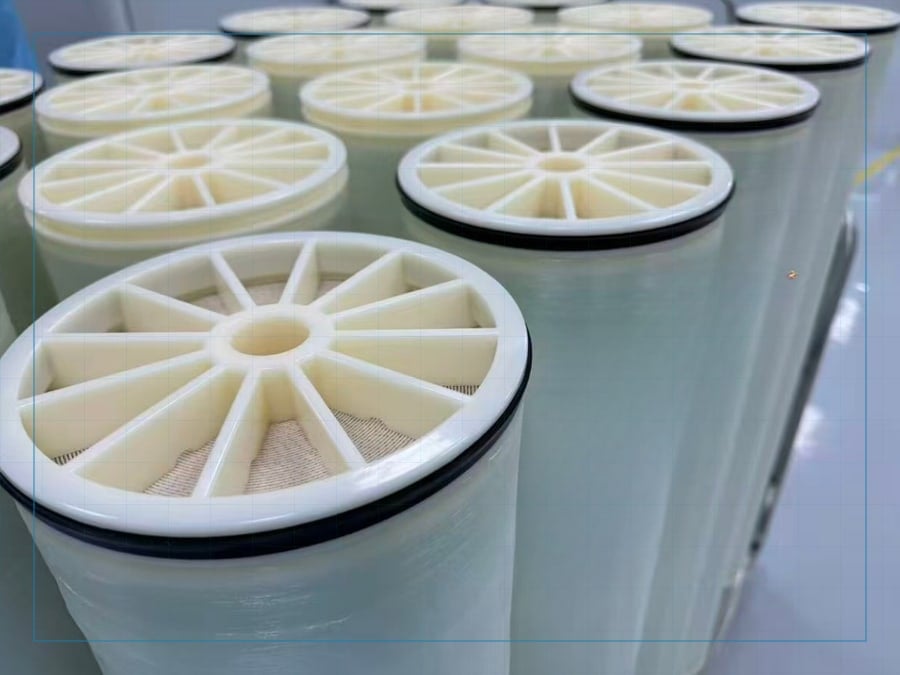
Operating & performance reference (both series).
Operating envelope (both series): maximum pressure 600 psi (41 bar) · maximum temperature 45°C · maximum feed SDI15 ≤ 5 · free chlorine tolerance < 0.1 ppm · pH 3–10 continuous / 2–11 cleaning · maximum pressure drop 15 psi per element. 4021 and 2540 sizes are available on the same chemistry for pilot and compact systems.
| Parameter | Value / note |
|---|---|
| Type of membrane | Polyamide thin-film composite (TFC), spiral-wound |
| Rated capacity | Permeate flow in gallons per day per element (see datasheet above) |
| Test water temperature | 25°C — permeate flow rate shifts about 3% per °C |
| Recovery rate | 15% test basis; system recovery rate is set by array design |
| Pressure requirement | Matched to feed TDS and the target permeate flow rate |
| Membrane housing | Standard 4″ and 8″ pressure vessels; o-ring coupler seal |
| Membrane life | Typically 2–3 years with correct pretreatment |
C1-vs-C2 feed-water selector
| If your priority is… | Typical feed water | Choose | Why |
|---|---|---|---|
| Lowest energy cost | Tap / municipal, < 2,000 ppm TDS | C1 (150 psi) | Energy-tuned, 99.5% rejection at low driving pressure |
| Highest rejection & service life | Larger-scale pure water, variable feed | C2 (225 psi) | 99.6% stabilized rejection, high-rejection / long-life build |
| Retrofit an ECO Pro-400 slot | Existing 8040 housing | MB-C1/C2-8040 | 400 ft², 34 mil spacer format match |
| Higher flow per housing | 8040 housing, flow-limited | MB-C1/C2-8040 PLUS | 440 ft², 28 mil spacer, ECO Pro-440 slot |
| Pilot / compact system | 4″ housing | MB-C1/C2-4040 | 85 ft² element for small skids |
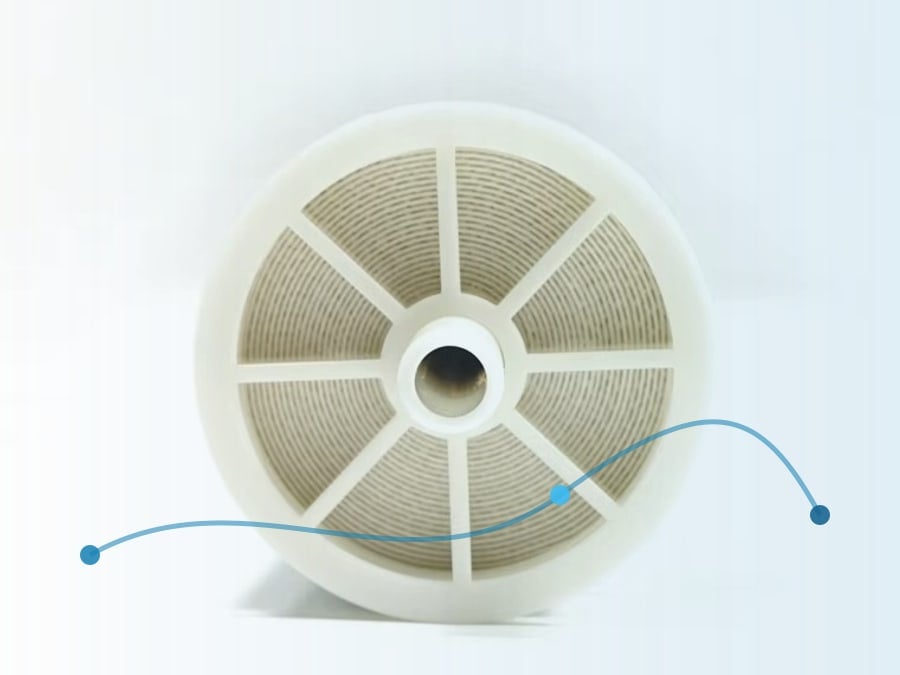
Why two series instead of one compromise element? Because a single spec always fails one job to serve another — the trade-off between energy and rejection is physical, not a marketing choice. Blue Membrane delivers C1 and C2 from the same in-house factory line so you match the element to the application without over-buying; every 8040 element is cross-checked to within 15% of its rated flow before it ships.
ULP vs Standard BWRO — Feed Pressure, Energy & Cost Comparison
For: EngineersOperationsProcurement
Most competitor pages assert “same flow at lower pressure” and stop there. Here’s the actual arithmetic, sourced to the water-treatment literature rather than to our own lab. A published Water Conditioning & Purification analysis (Dow Water & Process Solutions) reports that low-energy elements operate 33–40% below the pressure of standard elements without giving up flow or rejection, and puts real numbers on it: a standard pair at 156 psi drew 4.2 kWh per 1,000 gallons of permeate, versus 2.4 kWh at 93 psi for the low-energy pair — with a 1 ppm difference in permeate quality. Blue Membrane C1 sits in that same band: a 150 psi test basis against the ~225 psi typical of a standard brackish element is roughly a one-third pressure reduction on comparable low-TDS feed. For the lowest-TDS feeds, extra low pressure (XLE-class) designs push the window toward 100 psi, letting a smaller booster pump hold the same higher flux — which is where operating costs fall the fastest.
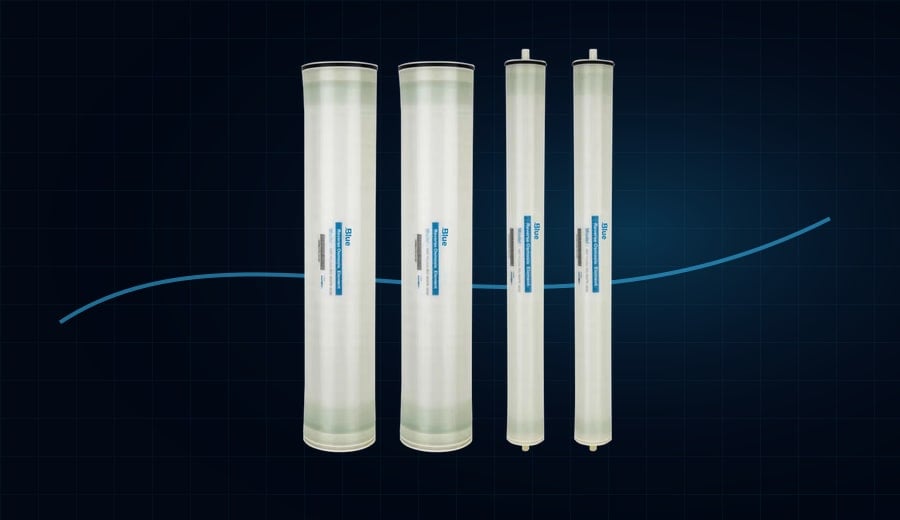
“Low-energy elements can operate at 33 to 40 percent lower operating pressure than standard RO membranes, without sacrificing flow or salt rejection.” — Water Conditioning & Purification (Dow Water & Process Solutions)
Performance Metrics Breakdown
Metric
Standard BWRO element
Blue C1 ULP
Basis
Typical feed pressure
~225 psi (15.5 bar)
~150 psi (10.3 bar)
datasheet + norm
Relative pressure
baseline
≈ 33% lower
WC&P: LE 33–40%
Specific energy (US)
4.2 kWh / 1,000 gal
2.4 kWh / 1,000 gal
WC&P (500 ppm feed)
Specific energy (metric)
0.5–1.0 kWh/m³
0.2–0.5 kWh/m³
industry ULP range
Permeate quality delta
baseline
~1 ppm
WC&P side-by-side
Efficiency & Cost Advantages
≈ 33%
Conservative — feed-pressure reduction on low-TDS feed, giving a proportional cut in pump work.
40–43%
Typical — specific-energy reduction in the published 4.2 → 2.4 kWh/1,000 gal industry example.
+ capex
Upside — a lower pressure rating can allow a smaller pump and drop the energy-recovery device.
Honesty note: these figures are cited industry averages and a published example — not Blue Membrane metered field data. The energy advantage is feed-water dependent: peer-reviewed BWRO plant work notes that operating near the thermodynamic limit doesn’t always reduce specific energy consumption. As feed TDS rises, osmotic back-pressure climbs and the low-pressure advantage narrows. Size around your worst-case feed and recovery, not the average. Reference: ULP energy & feed-water dependence.
Estimate energy savings for your feed water
Buyers make one costly mistake — comparing SKU price, not delivered energy cost — because pumps, not membranes, dominate the operating bill. Blue Membrane quantifies the gap: at roughly 40% lower specific energy on low-TDS feed, the payback shows up in kWh, not the sticker. Buying on unit price alone is the real risk here.
Get a per-system energy estimateULP RO Elements
Application Match
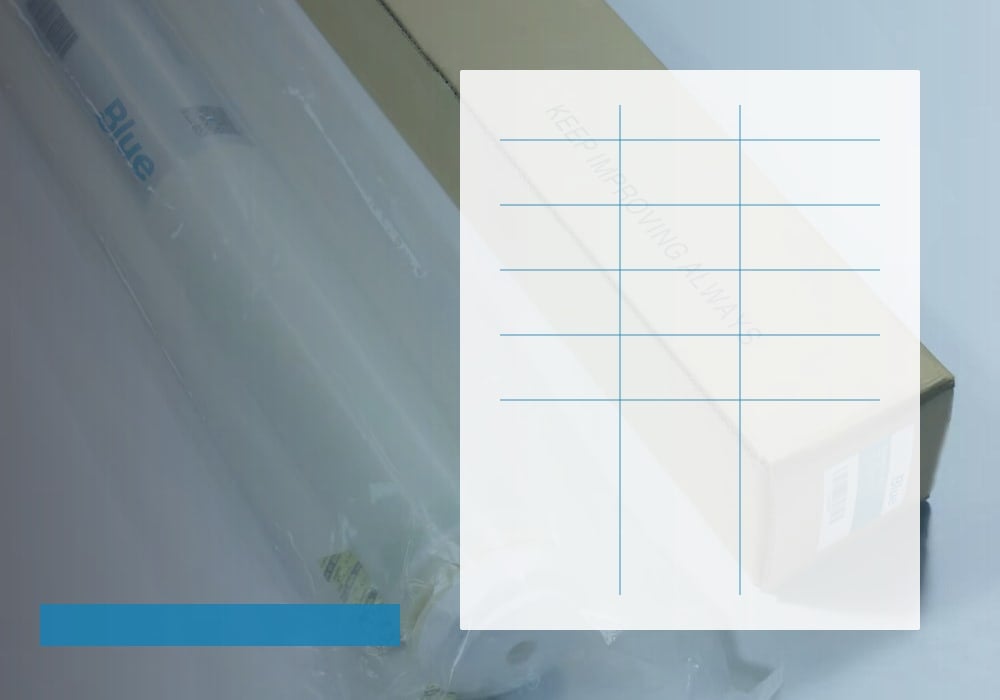
ULP Cross-Reference Chart —
Blue Membrane vs DuPont ECO Pro, Hydranautics, Toray & LG
If you’re replacing an installed element, the questions are always the same: does it fit the housing, and does it hold rejection at the same pressure? This chart maps Blue Membrane models to the equivalent low-energy / ULP class from the major suppliers. Treat it as a starting point for a retrofit slot — confirm the exact flow and rejection against each manufacturer’s current datasheet, because test conditions differ between makers (for example, the DuPont ECO Pro-400 datasheet is rated at 2,000 ppm NaCl and 150 psi, while the Blue Membrane datasheet is characterized at 1,500 ppm). We publish the difference rather than paper over it.
| Blue Membrane | DuPont FilmTec | Hydranautics | Toray | LG Chem | Other equivalents |
|---|---|---|---|---|---|
| MB-C1/C2-8040 | ECO Pro-400 | ESPA1 / ESPA2 | TMG20D-400 | BW 400 ES | Hydronix HLP-8040 · LE1-8040 |
| MB-C1/C2-8040 PLUS | ECO Pro-440 | ESPA2-LD | TMG20D-440 | BW 440 | ULP-8040 (440 ft²) |
| MB-C1/C2-4040 | ECO Pro (4040) | ESPA1-4040 | TMG20D-4040 | — | LE-4040 · ULP-4040 |
Where ULP Elements Deliver Municipal Water Systems
The best-fit applications share one trait: moderate feed salinity where energy cost, not extreme rejection, drives the economics. That covers bottled and drinking-water polishing, municipal potable and reuse, boiler-feed and cooling-tower make-up, food and beverage process water, and small-to-mid commercial pure-water for hospitals, hotels and light industry.
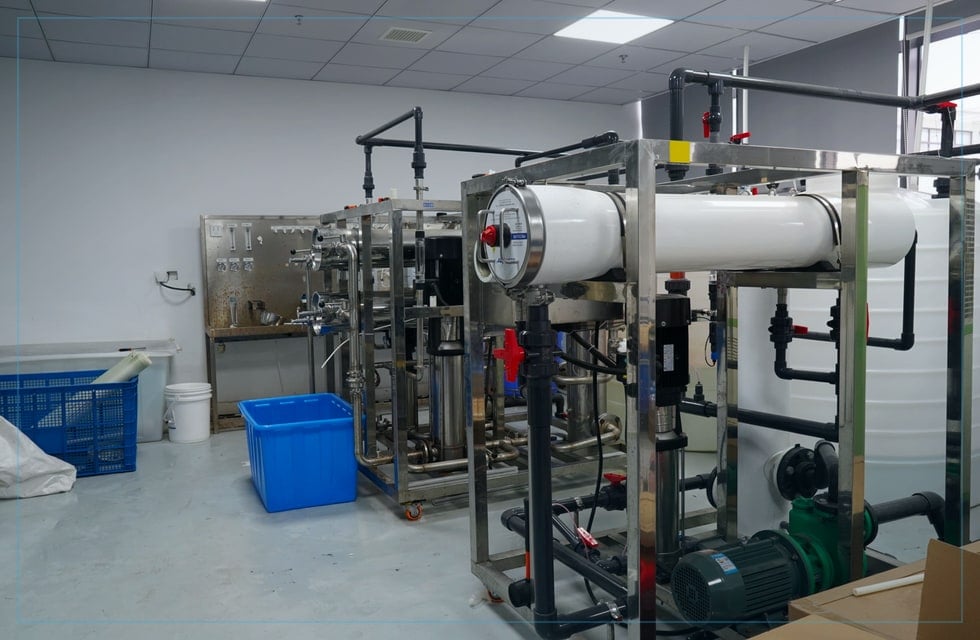
Pretreatment & feed-water sources
Pre-treatment: A low-pressure element is only as good as the water reaching it. Effective pretreatment — sediment filtration, then a sediment-and-carbon stage or carbon cartridge to strip chlorine, plus antiscalant where scaling is a risk — protects the film and holds the rated flow rate.
Get the feed water wrong and the element fouls early — the most common and expensive mistake in a low-pressure build. Because Blue Membrane engineers pretreatment guidance into every quote, you sidestep the scaling and biofouling risks.
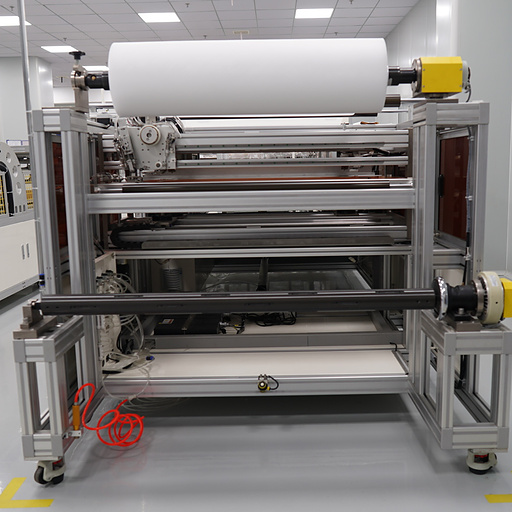
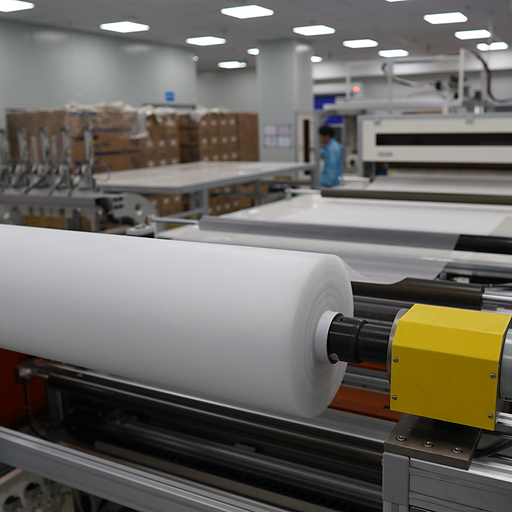
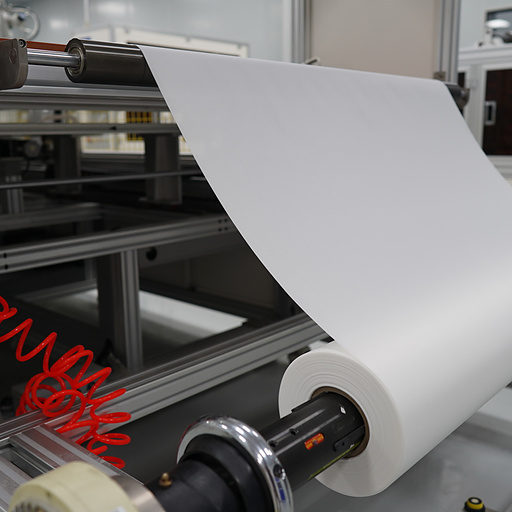
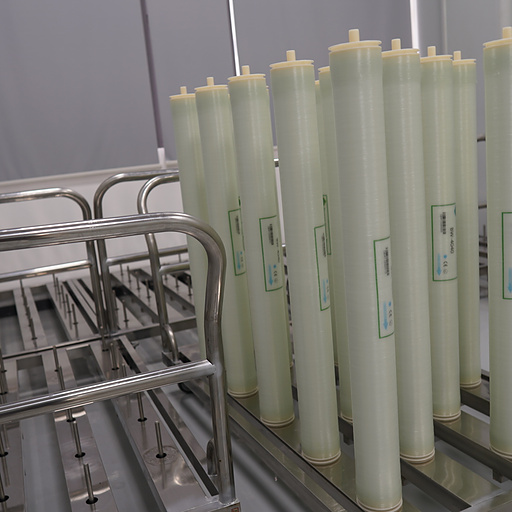
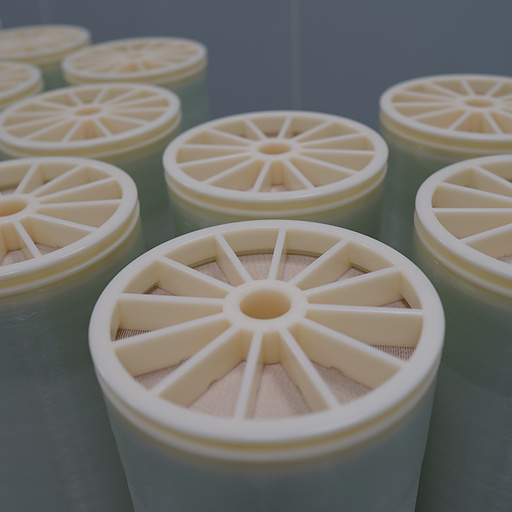
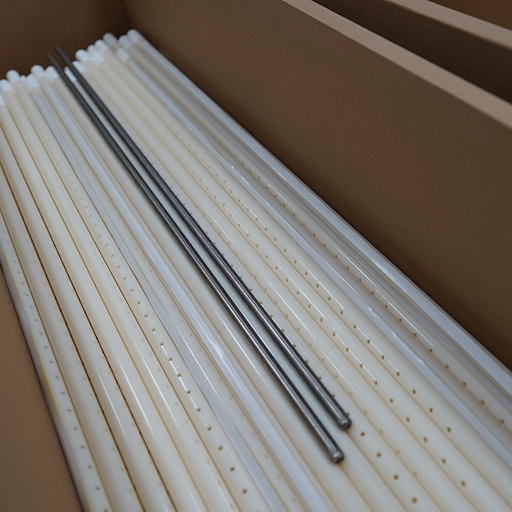
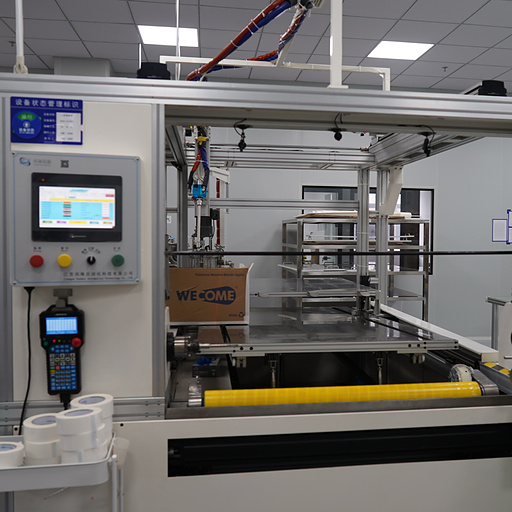
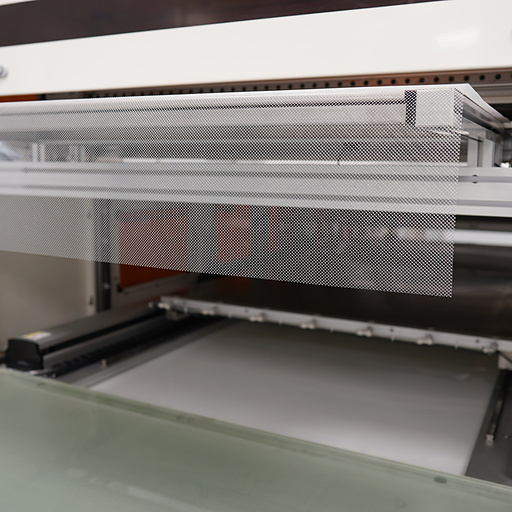
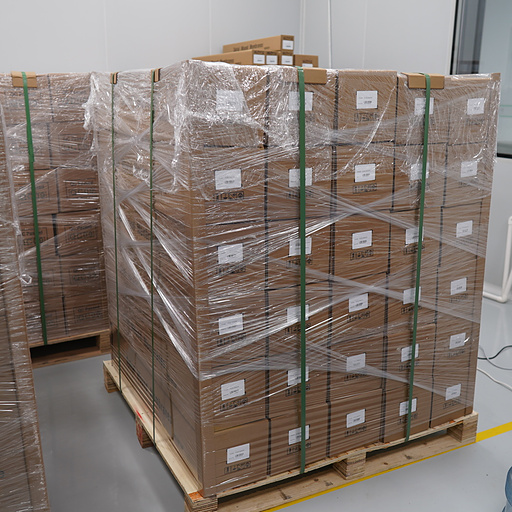
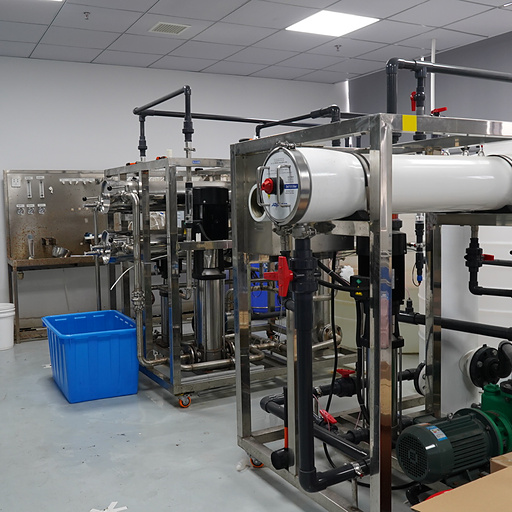
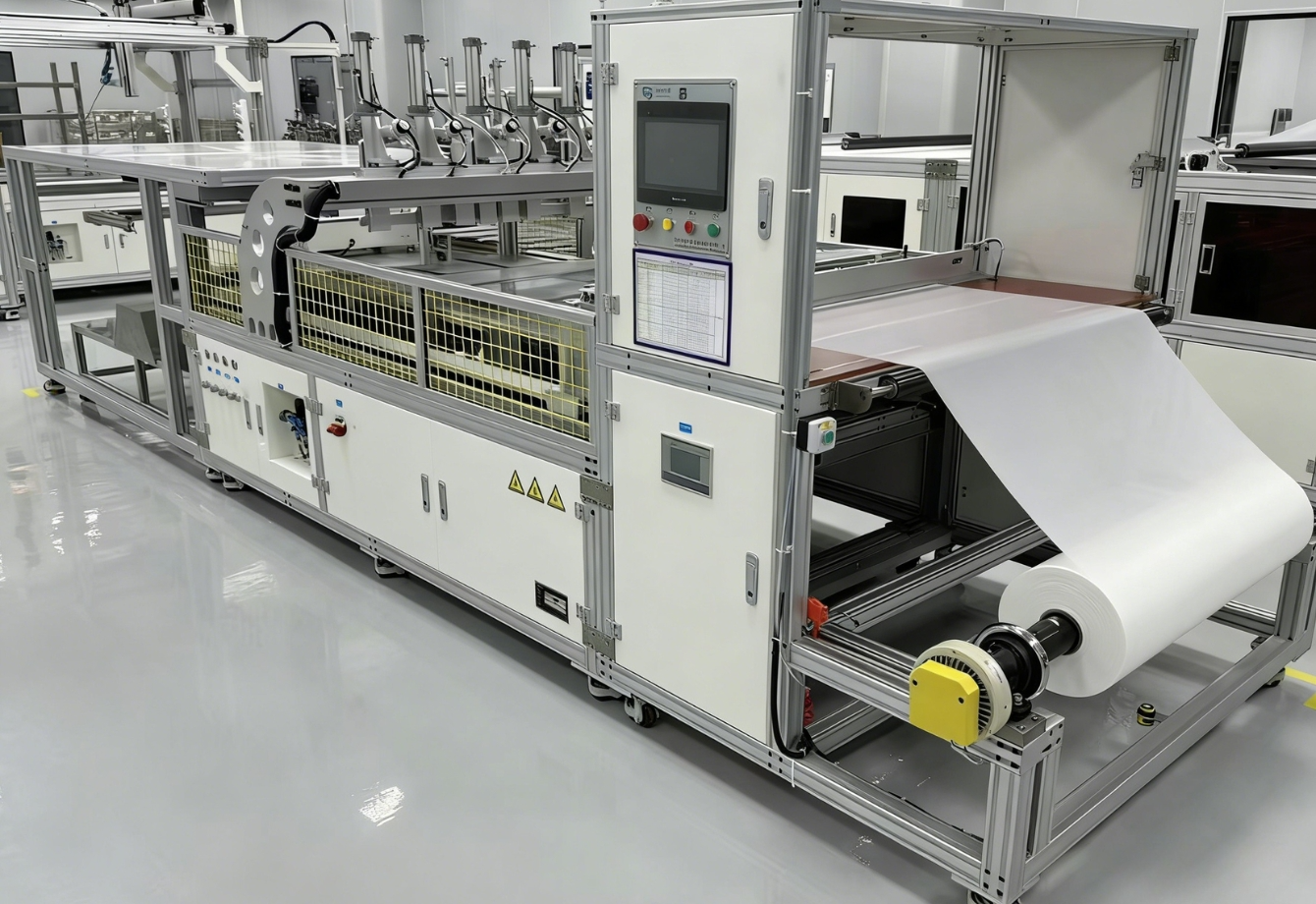
Application Support Request a Review >State-of-the-Art ULP RO Elements Manufacturing Workshop
CLICK TO ZOOM
CLICK TO ZOOM
CLICK TO ZOOM
CLICK TO ZOOM
CLICK TO ZOOM
CLICK TO ZOOM
CLICK TO ZOOM
CLICK TO ZOOM
CLICK TO ZOOM
CLICK TO ZOOM
×
![Enlarged View]()
Factory-Direct & OEM — Sizing, Lead Time, MOQ & Private Label
Blue Membrane manufactures these elements — we are not re-boxing another brand’s private label — which changes the procurement conversation from SKU price to total delivered value. For system integrators and OEM partners that means element-level sizing help, private-label and custom-spec options, and volume MOQ pricing on the 8040 and 4040 formats. For distributors it means a datasheet you can hand a specifying engineer and a cross-reference that shortens the “will it fit my housing” cycle. We support a documented quality process (ISO 9001-aligned manufacturing) and disclose our test conditions on every datasheet so your engineering team can normalize our numbers against whatever brand is installed today.
The practical objection we hear from procurement is that a newer brand has to earn trust against known names. Our answer is transparency, not discount-chasing: a full manufacturer datasheet, an honest cross-reference with test-condition differences called out, and application backing that matches the incumbent’s own literature. Compare on delivered energy cost and retrofit fit — the two things a low-pressure element is actually bought for.
Low Pressure / ULP RO Elements Engineering Tools
C1 or C2 — which series should I pick?
Pick C1 when energy cost dominates and feed is low-TDS tap or municipal water: 150 psi test basis, 99.5% rejection. Pick C2 when you need the highest rejection and longest service life, or feed quality is variable: 225 psi test basis, 99.6% rejection. Both share housings and sizes, so it is a performance choice, not a plumbing change.
Are these genuinely compatible with DuPont ECO Pro-400 / 440?
They share the retrofit form factor — 400 ft² / 34 mil spacer for the ECO Pro-400 slot, 440 ft² / 28 mil for ECO Pro-440 — and the same low-pressure operating class. They are a compatible replacement, not an identical part: the public DuPont datasheet is rated at 2,000 ppm NaCl while ours is characterized at 1,500 ppm, so confirm flow and rejection against both datasheets for your feed before swapping.
How is a low-pressure element different from a standard brackish element?
A thinner, more permeable polyamide layer produces comparable flow at a lower applied pressure — so ULP designs target the low end of the 150–250 psi band for the same duty, which is where the pump-energy saving comes from.
What feed water and pretreatment do these need?
Target TDS below ~2,000 ppm, SDI15 ≤ 5, free chlorine < 0.1 ppm, and a 5-micron cartridge minimum; add ultrafiltration on surface or reuse feed. Limits: 600 psi, 45°C, pH 3–10 continuous.
When is a ULP element the wrong choice?
When feed TDS is high. As TDS rises, osmotic back-pressure climbs and the low-pressure advantage shrinks, so a standard high-pressure or high-rejection element (or the C2 family, or a two-pass design) becomes the better fit. The energy case for low pressure is real on low-TDS feed and marginal on high-TDS feed — we would rather tell you that than oversell it.
Get the datasheet, cross-reference and a quote
Tell us your feed-water TDS, target flow and housing size. We'll send the C1/C2 datasheet, the cross-reference match for your installed element, and a factory-direct quote with MOQ and lead time.
Request a Factory Quote & Datasheet
Trending now