Get in touch with Blue Membrane Company

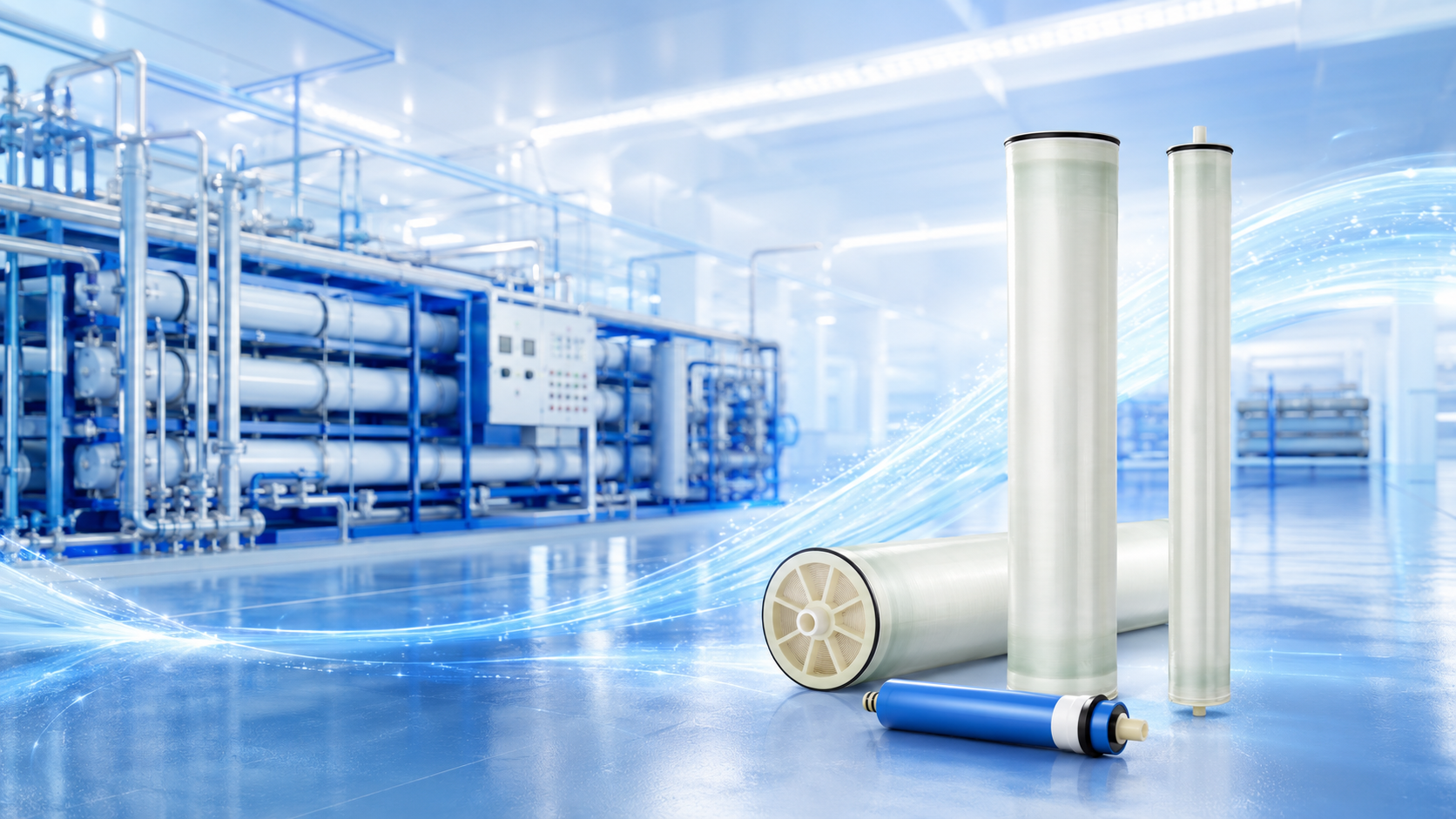
Avoid Costly 8040 RO Membrane Mismatches
An 8040 membrane may share dimensions with a different RO membrane, but that does not mean the two can be swapped directly. Sample PDS documents for FilmTec and Toray 8040 elements list a size of roughly 7.9 in diameter by 40 in length, but differ on important operating characteristics, including: test pressure, feed spacer type, chlorine tolerance, permeate flow, and intended use.
This often results in an unpleasant surprise during or after replacement. Someone might see a familiar FilmTec RO element or a Hydranautics compatible membrane in the marketplace and think a fit has been found based on physical dimensions alone. It is rarely that simple. Factors like applied pressure, targeted salt rejection, flow rate, feed water challenges, and equipment setup all play a role.
Blue Membrane offers this cross-reference table as a guide, not as the final specification document. Use it to narrow your options for an 8040 replacement membrane. Send us your current model, feed data, and vessel setup so our team can determine a suitable Blue Membrane path for your system.
Buyer Advisory
Use cross-references to shorten the list of potential candidates, not to skip checking the original product data sheet. A better approach to membrane replacement: model class, test pressure, intended application, vessel fit, feedwater composition, and then RFQ.
- pressure vessel
- applied pressure
- salt rejection
- chlorine exposure
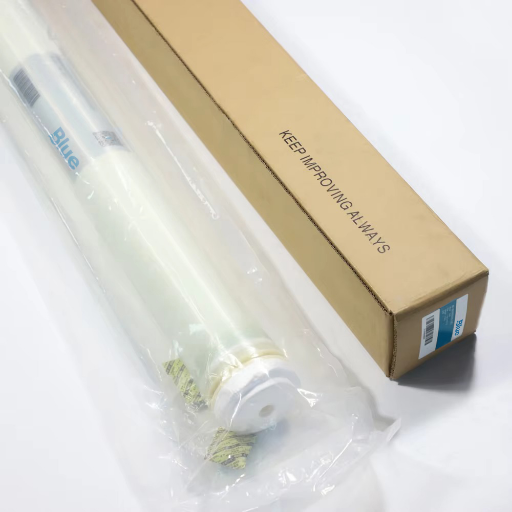
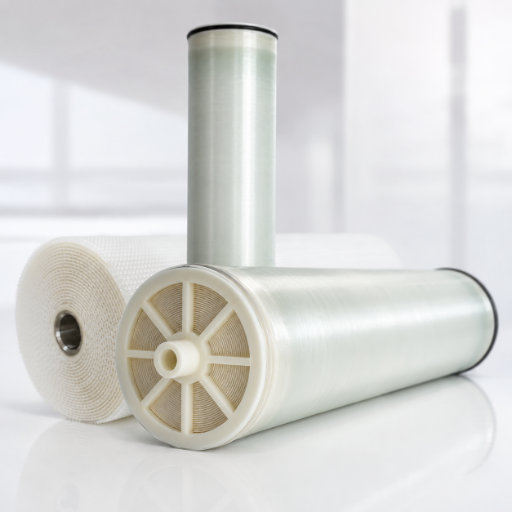
Blue Membrane OEM Cross-Reference Matrix
This cross-reference matrix was generated from the Blue Membrane OEM cross-reference workbook, and matches our Blue Membrane models against select DuPont/FilmTec, Hydranautics/Nitto, and Toray reference models, categorized by class, application, rejection/flow, and test pressure.
First Screening, Not Final Approval
These matches are approximations. Prior to replacement of any RO membrane, compare the original manufacturer's PDS document against your feedwater conditions, target recovery, operating pressure, pressure-vessel arrangement, end-cap size, and cleaning procedure.
| Blue Membrane Model | Type / Application | DuPont / FilmTec Reference | Hydranautics / Nitto Reference | Toray Reference |
|---|---|---|---|---|
| MB-C1-8040 | Ultra Low Pressure (ULP), low energy, high rejection, 150 psi test | Eco Pro-400; former BW30HRLE-440 | ESPA2-LD | TMG20-400 |
| MB-C2-8040 | Ultra Low Pressure (ULP), higher flow, low energy, 225 psi test | Eco Pro-400; BW30HRLE-440 | ESPA1-LD / ESPA2 | TM720D-400 |
| ZERO1-8040 | Zero Liquid Discharge (ZLD) high-pressure element, 225 psi test, up to 1200 psi max | Fortilife CR series | Not assigned in workbook | Not assigned in workbook |
| MB-H1-8040 | Seawater Desalination (SWRO), 800 psi test | SW30HRLE-400 | SWC5-LD or SWC4B-MAX | TM820C-400 or TM820E-400 |
| MB-Z1-8040 | Brackish Water (BWRO) standard high rejection, 225 psi test | BW30-400/34 | CPA3 or CPA5-LD | TM720-400 or TM720D-400 |
| MB-Z2-8040 | Fouling Resistant BWRO, 225 psi test | BW30FR-400/34 | LFC3-LD | TML20-400 or TML20-370 |
| N1-8040 | Nanofiltration (NF), medium pressure, high divalent-ion rejection, 100 psi test | NF90-400; looser grade NF270-400 | ESNA1-LF or ESNA1-LF2 | SU-620 or TM620-400 |
FilmTec, Hydranautics, and Toray Replacement Paths
Searches for dow membrane replacement, FilmTec membrane replacement, Hydranautics compatible membrane, or Toray compatible RO membrane usually start with identifying the part number. Next question: what operating parameters was that model built around?
Use this path when your current list includes models like Eco Pro-400, BW30HRLE-440, BW30-400/34, BW30FR-400/34, SW30HRLE-400, or NF90-400. DuPont's BW30 PRO-400/34 PDS that was reviewed shows 225 psi test pressure, 400 ft2 active area, and a 34 mil feed spacer.
For seawater RO, the reviewed SW30HRLE-400 PDS indicates a standard test pressure of 800 psi under seawater operating conditions. That lends further support for distinguishing SWRO elements in a separate path from BWRO or low pressure replacement options.
Use this path when your current system specifications identify ESPA, CPA, SWC, LFC, or ESNA product families. ESPA2-LD PDS specifies a 150 psig test pressure, while the CPA3-D lists a standard test pressure of 225 psig.
Hydranautics makes clear that the users themselves are ultimately responsible for the applicability of the product for any specific use case. That is precisely why we ask for feedwater, recovery, and operating data before we finalize a Blue Membrane replacement recommendation path.
Use this path when your system currently refers to TM720D-400, TML20-400, TM820C-400, or any similar Toray RO membrane element designation. Reviewed TM700D and TML(D) PDS documents identify the TM720D-400 and TML20D-400 models as 8040 sized elements tested at 225 psi.
Similarly, Toray's PDS literature advises purchasers to conduct their own testing to verify safety and fitness for purpose. That mirrors the same logic that a model replacement pathway first then site validation second.
Bronze Evidence Tier
Mismatch Risk Reduction, Not A Hard ROI Claim
Although this page contains substantial compatibility evidence, it intentionally does not include unsubstantiated cost-savings percentages. True business value lies in a more focused and precise RFQ package: fewer questions about incorrect model numbers, less time wasted missing key operating details, and a faster engineering review process.
Supporting evidence: Blue Membrane's uploaded workbook and independent reviews of official manufacturer PDS data and buyer insights.
How to Check Compatibility Before Replacing an RO Membrane
A well-designed replacement chart ought to steer the buyer toward the relevant technical dialogue. It should never represent the end of the conversation. Prior to approving any commercial reverse osmosis membrane, brackish water membrane, seawater desalination element, or nanofiltration element, please consult the checklist below.
| Factor | What To Confirm | Why It Matters |
|---|---|---|
| 01 Size | Current membrane size, including 8040 or 4040 membrane class | Reviewed 8040 PDS examples list about 7.9 in diameter and 40 in length, but vessel details still matter. |
| 02 Pressure | Test pressure and operating pressure, in psi or bar | 150 psi ULP, 225 psi BWRO, and 800 psi SWRO paths should not be mixed casually. |
| 03 Feedwater | TDS, SDI, turbidity, iron, manganese, silica, organics, and biological load | Feedwater drives fouling risk, cleaning frequency, and membrane replacement timing. |
| 04 Chemistry | Free chlorine, oxidizer exposure, antiscalant, biocide, and cleaning pH | Hydranautics TSB107 warns RO membranes should not be exposed to chlorinated water, and cationic surfactants should be avoided. |
| 05 Performance | Target permeate flow, rejection rate, recovery, salt passage, and pressure drop | A model can fit physically and still miss your water quality target. |
| 06 Hardware | Pressure vessel brand, end-cap style, interconnector, brine seal direction, and adapter details | Fitment errors create leaks, bypass, or avoidable startup delays. |
“When we get an 8040 replacement request, the model number is just a starting point. Our selection process is determined by pressure class, feedwater, recovery rate, vessel compatibility, and the client’s cleaning regimen.”
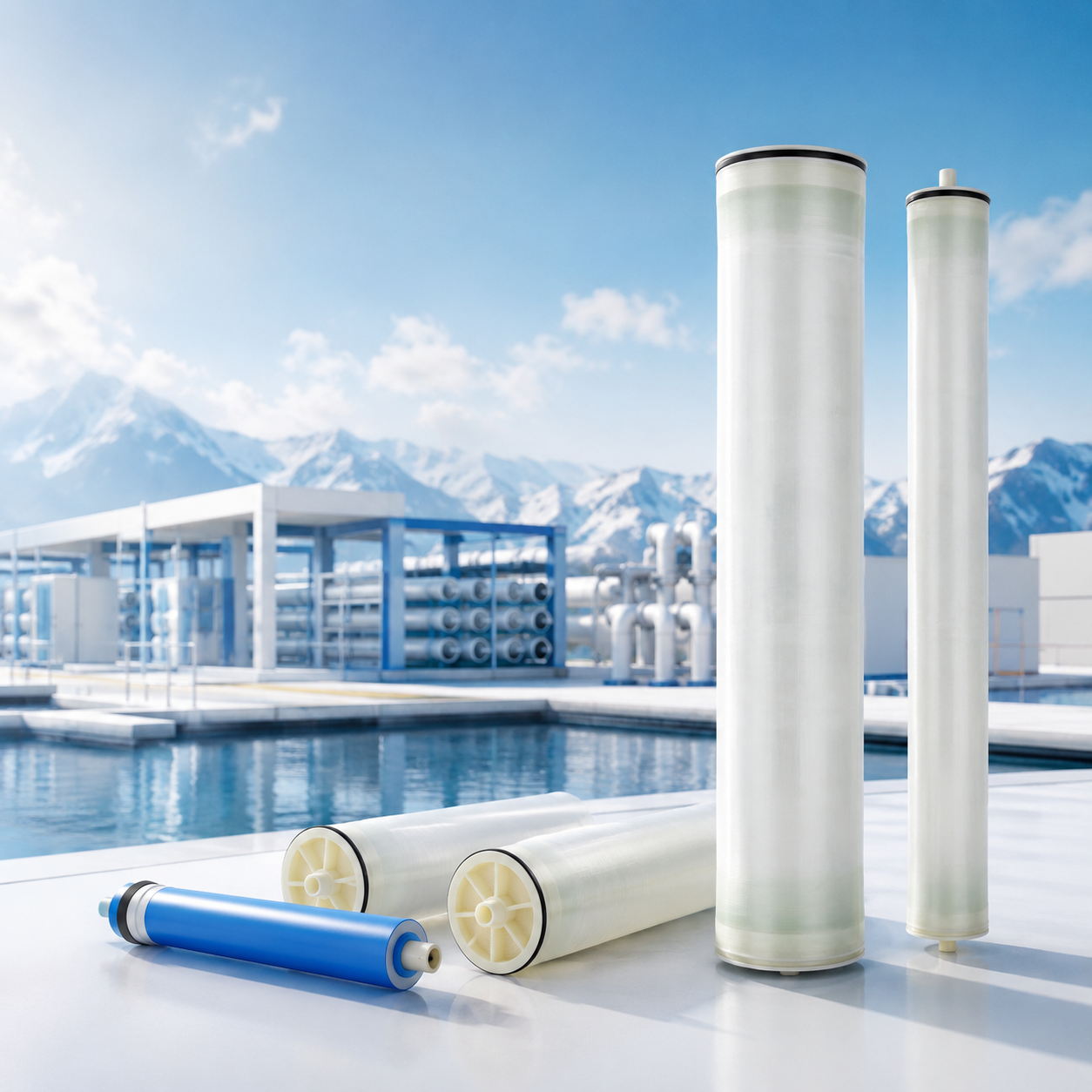
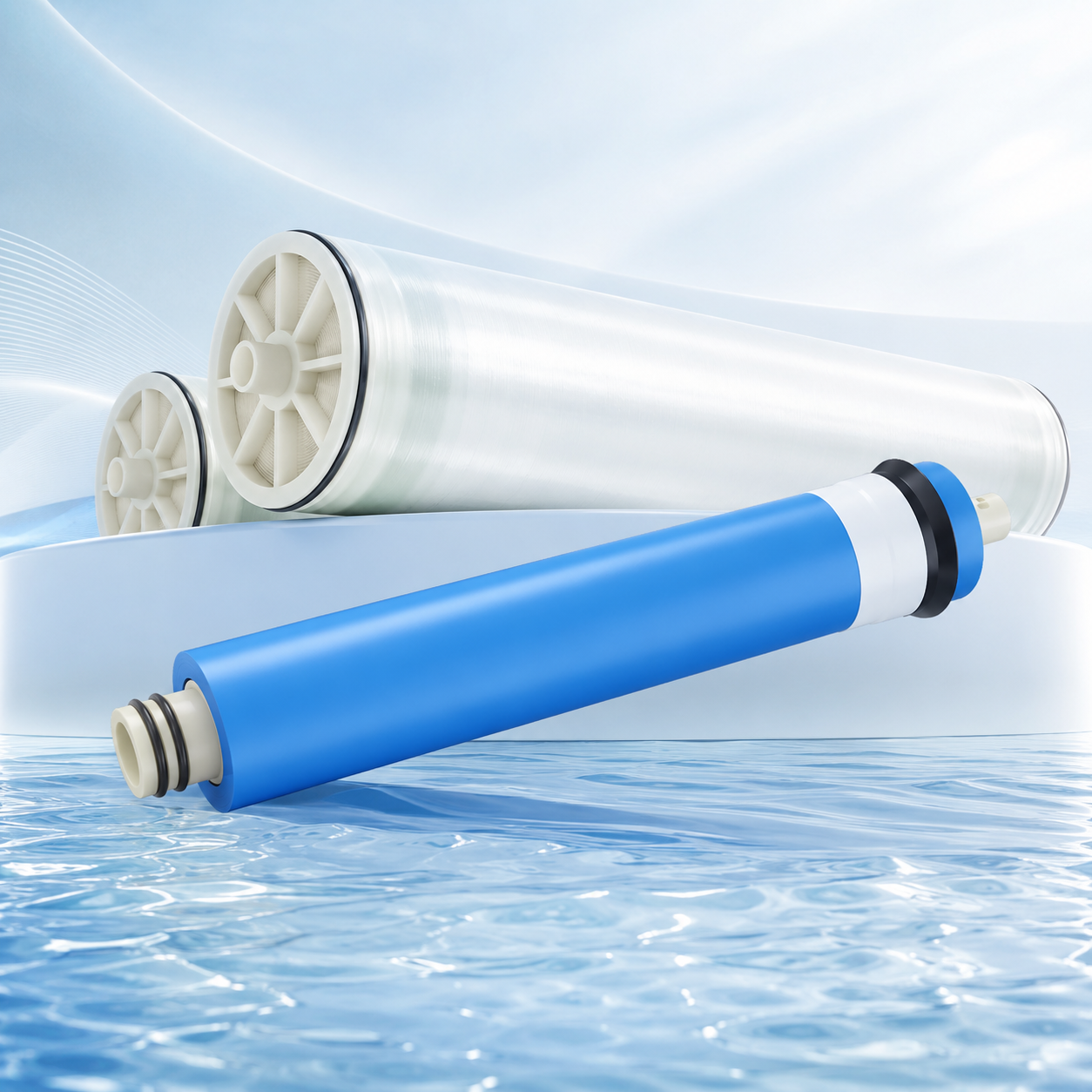
Application Matching: ULP, BWRO, SWRO, ZLD, and NF
Blue Membrane's matrix accommodates various RO operating scenarios. View each Blue model as a category of membrane elements rather than a specific part number. A low-energy ULP element, a fouling-resistant BWRO element, a seawater RO element, and an NF element address different operating challenges.
| Application Need | Blue Membrane Model | Workbook Test Class | Best-Fit Review Question |
|---|---|---|---|
| Low energy, high rejection ULP | MB-C1-8040 | 150 psi test | Is the current system designed around a low-pressure ESPA/Eco Pro style operating window? |
| Higher-flow ULP replacement | MB-C2-8040 | 225 psi test | Does the target prioritize flow while staying in a low-energy brackish water route? |
| High-pressure ZLD concentration | ZERO1-8040 | 225 psi test, up to 1200 psi max | Can the system hardware, pump train, vessel, and safety design support this pressure path? |
| Seawater desalination | MB-H1-8040 | 800 psi test | Is the feed salinity closer to SWRO conditions rather than brackish water conditions? |
| Standard BWRO high rejection | MB-Z1-8040 | 225 psi test | Does the current BW30/CPA/TM720-style path match the feedwater and recovery target? |
| Fouling-resistant BWRO | MB-Z2-8040 | 225 psi test | Does the site have high fouling tendency, frequent cleaning, or elevated organic/biological risk? |
| Nanofiltration, divalent-ion rejection | N1-8040 | 100 psi test | Is the target partial desalting or divalent-ion control rather than full RO salt rejection? |
Engineering Note
Do not transition a project from a BWRO to a SWRO application, from RO to NF, or from standard BWRO to a fouling-resistant BWRO based solely on a list of models that appear compatible. Application class guides the evaluation process; that's what separates a valuable cross-reference from a potentially hazardous shortcut.
Procurement Notes for OEMs, Integrators, and Distributors
Blue Membrane supports OEMs, system integrators, distributors, and water treatment professionals with consistent membrane supply and a clear process for model evaluation. Our industrial, municipal, commercial, and specialty purification products-including reverse osmosis membranes and advanced separation solutions-are made with careful membrane chemistry, spiral wound element construction, and quality control.
RFQ Data We Need
Add the application detail too: industrial reverse osmosis membrane service, food processing, or commercial purification changes how we review the RO system flow target in gpd, filtration duty, 8 x 40 vessel notes, energy efficiency goals, and the exact reverse osmosis membrane element. For a DuPont FilmTec replacement membrane request, include the pressure-vessel end cap style if it differs from a standard 8040 housing.
- Current membrane brand and model
- Element size and quantity
- Feedwater type, TDS, SDI, temperature, and chlorine exposure
- Operating pressure, recovery, and flow target
- Pressure-vessel and end-cap details
- Cleaning chemistry and recent fouling history
Pricing Factors Framework
Exact pricing depends on model class, order quantity, qualification requirements, document requirements, freight route, and desired supply schedule. We do not provide one price for all replacement paths as an improper model is far more expensive than a well run RFQ.
Send Current Model
What information do you need? Brand, Model, Quantity, Membrane size and what is your current operating performance target?
Add Operating Data
Please provide TDS, SDI, Temperature, Recovery, Applied Pressure and Product water target.
Check Hardware Fit
Confirm pressure vessel, end-cap, adapter, interconnector, and brine-seal direction.
Approve RFQ Route
Blue Membrane marks the likely replacement path and notes any missing data points that may need clarification.
Workbook Data
Blue model matrix from uploaded OEM cross-reference file.
PDS Review
Pressure and dimension claims checked against official reference sources.
Fit Review
RFQ intake requests feedwater, pressure, and vessel details.
No Blind Swap
Approximate equivalents are screened before purchase approval.
Membrane Compatibility & Selection Tools
FAQ: RO Membrane Replacement and Cross-Reference Questions
Can one 8040 RO membrane replace any other 8040 membrane?
No. Membrane size is just one data point. Match the operating pressure, feedwater chemistry, recovery, flow, cleaning limits and vessel fit before ordering a new membrane element.
What is the difference between a 4040 membrane and an 8040 membrane?
Main difference between 4040 and 8040 membranes starts with physical size. A 4040 RO membrane is a smaller sized element used in low flow systems, while an 8040 membrane is an 8-inch diameter element used in high flow industrial and commercial reverse osmosis systems. Vessel and system setup decide the membrane size.
How should I verify a Hydranautics compatible membrane?
Start by choosing your reference model family from the Hydranautics series (e.g., ESPA, CPA, LFC, SWC or ESNA) then verify operating pressure, feedwater concentration, recovery, max pressure, chlorine exposure and cleaning pH against the target Blue Membrane candidate.
How should I verify a Toray compatible RO membrane?
You can use the Toray model number as the reference and then determine if the target is a BWRO, fouling-resistant, SWRO or NF type element. For example, sources for the Toray TM720D-400 and TML20D-400 PDS documents mention an 8040 size and 225 psi test conditions, but the application type and cleaning conditions still need review.
Is Dow membrane replacement the same as DuPont FilmTec replacement?
Many end-users are still using Dow and FilmTec in their RFQs because that nomenclature is what is listed in the legacy system procurement records. For a new RFQ, please provide the current and precise model number listed on the product label, the PDS, or in your purchase file. Both naming conventions can be referenced by Blue Membrane, but the final comparison should use the current product specifications.
How often should industrial RO membranes be replaced?
There is no single safe replacement without additional information. Discussions with other buyers and reviews of available technical records suggest that feedwater quality, SDI, oxidizing agent exposure, fouling, recovery, cleaning practices and normalized performance trends are key factors. If you want Blue Membrane to suggest a replacement path, send your operating history.
What data should I send before requesting a replacement membrane quote?
Send the current model, element size, quantity, type of feedwater, TDS, SDI, temperature, operating pressure, recovery, desired flow target, vessel specifications (e.g. size, pressure rating), end-cap configuration, and the cleaning chemistry used in the system. Photos of the product label and vessel end-caps can be very helpful. If you have normalized performance data, a recent cleaning log, or startup reports, these documents can assist us in distinguishing a simple membrane replacement from an issue with the feedwater or fouling.
Can Blue Membrane supply OEM partners and distributors?
Yes, Blue Membrane works with system integrators, OEM partners and distributors seeking reliable, long-term performance and stable supply for applications including desalination, ultrapure water production, industrial process water, wastewater reuse, food and beverage processing and commercial water purification.
Trending now