Get in touch with Blue Membrane Company

Fouling-Resistant Elements (FR)
Fouling-Resistant RO Membrane Elements, Blue Membrane Z2 Series
The reason for fouling resistant RO membrane elements is simple: run a standard RO membrane on high-SDI brackish feed, the pressure rises, and you’ll clean it to death. Blue Membrane Z2 series doesn’t. Its hydrophilic modified polyamide surface and 34 mil wide feed spacer work to repel organics, colloidals and biofilm – while still maintaining 99.7% stabilized salt rejection.
Each Z2-8040 membrane has been engineered to the same 400 ft² / 34 mil geometry as the DuPont FilmTec BW30FR-400/34 membrane it replaces. You keep the same pressure vessels, the same piping and plumbing, and the same target recovery — only the membrane’s fouling performance changes.
Request a Quote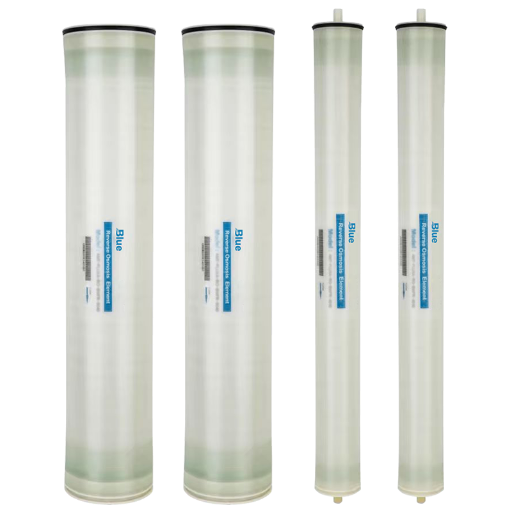
99.7%
Stabilized salt rejection
34 mil
Wide feed spacer
400 ft²
Active membrane area (8040)
SDI15 ≤6
Rated feed fouling tolerance
10,000 ppm
Max feed TDS
BW30FR-400/34
Drop-in compatible
Fouling Is What Kills Brackish-Water RO Performance, and How Z2 Stops It
500+Elements Tested
~60%Fouling Identified
~60%Poor Pretreatment
In brackish feedwater, foulants often exist in combination. According to that same membrane autopsy dataset:
Bio/organic 31%
Colloidal 29%
Scale 22%
Mixed 35%
Each class behaves differently. Humic and natural organic matter and microorganisms adsorb directly onto the polyamide surface, while sulfate and silica in the feed concentration drive scale into the membrane pore structure. That mix of organic fouling and scaling compounds is what a fouling-resistant element is built to slow.
A fouling-resistant RO membrane element is a spiral wound reverse osmosis element specifically designed to retard the deposition of foulants onto the surface of the membrane. That’s not a niche capability: in one membrane autopsy study involving over 500 elements, fouling was identified in ~60% of RO membranes, with poor pretreatment identified as the source in ~60% of these cases.
IMPACT / COST EVAL. | THE COST YOU ACTUALLY PAY FOR FOULING
Fouling on an RO membrane is a membrane replacement, not a chemical-cleaning budget item. A peer-reviewed economic study on 7 surface-water RO/NF plants in the Netherlands calculated that fouling represented 24% of overall operating cost and attributed that to premature membrane replacement (not chemicals) above all other causes.
PROCESS / Z2 INTEGRATION
Z2 addresses this problem right at the surface. A modified polyamide with a hydrophilic skin resists attachment of organics, oils, surfactants and other biological matter – thereby slowing down bio/organic foulants. The near-neutral surface charge repels inorganics that initiate scaling. This creates an RO element that maintains water permeability and salt rejection over time under difficult feedwater conditions, bridging the gap between clean-in-place events for one membrane and another. The fouling-resistant membrane’s space is found here. In an RO plant this translates into more consistent water quality, fewer operational surprises and more efficient process design and control. From municipal water treatment to industrial water reuse and upstream feed for subsequent process steps, fouling-resistant membranes contribute to overall system stability.
“This is no magic, and we’re not going to sell it as maintenance free. Fouling-resistant membranes reduce cleanings and slow down the rate of flux decline-they don’t eliminate cleaning. What they do is change how often you need to clean it before the membrane is no good.”
Wider Feed Channel
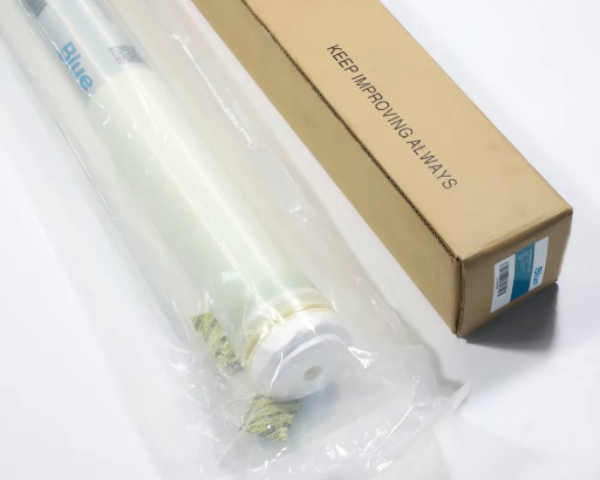
34 mil spacing maximizes cross-flow, minimizes pressure drop, and keeps foulants from sticking.
Higher Foulant Tolerance
Designed to perform up to SDI15 6 (standard BW elements warranty typically caps at SDI<5).
Extended CIP intervals
Surface chemistry and feed channel spacing keep fouling reduced, providing longer intervals between cleaning cycles on problematic water sources.
Here is the honest version of the trade-off. Unlike a standard brackish membrane that fouls slower only on paper, the Z2 is built in-house to hold high rejection while also resisting fouling — two properties that most membranes force you to choose between. In a 5,000 ppm municipal reuse train operating at about 220 psi, that means the difference between a quarterly cleaning and a monthly one. That unseen cost of the monthly cleaning is a membrane you’ll replace a year early.
Not sure a fouling-resistant element fits your feedwater?
Get Instant QuoteBlue Membrane Z2 Series, Models, Sizes & Performance Specs
Models & Performance Specs
| Model | Element size | Active area | Avg permeate flow | Stabilized rejection | Feed spacer |
|---|---|---|---|---|---|
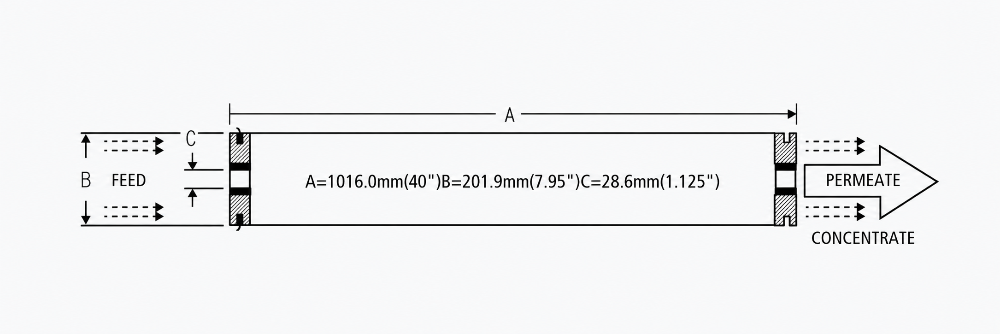
| MB-Z2-8040 | 8″ × 40″ | 400 ft² (37.2 m²) | 10,500 GPD (39.7 m³/d) | 99.7% (min 99.5%) | 34 mil |
| MB-Z2-4040 | 4″ × 40″ | 85 ft² (7.9 m²) | 2,400 GPD (9.1 m³/d) | 99.7% (min 99.5%) | 34 mil |
| MB-Z2-4021 | 4″ × 21″ | Available on request | — | 99.7% | 34 mil |
| MB-Z2-2540 | 2.5″ × 40″ | Available on request | — | 99.7% | 34 mil |
Standard test conditions include 2,000 ppm NaCl, 225 psi (1.55 MPa), 25C (77F), pH 7-8, and a 15% recovery rate and permeate flow rate tolerance.
Operating limits (all Z2 models)
| Maximum operating pressure | 600 psi (4.14 MPa) |
| Maximum feedwater temperature | 45°C |
| Maximum feed SDI15 | 6 |
| Maximum free chlorine | <0.1 ppm |
| pH range, continuous operation | 3–10 |
| pH range, chemical cleaning | 2–11 |
| Maximum pressure drop per element | 15 psi (0.1 MPa) |
Which size for which system
| If your system runs… | Choose | Because |
|---|---|---|
| Large municipal / industrial trains, 8″ vessels | MB-Z2-8040 | 400 ft² and 10,500 GPD per element — highest productive area per housing |
| Small-to-mid commercial / pilot skids, 4″ vessels | MB-Z2-4040 | 85 ft² / 2,400 GPD, standard 4040 form factor |
| Compact point-of-use or short vessels | MB-Z2-4021 / -2540 | Same FR surface and 34-mil spacer in a shorter/narrower element |
Operating envelope, what the numbers mean for your system
Like any semi-permeable membrane, a Z2 element maintains high salt rejection while pushing permeate through the material using the feed water’s pressure against osmotic pressure. When used in a brackish water source (1,000-10,000 ppm TDS), pressure ranges between 150-600 psi (1-4.1 MPa), with a premium on stable recovery and high salt removal rates over maximum flux.
There are two major sources of feed water variability that set constraints. With high recovery rates, the prevalence of hard water and silica necessitates that a pragmatic recovery rate for brackish water be no higher than 75-85% (not 95%), and power consumption correlates with that rate and water salinity, often hovering around 0.5-2.0 kWh/m of permeate produced. Within these constraints, the Z2’s advanced membrane technology offers superior foul-resistant properties, not freedom to exceed them.
One parameter that’s important not to miss. Free chlorine levels higher than 0.1 ppm are problematic for all aromatic polyamide thin-film composite membranes including the Z2. Failure to remove free chlorine will shift the problem from fouling to oxidation and ultimately result in irreversible damage to the membrane skin.
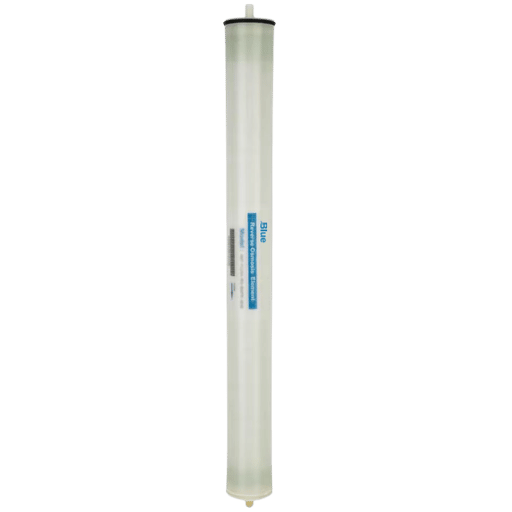
Need the full spec sheet with dimensional drawings and part numbers?
The Engineering Behind Z2’s Fouling Resistance
Here’s the counterintuitive part most spec sheets skip: a “hydrophilic coating” alone does not make a membrane fouling-resistant. Peer-reviewed testing shows conventionally hydrophilic-modified RO membranes still lose about 40% of their flux against small charged foulants — real resistance needs surface-charge control, not just wettability. Whereas a coating markets well, the physics does not care.
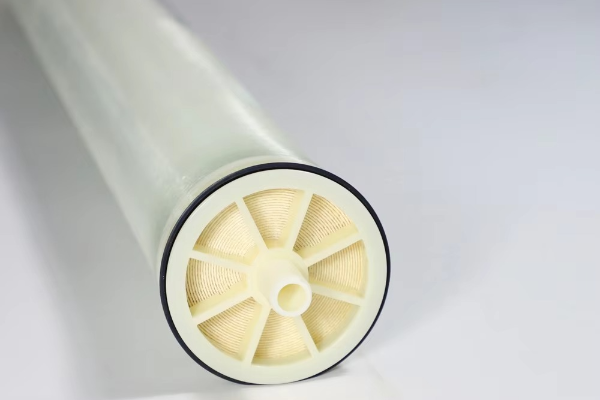
01 / 03
This precise aspect of membrane surface design has been consistently emphasized in the RO membrane patent literature for over two decades. One foundational patent names hydrophilicity and smoothness as the most important surface attributes for fouling resistance, with surface charge as the third factor. Another patent even quantifies it, establishing that a near-neutral surface charge of within 10 mV of neutral for the separation-layer zeta potential is critical for effectively mitigating the electrostatic adhesion of charged scale-formers. Z2 is designed with all three key elements in mind: a hydrophilically modified polyamide surface, carefully controlled smoothness, and a near-neutral surface charge.
Its reduced surface roughness offers significantly fewer anchoring points for bacteria and organic foulants, while its near-neutral charge actively repels charged scale-forming ions and silica, preventing them from bonding to the membrane surface. This combination is what fundamentally distinguishes Z2 as a true anti-fouling membrane surface, rather than merely a smoother one-and it’s why the element consistently maintains its high rejection rates where standard membranes would quickly become fouled and inefficient.
Why the 34-mil spacer earns its keep
A first sign of biological fouling is often a rise in the first-stage differential pressure. Experience and data from major membrane manufacturers caution that a differential pressure exceeding approximately 3.5 bar can lead to irreparable mechanical damage to the membrane element, the exact threshold an anti-fouling design is engineered to remain below.
Comparative pressure-drop testing behind this guideline was run on 8-inch, 400 ft2 elements fitted with 34-mil brine spacers — the same class of geometry the Z2-8040 belongs to. That wide-channel geometry is recognized across the industry as the key lever for holding differential pressure down at 400 ft2 of active membrane area.
That wider channel matters because of how biofilm fails an element. When foulant is lifted into the flow path by feed-spacer protrusion, differential pressure climbs. Operators respond by pushing feed pressure higher, which drives the spacer harder against the membrane surface and accelerates the damage.
It’s important to note that a label of “fouling-resistant” doesn’t automatically guarantee sustained rejection performance. In one challenging seawater field trial, a competitor element that was marketed as fouling-resistant exhibited an astonishing 80% increase in salt passage across cleaning cycles-the very reason Z2 is designed and guaranteed to maintain a 99.7% rejection rate, not just to reduce fouling.
This is exactly the trade-off we engineer around. In an industrial reuse stream at 200-400 psi, you want a membrane that resists fouling without drifting on rejection — otherwise you just move the problem from your cleaning logs to your permeate-quality logs. Blue Membrane builds the Z2 surface in-house so the two hold together, and the differentiator is that you don’t have to choose between them. On a semiconductor or power-generation feed running at 250 to 450 psi, that in-house manufacturing consistency is exactly what a plant engineer is buying from Blue Membrane.
“We do not treat fouling resistance as a coating you spray on. It is the feed spacer geometry and the membrane surface chemistry working together, the 34-mil channel keeps differential pressure down, and the hydrophilic, near-neutral surface keeps the foulants from anchoring in the first place. Take either one away and the element fouls like a standard membrane.”
— Blue Membrane Engineering Team
Z2-8040 vs DuPont FilmTec BW30FR-400/34, Head-to-Head Specs
Most people come to Blue Membrane because they’re already running FilmTec BW30FR-400/34 and are looking for a fouling-resistant element on a level playing field – but not the premium price or supplier lock-in of the incumbent. We took DuPont’s and our published numbers and threw them side-by-side. We used every DuPont figure from DuPont’s own product data sheets. We used every Z2 figure from our own data sheet.
| Specification | Blue Membrane Z2-8040 | DuPont BW30FR-400/34 | Standard BW30FR-400 |
|---|---|---|---|
| Stabilized salt rejection | 99.7% | 99.5% | 99.5% |
| Minimum salt rejection | 99.5% | 99.0% | 99.0% |
| Average permeate flow | 10,500 GPD | 10,500 GPD | 10,500 GPD |
| Active membrane area | 400 ft² | 400 ft² | 400 ft² |
| Feed spacer thickness | 34 mil | 34 mil | 28 mil |
| Maximum feed SDI15 | 6 | 5 | 5 |
| Maximum operating pressure | 600 psi | 600 psi | 600 psi |
| Maximum temperature | 45°C | 45°C | 45°C |
Two numbers move in your favor, but one point must be said plainly
Z2 provides 99.7% stable rejection versus the BW30FR-400/34’s claimed 99.5% – same 99.7% figure FilmTec’s own higher rejection BW30HR element offers, thus we’re talking DuPont high rejection equality here not an exaggeration.
On the SDI15 = 6 rating, read it correctly
Z2 can handle a feed SDI15 of up to 6, one greater than the SDI<5 threshold stated for the FilmTec BW line and typically considered the warranty limit by all membrane vendors. The higher threshold is meant to provide a cushion against biofouling or similar operational events – pretreatment must still strive for an SDI<5 prior to entering the membrane, Z2 merely adds a margin of safety before the threshold is reached.
Also included as the other half of the story is the 34 mil spacer
It’s intentionally nothing revolutionary. It’s the same fouling-resistant surface and channel design DuPont builds into its own FR and ECO elements. Unlike a generic element that quietly ships a 28-mil channel, Z2 uses this proven mechanism rather than an unproven feature — exactly what you want in a drop-in replacement. The catch most buyers miss is the spacer number, so we print it.
Where Z2 Delivers, Applications & Feed-Water Fit
Z2 is built for brackish water reverse osmosis and industrial water in the 1,000-10,000 ppm TDS band, run at 150-600 psi depending on salinity. That covers the water treatment applications where fouling resistance pays back.
Performance Data
~24%
Of surface-water RO operating expense is spent on fouling — and the largest slice of it is premature membrane replacement, not cleaning chemicals.
Source: Jafari et al., Desalination 500:114865 (2021), seven full-scale Dutch plants-
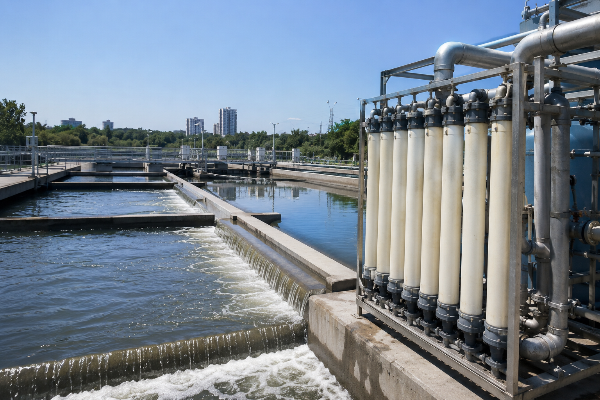
Municipal water purification & reuse
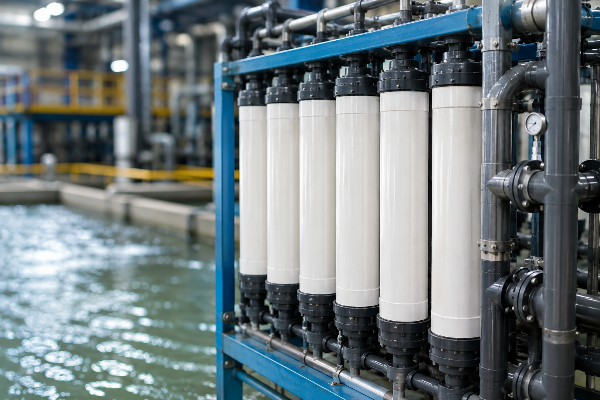
Reclaimed and fresh surface water for drinking water and reclamation, where organics and biofouling drive fouling.
-
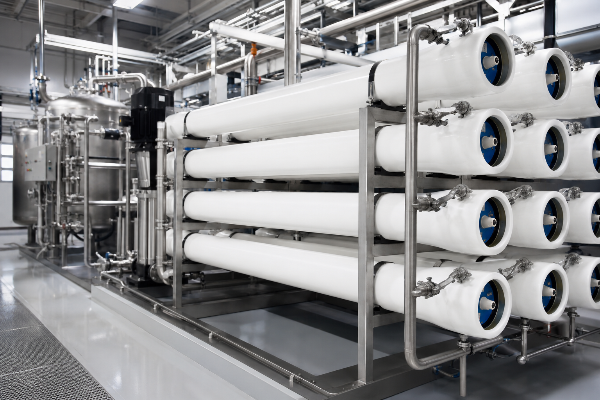
Industrial process & high-purity water
Power generation, chemicals, semiconductors, pharmaceuticals, and food & beverage reverse osmosis systems that produce pure water.
-
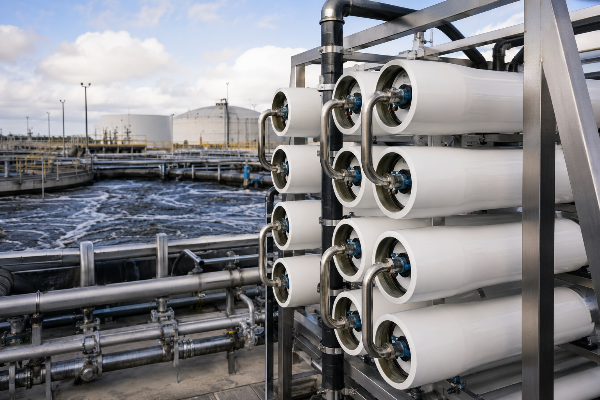
Wastewater treatment & reuse
High-organic effluent where a standard element fouls on a monthly cleaning cycle.
-
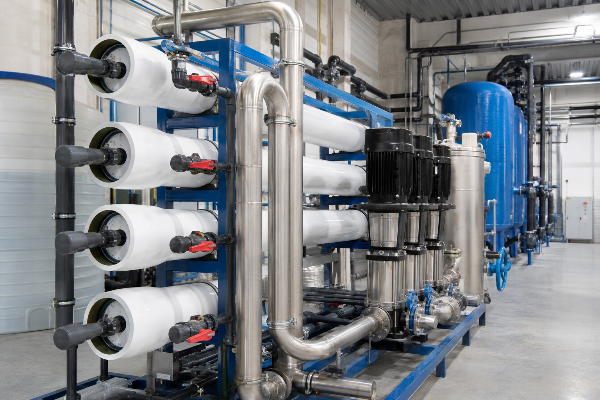
Boiler make-up and brackish water desalinaton pre-treatment
High TDS, fluctuating SDI feed water.
Product Brochure
How to Think About Z2’s Total Cost of Ownership
Those savings aren’t from cheaper cleaning chemicals. They’re from reduced cleanings and longer membrane lifespan on existing feedwater, which drastically cuts down on the single largest cost-early membrane replacement. When feedwater is high enough to warrant monthly clean-in-place, our SDI15-up-to-6 tolerance and 34-mil channel work to postpone cleaning intervals and extend membrane replacement cycles.
We publish this as a framework, not a rigid percentage, as your payback is determined by your feedwater’s SDI, recovery objectives, and cleaning schedule. For brackish systems, a pragmatic maximum recovery goal is 75 to 85 percent, rather than 95 percent, to avoid fouling and excessive antiscalant cost for water you’ll ultimately pay for.
Want a TCO estimate for your feedwater and recovery target?
Request a quote based on your application →Manufacturing Quality & Performance Testing
We face the issue of trust in this space directly and will not use a lab-centric slogan. NSF/ANSI certifications are a product of lab conditions, and 100 percent contaminant removal is impossible.
Unlike a spec sheet built on lab-ideal numbers, we present real-world values and how they are measured, and we will not claim laboratory-ideal absolutes.
What helps maintain efficient operations over an entire run is process consistency, not certifications. Whether processing municipal water, industrial water, or wastewater reuse, each batch uses the same membrane chemistry and performance window, verified by testing.
View Technical Specifications
Each Z2 performance figure on this page is supported by a defined test condition: 2,000 ppm NaCl, 225 psi, 25C, pH 7-8, with 15 percent recovery per element, a 15 percent permeate flow tolerance, and an 8 percent pressure loss. This matches the parameters under which DuPont’s BW30FR figures are reported, allowing for a direct, like-for-like comparison with the performance data shown above.
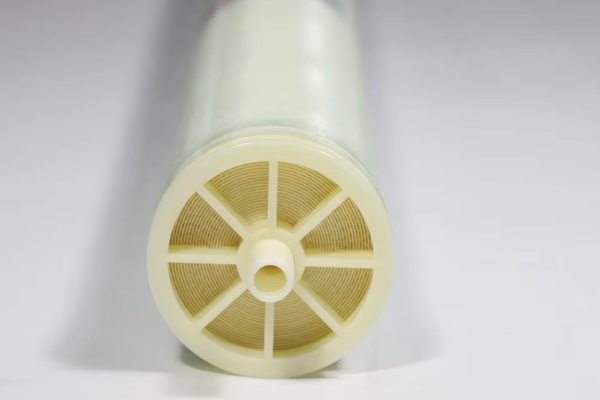
Our consistent membrane chemistry features a spiral-wound, aromatic polyamide thin-film composite construction, fabricated with Blue Membrane’s rigorous precision and quality control processes.
Our elements are designed and dimensioned for direct compatibility with standard 8-inch, 40-inch DuPont FilmTec BW30FR-400/34 housings.
Published tolerances, not loose claims – The three main specifications that come with a defined tolerance are active area, permeate flow, and rejection.
What to demand from any RO membrane supplier, including us
Ask for batch quality data (flow and rejection at standard test conditions), element pressure-drop data, and wet/dry shipping details upfront. Tie your site acceptance test to specific pass/fail criteria – permeate quality, recovery, and specific energy consumption – and tie a payment milestone to meeting those criteria. A supplier that balks on putting it in writing is the real risk.
Fouling-Resistant (FR) Engineering Tools
-
Z2 Element Selector
Determine the optimal Z2 fouling-resistant element for your specific system parameters.
Access Tool -
BW30FR Cross Reference
Compare and identify equivalent BW30FR series membranes for direct system replacements.
Access Tool -
Fouling TCO Estimator
Calculate the Total Cost of Ownership to evaluate long-term operational efficiency and savings.
Access Tool
Frequently Asked Questions
What is a fouling-resistant RO membrane element?
Spiral wound, reverse osmosis membrane element for reduced fouling on high organic, colloidal, and biologically-fouled feeds. Engineered with a hydrophilic, nearly neutral-charged polyamide skin and a 34-mil feed spacer, the fouling-resistant Z2 minimizes cleaning cycles and delays flux decline for improved overall RO system life.
Is the Z2-8040 a drop-in replacement for DuPont FilmTec BW30FR-400/34?
Yes. It has the same 400 ft2 active area, 34-mil feed spacer, and 8″ 40″ dimensions as the BW30FR-400/34, so it’s compatible with existing pressure vessels and hydraulics. Z2 is rated at 99.7% stabilized rejection, compared to the BW30FR-400/34’s stated 99.5%.
Is a generic or aftermarket membrane as good as FilmTec?
It really depends on the specific membrane, the aftermarket market can vary from matching FilmTec’s performance to membranes with very low rejection rates. We’ve heard reports from operators of replacement membranes performing at 300 TDS from 400 TDS feedwater, roughly a 25% rejection. For this reason, we provide our own standardized test conditions and a line-by-line comparison to the FilmTec datasheet, rather than asking customers to rely on what the label claims.
What feed-water SDI and TDS can Z2 handle?
The Z2 is designed to handle feed SDI15 values up to 6 and feed TDS up to 10,000 ppm. The SDI15-6 specification is one step above the typical <5 limit for most brackish water elements. This provides a little extra room for fouling before it impacts performance. However, the best practice is to maintain SDI <5 at the membrane inlet with proper pretreatment.
How does a 34-mil feed spacer reduce fouling?
A wider channel keeps cross-flow moving across the membrane leaf, which reduces differential pressure and leaves less surface area available for colloids and biofilm to bridge. Biological fouling primarily appears as a rise in first-stage dP, and excessive dP (above ~3.5 bar) can damage a membrane. Therefore, controlling dP is key to achieving high fouling resistance.
How long do fouling-resistant RO membranes last, and how often do they need cleaning?
Membrane lifespan is closely tied to the feedwater quality and maintenance. Under normal conditions with good pretreatment, a membrane can last 3-5 years. However, on feedwaters with high hardness or high organics, the lifespan may be shorter. Regular clean-in-place (CIP) procedures can extend membrane life by 30-50%. Elements like Z2 are built to withstand longer intervals between cleanings on challenging feeds, not to eliminate the need for cleaning.
Which Z2 sizes are available?
Four spiral-wound sizes: 8040, 4040, 4021, and 2540 — all with the same 34-mil fouling-resistant surface.
Trending now