Get in touch with Blue Membrane Company

Seawater RO Systems · Membrane Manufacturer-Direct
Seawater RO Systems, Marine, Containerized & Portable Desalination
Marine water makers, containerized & skid-mounted SWRO plants and portable desalination plants-all designed around seawater RO membranes we make ourselves-not membranes we buy and resell.
The one piece of hardware that determines whether a seawater RO system performs well or poorly is the reverse osmosis membrane. Most seawater reverse osmosis plants today are built around membranes you buy from one of several suppliers and then bundle with a stainless steel frame and a control panel. We design and build the membrane first-our H1 and H2 seawater desalination membranes deliver up to 99.8% salt rejection-and then design the reverse osmosis desalination system around the element.
Request a Quote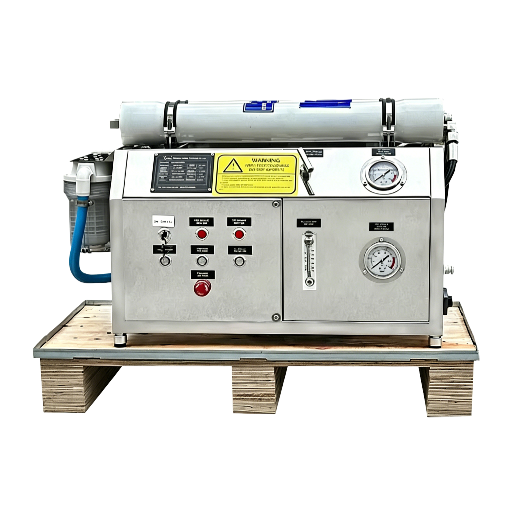
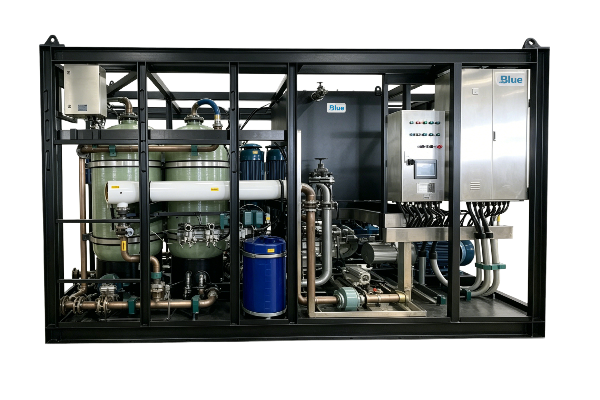
99.8%
H1 stable salt rejection at 32,000 ppm NaCl
3
Deployment-matched product lines
65 TPD+
Containerized capacity, custom scalable
Drop-in
Compatible with SW30HRLE-400
2205
Super duplex high-pressure piping
BV / GB5749
Class-certified & potable-grade builds
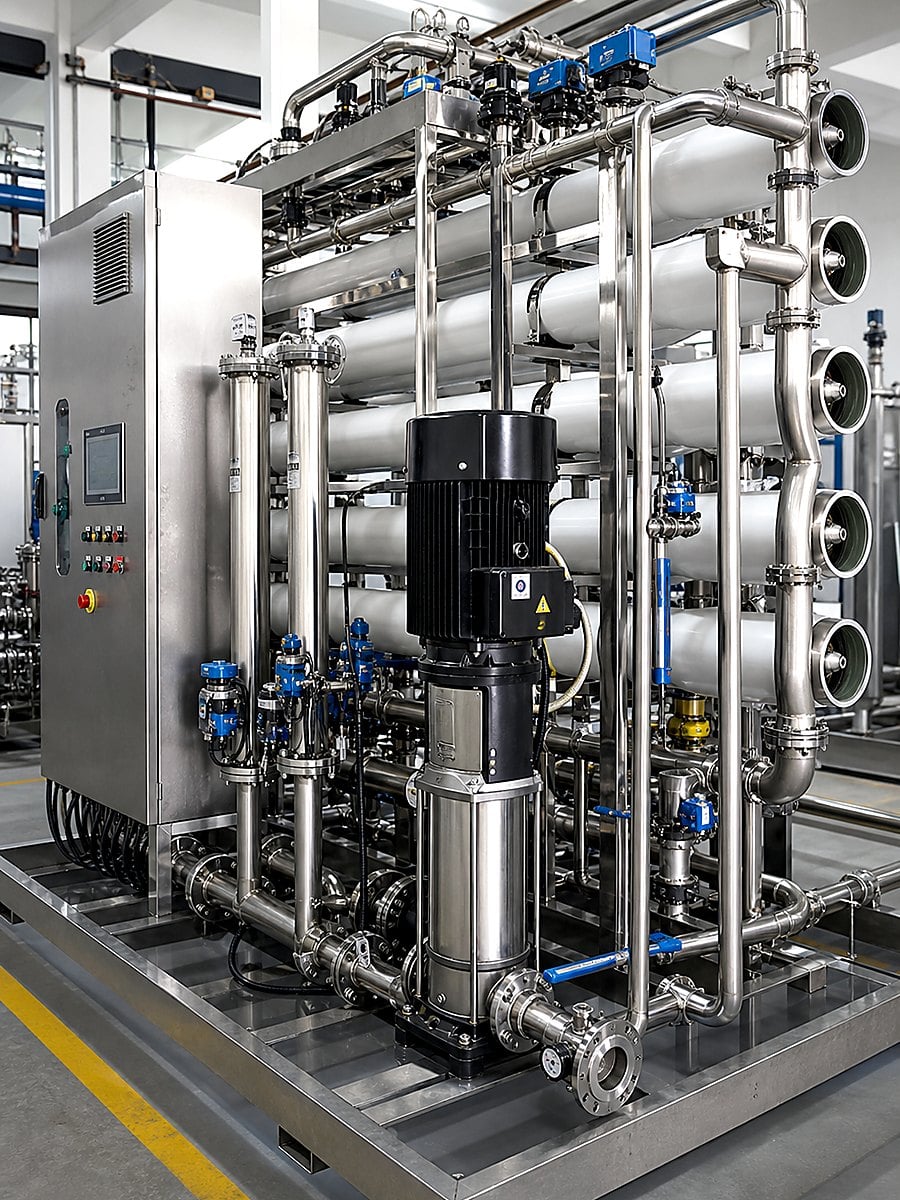
FIELD FAILURE ANALYSIS
It’s a gap in attention that causes system failure. Operators report an RO membrane failing within three months, the permeate TDS returning toward feed levels. The reason: the strong stainless frame housed a weak or fake RO membrane, resulting in poor salt rejection, shortened element life and runaway operating energy costs. Buy directly from a membrane manufacturer, and you get a published element datasheet, a traceable part number and standard test conditions so you can actually verify the performance claims.
Picture a tropical island resort going offline 65 TPD when their re-branded component element prematurely scaled. We build our membranes at our in-house Nantong facility to test and performance data under consistent conditions, meaning your MB-H1-8040 element specification is a product you can test to and source in three years from today. Ownership vs rental.
SYSTEM / SPECIFICATIONS
Why Your Seawater RO System Is Only as Good as Its Membrane
Reverse osmosis (RO) of seawater is a pressure-driven separation process. Sea water (approximately 35,000 ppm total dissolved solids) is pushed by a high-pressure pump across a semi-permeable reverse osmosis membrane that separates pure water from the salt. Everything else in the reverse osmosis system — the pre-treatment filter, high-pressure pump, frame and controller — serves a single purpose: protecting the reverse osmosis membrane and maximizing energy recovery.
Every one of our units uses the same underlying technology: seawater RO. Whether it’s our marine water maker system, our containerized seawater treatment plant or our portable RO units, we draw fresh water out of salt water and other high-salinity feed water by pushing it across a reverse osmosis membrane protected by a pre-filter. Our reverse osmosis desalination process works the same at scale; only the production rate, the seawater RO pressure, and the water recovery rate change.
The reverse osmosis sea water desalination principle scales from a small water reverse osmosis skid to a massive sea water desalination reverse osmosis plant. Here is the counter-intuitive part buyers miss: the RO membrane defines your ultimate permeate quality, yet it is the component buyers scrutinize least. They focus on brand-name pumps, frame steel and control software, while the critical element that sets your permeate TDS is treated as a commodity.
Ask us to identify and benchmark your membrane →Blue Membrane Seawater RO Systems, Three Deployment-Matched Product Lines
Most seawater desalination system vendors differentiate on size – small, commercial, industrial. Yet capacity is the wrong parameter to define survival. Bigger plant means not always lower energy use — the U.S. Department of Energy tracks how water-treatment energy varies widely by design — while vessel-mount systems present vastly different materials, power, and certifications than their land-based, containerized cousins.
At Blue Membrane, we segment by deployment context, because deployment drives material grade, power source, recovery set-point, and the certification required for your client.
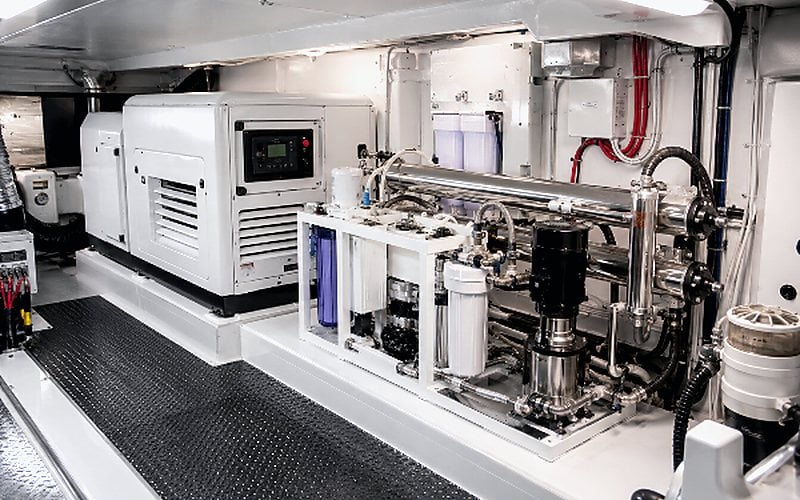
Line 1 · Vessel & Yacht
Marine Water Makers
- Compact seawater water makers for boats and yachts
- Corrosion-resistant build for continuous marine-grade duty
- Turns sea water into fresh drinking water on board
- Best for: sailboats · yachts · crew & passenger vessels
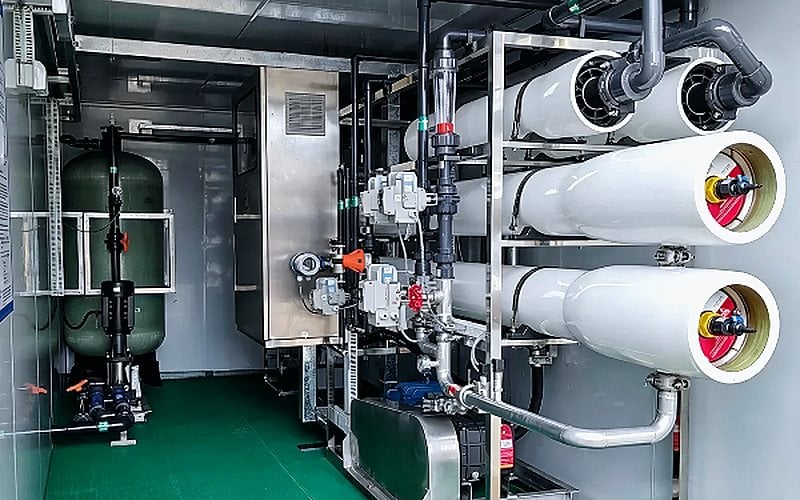
Line 2 · Land & Offshore
Containerized & Skid-Mounted SWRO
- 65 TPD 20-ft containerized RO desalination plant, plug-and-run
- 200 & 45 m³/day skid-mounted SWRO for FPSO topside
- Super duplex 2205 high-pressure piping; GB5749-2022 potable
- Best for: islands · resorts · offshore platforms · coastal industry
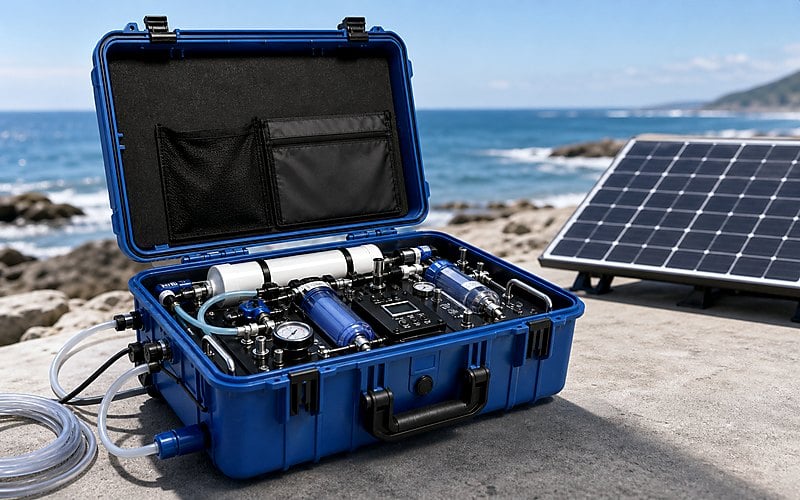
Line 3 · Off-Grid & Emergency
Portable Desalination Units
- Portable seawater desalination units for off-grid and remote sites
- Compact reverse osmosis for emergency and disaster-relief water
- Fast to deploy where no fixed water treatment exists
- Best for: remote camps · emergency response · off-grid supply
SWRO Deployment-Match Selector
Match seawater RO membranes to their intended application – not gallons per day. Use your project context – capacity, water intake type, concentrate discharge, power availability, required certification – to specify not only the correct system, but the ideal membrane series and regulatory path.
| Deployment context | Product line | Capacity band | Membrane series | Material / power | Certification path |
|---|---|---|---|---|---|
| Yacht / small vessel | Marine Water Maker | Low (on-board L/D) | H1 / H2 2540–4040 | Marine-grade, 12/24V or AC | Vessel-suitable |
| Crew / passenger ship | Marine Water Maker | Low–medium | H1 4040 | Marine-grade, AC | Vessel-suitable |
| Island hotel / resort | Containerized SWRO | 65 TPD (custom) | H1 8040 ×4 | Duplex 2205, AC 380V | GB5749-2022 potable |
| Coastal industry / process | Containerized SWRO | Custom TPD | H1 / H2 8040 | Duplex 2205, AC 380V | GB5749 / project spec |
| FPSO topside — process water | Skid-Mounted SWRO | 200 m³/day | H1 8040 | 690VAC marine, IP55 | BV Classification |
| FPSO topside — demin water | Skid-Mounted SWRO (2-stage) | 45 + 5 m³/day | H1 + polishing | 690VAC marine, IP55 | BV Classification |
| Offshore platform emergency | Skid / Portable | Low–medium | H1 4040 / 8040 | Marine-grade | Project spec |
| Remote camp / off-grid | Portable Desalination | Low | H1 2540 / 4040 | Compact, DC/AC | Application-based |
| Disaster / humanitarian relief | Portable Desalination | Low | H1 2540 | Compact, portable power | Application-based |
| High-salinity feed (>35,000 ppm) | Containerized / Skid | Custom | H1 (max rejection) | Duplex 2205 | Project spec |
These application-based distinctions establish your material and power boundaries. Which membrane is fitted inside that vessel will ultimately determine water quality and operating energy costs.
Unsure which line fits your site?
Get a free capacity sizing estimate →
The Membrane Behind the System, H1 & H2 SWRO Elements
Buyers will often choose what they perceive as the “highest rejection” membrane without fully assessing the application need. As membrane forum contributors frequently note, high salt rejection doesn’t automatically mean a better element; these membranes usually operate at a higher pressure and cost of energy — a fouling-resistance and rejection trade-off reflected in industry patents such as USPTO US10519326B2. The choice is often between maximum pure permeate water or the minimum energy use per unit of product water – that’s precisely why we make two seawater desalination membrane series instead of just one.
H1 vs H2, the honest trade-off
Coastal feed water fouls membranes, and municipal drinking water requires predictable output for decades. High-salinity feed increases fouling potential due to debris accumulating on short, broad membrane leaf surfaces. H1 and H2 series elements employ short leaf design and an engineered feed channel that minimizes fouling, thereby prolonging the time between cleaning cycles. H1 is rated for 99.8% stable rejection (99.7% min) at 32,000 ppm NaCl, 800 psi; in comparison, H2 achieves this with a minor reduction in rejection performance and a boost in permeate flow and lower energy consumption by up to 20%.
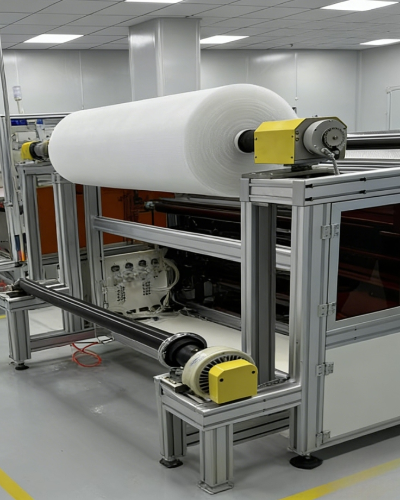
| Model | Stable rejection | Permeate flow (8040) | Best for | Compatible with |
|---|---|---|---|---|
| MB-H1-8040 | 99.8% (99.7 min) | 7,500 GPD / 28.4 m³/d | Max rejection, high salinity | DuPont SW30HRLE-400 / SW30XLE-400 |
| MB-H1-4040 | 99.8% | 1,600 GPD / 6.1 m³/d | Compact / marine skids | DuPont SW30XLE-400 |
| MB-H2-8040 | 99.7% (99.6 min) | 9,000 GPD / 34.0 m³/d | Energy-efficient, higher flow | Standard 8040 vessels |
| MB-H2-4040 | 99.7% | 1,900 GPD / 7.2 m³/d | Energy-efficient compact | Standard 4040 vessels |
Both series support a maximum operating pressure of 1,200 psi, a continuous pH operating range from 3 to 10, and a 34-mil feed spacer. These standard 8-inch by 40-inch elements use the same test basis as DuPont’s FilmTec SW30HRLE-400: 32,000 ppm NaCl, 800 psi, and 25C. They fit existing 8040 housings and are listed in our datasheet as a drop-in replacement for both the SW30HRLE-400 and the SW30XLE-400.
⟲ Click to Reveal Market Insights
INDUSTRY REALITY
There’s a second benefit that comes with a traceable, manufactured element. In the competitive RO membrane business, there’s one membrane that has become the “copy” standard for everyone else-including some unauthorized counterfeit membranes that now circulate the market.
A real manufacturer with a model number and a published datasheet isn’t a commodity you can bet the house on. It’s a specification that can be audited. You can tell the direction the SWRO membrane market is headed by looking at patent filings like this one for antifouling, chlorine-resistant membrane coatings. And, we’re building both our feed-channel design and leaf design with this same direction toward improved fouling resistance.
“We test under the exact same parameters that the reference seawater element uses – 32,000 ppm NaCl at 800 psi – so an engineer can compare their H1 to their existing membrane, put both on a spreadsheet and look them line by line. You cannot test a membrane that you are not testing in blind faith.
Manufactured Membranes vs Assembled Systems, What Actually Changes
Nearly every seawater RO system in the market today – and most of the ones that ranked above this – are built with membranes sourced from third-party suppliers. Nothing wrong with that; but when you purchase that way, there are some things you can and can’t verify. A membrane sets your water quality, but only its maker can hand you a benchmarkable datasheet; independent references such as NOAA tell you the feed, not what element sits inside the frame. Here’s how to see the difference, without calling out anyone by name.
SYSTEM INTELLIGENCE [ CLICK TO REVEAL ]
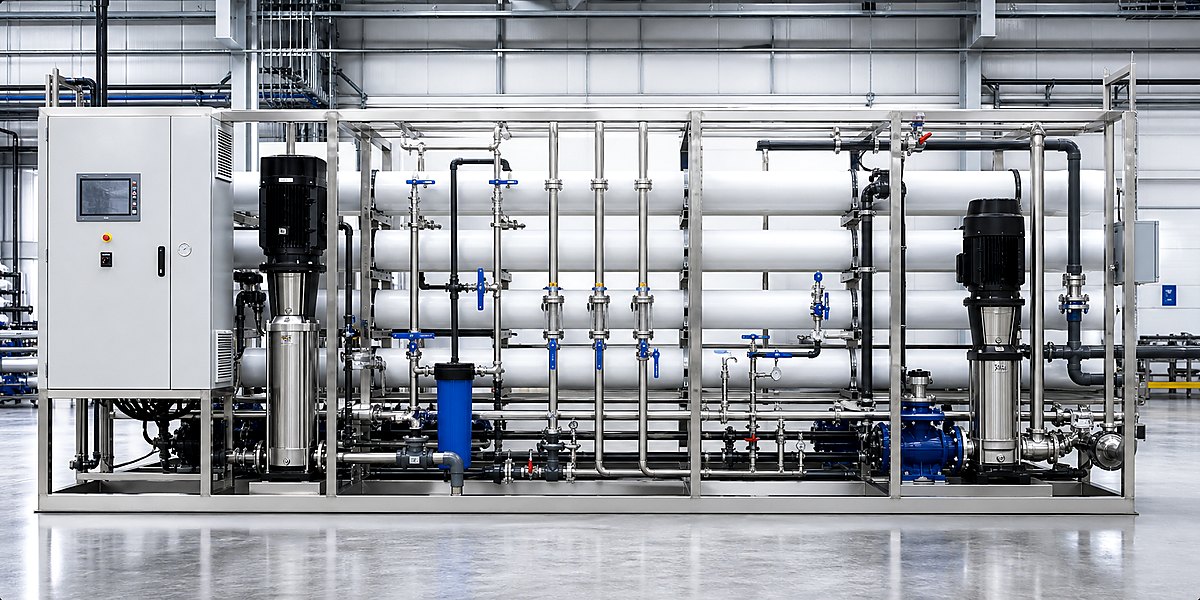
SCENARIO ANALYSIS
Picture a coastal bottling plant whose permeate TDS drifts out of spec four months into operation. With an assembled system, the OEM who supplied the frame and housing blames the membrane, the reseller who sold the membrane blames the installation, and the buyer loses money on downtime. When it is our H1 or H2 element paired with an SWRO system built in the same Nantong plant, the buyer avoids that buck-passing, because there is one datasheet, one manufacturer, and one name to call for both.
PURCHASING IMPACT
To the purchasing manager, that traceability is the secret power. Instead of a framer/assembler referring you to a third party for a spare part, you get one from us. Instead of an assembled system having its membrane quietly substituted for a knock-off, your spare carries the same model number printed at the factory.
SPECIFICATIONS COMPARISON MATRIX
| Dimension | Assembled system (buys membranes) | Blue Membrane (makes membranes) |
|---|---|---|
| Membrane source | Purchased, re-branded or generic | Manufactured in-house (H1 / H2 elements) |
| Published datasheet | Often the third party’s, or none on the hub | Per-model datasheet with test conditions |
| Accountability | Split: system builder vs membrane maker | Single source for membrane + system |
| Price stacking | Membrane markup + system markup | No intermediary membrane markup |
| Re-element / spares | Depends on third-party availability | Direct from the element manufacturer |
| Counterfeit exposure | Commodity elements can be faked | Traceable model number, factory origin |
SYSTEM SPECIFICATIONS
Engineering That Survives Seawater, Materials, Energy & Recovery
Seawater is a nasty, corrosive fluid and the high pressure circuit in an SWRO operates at around 5.5 MPa; normal stainless fails fast at welds and fitting ends. On an offshore installation, a leaking joint is more than just inconvenient, it’s a production shutdown. On our skid-mounted and containerized SWRO systems, we run 2205 super duplex stainless in the high pressure pipeline and high pressure pumps made of SUS316L. The containerized units even go through factory commissioning in our Nantong plant before shipping, minimizing field work to connecting the input and output lines. That same corrosion-conscious engineering philosophy goes into our brackish water RO builds.
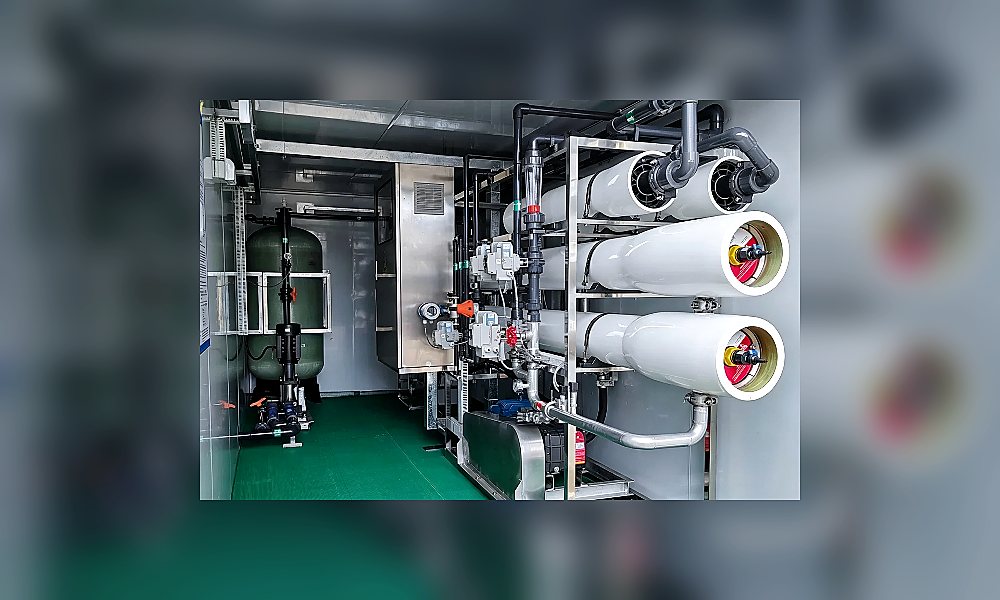
Energy & recovery, the honest numbers
Modern seawater reverse osmosis with an energy recovery device typically runs in the range of 3–4 kWh per m³ of permeate, with the most efficient plants reported below 2.5 kWh/m³ and older designs well over 6 kWh/m³. A full packaged plant draws more than the bare membrane’s specific energy because it also powers pretreatment, dosing, instrumentation, and controls, our 65 TPD container is rated at 17.2 kW at a 35% recovery rate, and the 200 m³/day marine skid at ≈74 kW. We quote whole-system power, not a membrane-only figure, so your operating budget is real.
3-4 kWh/m³
Typical Energy Use
17.2 kW
65 TPD System Rating
26-35 %
Operational Recovery
Recovery is a design spec, not a bragging point. Our seawater RO systems run between 26 and 35% recovery, so 65-74% of the water ends up in concentrated brine. The brine is a first order engineering issue – your concentrate discharge must match site hydrogeology, flows, salinities, and local discharge regulations; discharge costs haven’t declined as fast as membrane costs have. Our systems ship with the concentrate discharge and pretreatment to meet your site conditions; it’s your job to secure the permits for that discharge, and we specify the plant based on whether your intake is open or a beach well, as this affects pretreatment load and fouling potential.
All of our plants ship with systems that continuously measure feed water salinity and quality, as well as the permeate conductivity. this allows the operator to see when something is wrong before the product water go out of specification. For commercial water suppliers – a hotel on an island or a coastal town protecting its fresh water resources – that’s exactly how to make water supplies reliable, and how to ensure pure water across varying conditions, not just at the nominal rating point.
SYSTEM SPECIFICATIONS
Certifications & Compliance
There's no greater risk in the procurement process than a vendor that make a certification claim that can't be proven when reviewed. That risk becomes yours the moment you approve the false claim. Trust in seawater RO is established at the component level and at the system level, and these aren't equivalent. A certified membrane doesn’t guarantee a certified system in practice, but unlike those who over-state their paperwork, Blue Membrane will never claim a system level certification it can't prove and provides evidence for each mark shown below.
-
01
BV Class
Bureau Veritas classification on FPSO skid builds
-
02
GB5749-2022
Container product water to China potable standard
-
03
H1 / H2 Datasheets
Per-model membrane test data, published
-
04
NSF/ANSI 58
The system-level RO reference framework
-
05
Material Declaration
Asbestos-free & supplier conformity docs
Some suppliers over-claim the certifications they hold; in reality, official standards bodies — from NSF/ANSI to the U.S. EPA Safe Drinking Water Act framework — measure system-level performance. NSF/ANSI 58 covers structural integrity, material safety, TDS reduction, and recovery — not rejection of specific ions. What we supply are per-model membrane datasheets, Bureau Veritas-classified marine skids, and GB5749-2022-compliant container water. Full system-level potable certification depends on the final integrated build and the site, and Blue Membrane will not claim a certification it has not earned.
Need the paperwork for a tender?
Request full compliance documentation
PROCUREMENT & SPECIFICATION
Procurement Guide, Sizing, Lead Time, OEM & After-Sales
Where is it that buyers actually lose money on a seawater desalination plant? Not on the sticker price - on a poorly matched plant size, on membranes you can't replace, or on hard feed that kills membrane life. As an operator told me, even new membranes have a significantly reduced life with a hard and improperly pre-treated feed. Here's how to avoid these three.
OEM & Manufacturing Capability
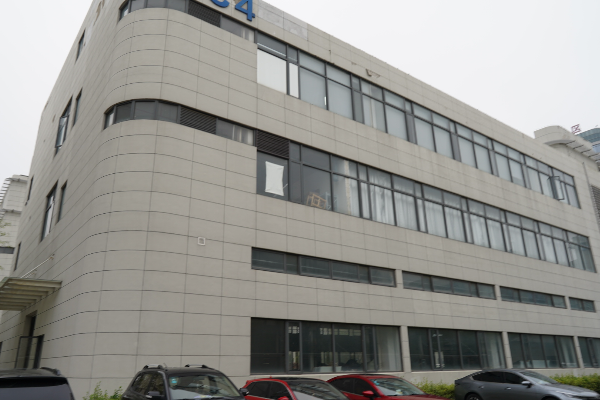
Blue Membrane works directly with system integrators, OEM partners, and distributors, so the membrane inside stays available for re-elementing straight from the manufacturer — no hunt for an obsolete third-party part. Because our Nantong plant makes the full element range — seawater H1/H2, brackish, low-pressure, and nanofiltration — we match the membrane to your feed chemistry instead of forcing a stock catalog part. Unlike an assembler quoting one fixed model, we scale a seawater ro system price to your capacity, membrane series, material grade, and certification path. Whether you are scoping a seawater ro system project for a tropical island hotel or the deck of an FPSO, ask for a capacity-based quote and a lead-time estimate. Many buyers who start by searching "seawater ro system for sale" land on assemblers who cannot name the membrane inside the plant; here you can.
How to size and specify
Inputs needed: Daily fresh water requirement, feed water salinity (32,000-35,690 ppm in our FPSO applications) and the output requirement (potable, <500 mg/L or demineralized, <5 ppm in our two-stage skid system). These determine plant capacity, the required membrane series (H1 for high rejection, H2 for lower energy use), the water recovery rate and the grade of materials used. Larger capacities above the standard 65 TPD in our containers can be customized on request.
Ready to scope your plant?
Get a free capacity sizing estimate
ENGINEERING RESOURCES
System Engineering & Sizing Tools
TOOL 01
SWRO Capacity & Line Selector
Configure system capacity and evaluate suitable product lines based on deployment inputs.
TOOL 02
SWRO Energy & Operating-Cost Estimator
Estimate power requirements, specific energy consumption, and operational budgets.
TOOL 03
Membrane Drop-In Compatibility Checker
Verify dimensional and functional equivalence for membrane element replacement.
SYSTEM SPECIFICATION & QUOTE
Match a Seawater RO System to Your Deployment
State your fresh water needs, feed salinity, and application - boat, onshore, off-grid - and our engineers will select a membrane series, system line, and certification route to quote against your requirements.
ACTION
PROCUREMENT
Request a Quote
TECHNICAL RESOURCES
Seawater RO Systems FAQ
01
Which seawater RO system do I need — marine, containerized, or portable?
Match it to deployment context. Choose a marine water maker — a compact desalination system for boat and yacht supply — for on-board vessel use, a containerized or skid-mounted SWRO plant for islands, resorts, offshore platforms, and coastal industry, and a portable desalination unit for off-grid or emergency use. The Deployment-Match Selector above maps each context to a product line, membrane series, and certification path. If you are unsure, send us your daily fresh-water demand, feed salinity, and site type, and our engineers will map it to the right line, membrane series, and certification before you commit to anything.
03
What salt rejection and recovery rate do your seawater RO systems achieve?
H1 membranes hold 99.8% stable salt rejection and H2 hold 99.7%. Packaged systems run 26–35% recovery depending on feed salinity and configuration — for example 35% on the 65 TPD container and 33% on the 200 m³/day FPSO skid.
05
How much energy does a seawater RO system use?
A modern SWRO plant with energy recovery typically uses roughly 3–4 kWh per m³ of permeate — below 2.5 in the most efficient plants — while older systems exceed 6 kWh/m³. Whole-plant figures are higher than the membrane's specific energy because they include pretreatment, dosing, and controls — our 65 TPD container is rated at 17.2 kW.
07
Can you customize or OEM seawater desalination systems?
Yes. We build custom capacities beyond the standard 65 TPD container, including two-stage skids delivering both potable and demineralized water.
02
Can Blue Membrane's SWRO membranes replace DuPont or Hydranautics elements?
Yes. The MB-H1-8040 is tested to the same standard conditions (32,000 ppm NaCl, 800 psi, 25°C) as a DuPont FilmTec SW30HRLE-400 and is dimensionally a standard 8040 element, so it drops into an existing pressure vessel without redesign. Send us your current element model and we will confirm the swap.
04
Is a higher salt rejection membrane always better?
No — a higher rejection membrane is not always the right call, because higher rejection usually costs more energy. H1 maximizes rejection for high-salinity or strict potable targets; H2 gives up a fraction of rejection for up to 20% more permeate flow and lower operating energy. The right choice depends on whether purity or energy cost matters most for your site.
06
What happens to the brine (concentrate)?
At 26–35% recovery, most of the feed leaves as concentrated brine. Our systems include the concentrate outlet and pretreatment your site needs, but safe discharge depends on local hydrogeology and regulation and remains the site owner's responsibility. We scope the plant to your intake type and discharge plan.
08
What certifications do your seawater desalination systems carry?
FPSO skid builds carry Bureau Veritas classification, container product water meets GB5749-2022, and every membrane ships with a per-model datasheet. NSF/ANSI 58 is the system-level RO reference framework; full system potable certification depends on the final integrated build and site.
Trending now