Get in touch with Blue Membrane Company

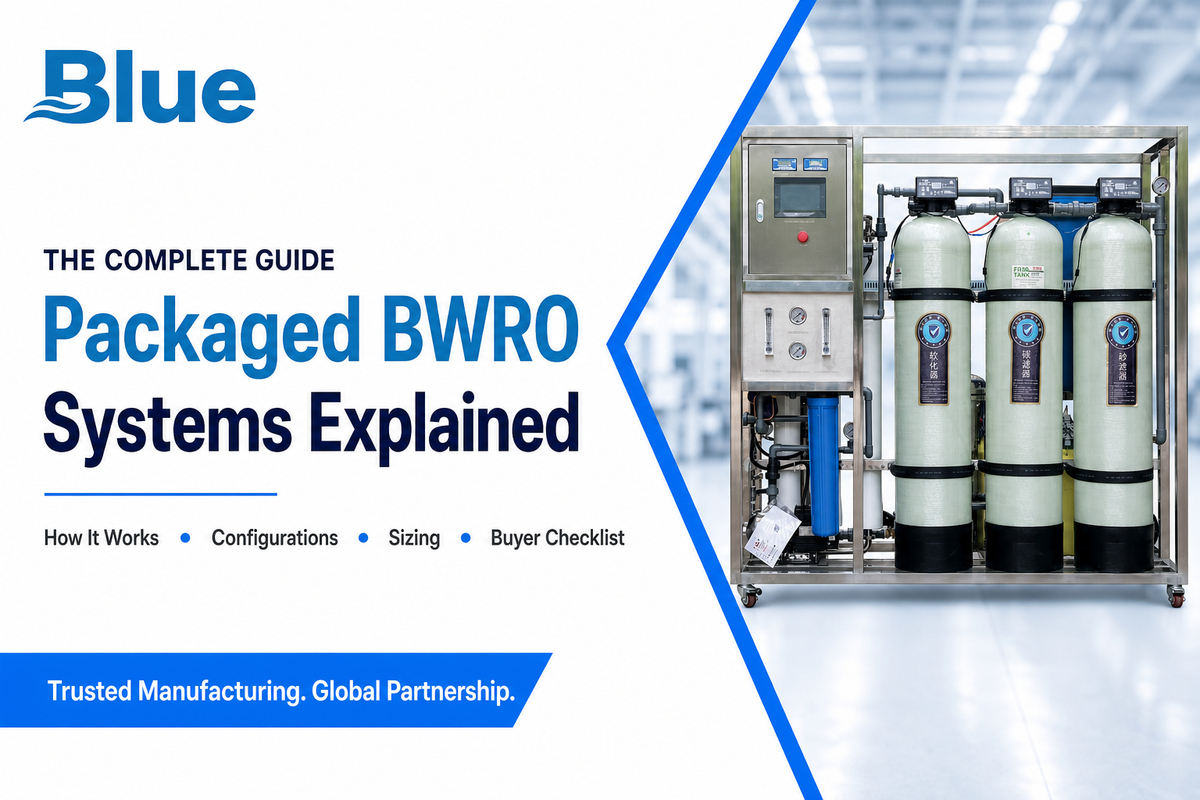
Packaged BWRO systems are factory-built, skid-mounted brackish water reverse osmosis units, and picking the right one starts with understanding what “packaged” actually means before comparing spec sheets. This guide walks through how brackish water reverse osmosis works, where it fits against seawater RO, nanofiltration, ion exchange, and electrodialysis, and what to check before signing a purchase order.
Packaged BWRO systems are factory-assembled, skid-mounted brackish water reverse osmosis units that combine pretreatment, a high-pressure pump, membrane elements, and controls on one frame. They typically treat 1,000-10,000 mg/L TDS feedwater at an estimated 50-75% recovery and 150-250 psi operating pressure, using a reverse osmosis membrane train sized to the feed’s total dissolved solids.
Key Takeaways
- Higher recovery or rejection isn’t automatically better – pushing past your feedwater’s scaling limit causes more downtime, not less.
- A packaged system is a factory-tested unit, distinct from a custom-built plant or a bare membrane purchase.
- Concentrate/brine disposal permitting can limit feasibility more than the RO technology itself, especially at inland sites.
- Typical range: 1-500+ TPD capacity, 50-75% recovery, 150-250 psi operating pressure.
Quick Specs
| Feed water TDS | 1,000-10,000 mg/L |
| Operating pressure | 150-250 psi |
| Recovery rate | 50-75% |
| Salt rejection | 98-99.7% |
| Specific energy use | ~1-1.5 kWh/m³ |
| Common build formats | Integrated skid, split system, containerized, modular |
What a Packaged BWRO System Is (and Isn’t)
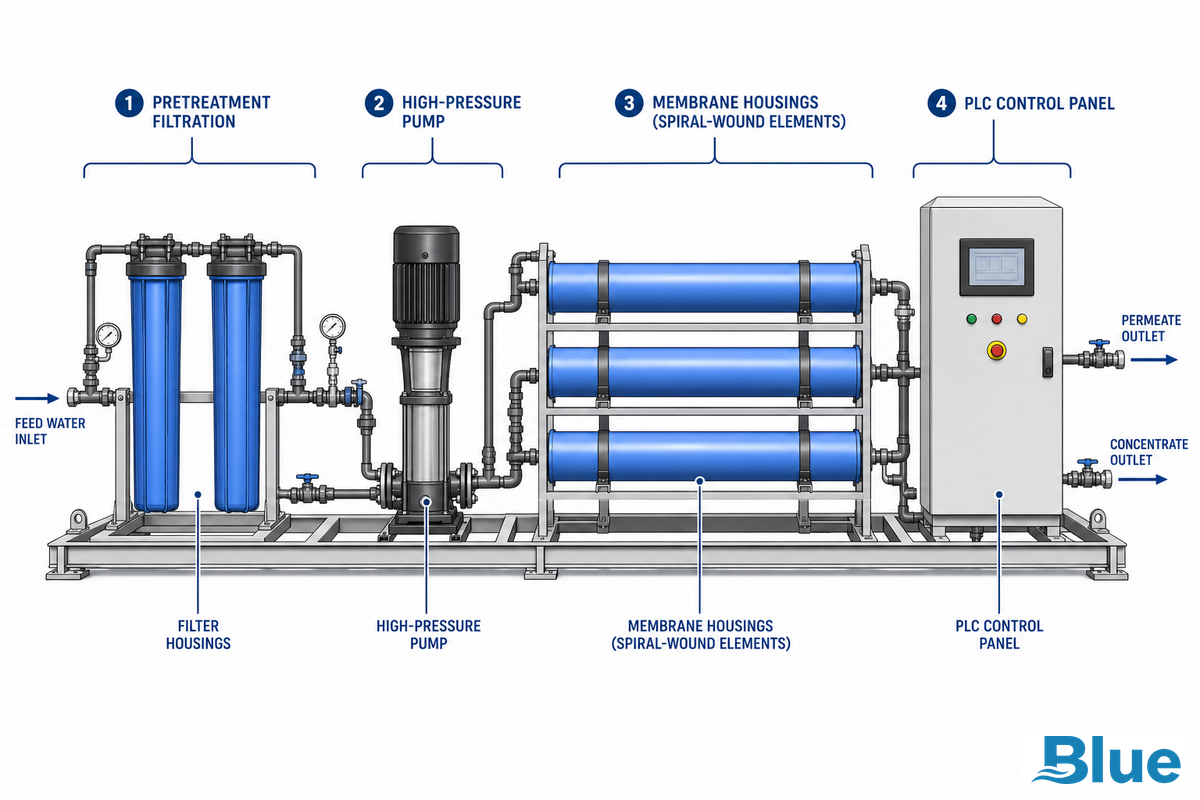
A packaged BWRO system is a factory-assembled brackish water reverse osmosis train, pretreatment, high-pressure pump, membrane housings, and controls, built and tested as one unit before shipment. It differs from buying bare membrane elements alone or contracting a fully custom-engineered plant built from scratch on site.
A packaged BWRO system is the complete brackish water reverse osmosis train – pretreatment filtration, high-pressure pump, membrane housings filled with spiral-wound elements, and a control panel – fully assembled and factory tested before it ever ships. That sets it apart from two other routes buyers sometimes confuse it with. Ordering bare membrane elements leaves you (or a contractor) responsible for the pumps, piping, controls, and construction. At the other extreme, a fully custom-engineered plant has an engineering firm design a unique system for a specific site – typical for larger-than-standard municipal or industrial capacity – and isn’t a packaged unit at all. A packaged system sits in between: a shorter lead time from order to operating water since it arrives pre-plumbed, without the cost and complexity of full custom engineering. The costliest mistake buyers make at this stage is guessing wrong on scale – paying for a fully custom-engineered plant when a standard packaged unit would have covered the job, or the reverse, undersizing a packaged unit for a load that actually needs custom engineering. Manufacturers who build across the full range, like Blue Membrane, size a project against real capacity data rather than pushing it into the wrong category by default.
So, where’s the dividing line in practice? Capacity and site complexity are what settle it. Packaged, skid-mounted-like units are generally rated for between 1 and 500 TPD (or the GPD/m-day equivalent for whatever form they take); beyond that (or if you need a totally unique plant design), then you enter the custom engineered domain. To see Blue Membrane’s own product range of brackish water RO units across that range, take a look at our brackish water RO systems category page.
How Brackish Water Reverse Osmosis Actually Works
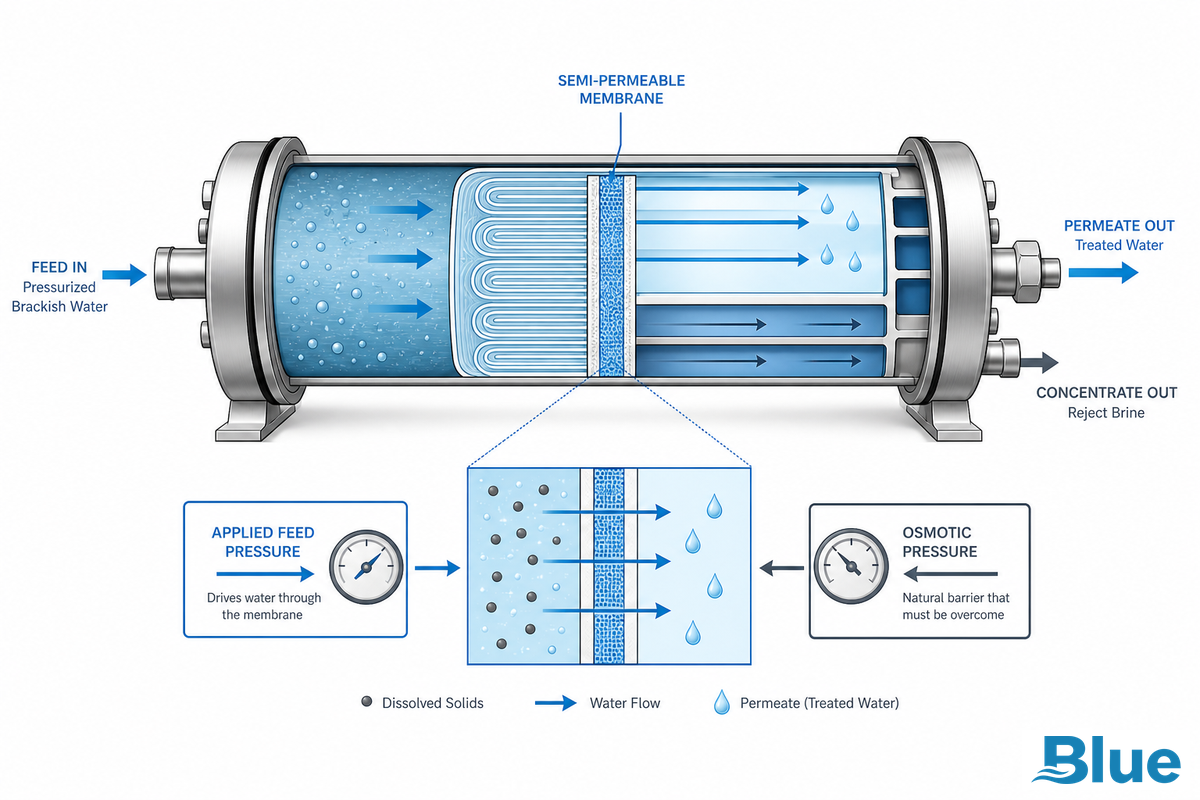
Brackish water is intermediate on the salinity scale, generally between fresh water and salt water, typically 1,000-10,000 mg/L total dissolved solids, usually taken from inland wells, groundwater or industrial discharge. Reverse osmosis pushes the water through a semi-permeable membrane with a pressure greater than the natural osmotic pressure of the water in order to force water molecules through while rejecting dissolved salts to a concentrate stream.
As a general engineering rule of thumb, osmotic pressure can be estimated as 0.01 psi/mg/L TDS for a predominantly sodium-chloride feed (the precise value vary based on ion composition and temperature, so this should only be considered an estimate and not a design specification). So for a brackish 5,000 mg/L feed, the osmotic pressure would be about 50 psi. Residential whole-house RO units (designed to handle typical tap water pressure of about 40-80 psi) will have virtually no excess pressure to force the permeate through the membrane once it passes that 50 psi barrier, and this is why brackish desalination requires a specific high-pressure pump unit that’s capable of delivering 150-250 psi-enough to pass the feed’s osmotic pressure and still leave a sufficient net differential for meaningful flux and a margin against scaling.
📐 Engineering Note
Let’s work an example: a 5,000 mg/L feed will have an osmotic pressure estimated as: 5,000 mg/L × 0.01 psi/mg/L = 50 psi. Assuming an operating pressure of 200 psi for the system, the available net driving pressure (after overcoming the osmotic pressure barrier) would be approximately 150 psi-this is the pressure margin that actually determines flux and recovery, not just the applied feed pressure. Based on the literature concerning peer-reviewed modeling research in reverse-osmosis, recoverable fraction isn’t only determined by TDS, but also by precipitation dynamics based on the specific ion chemistry of the feed. A feed high in silica or calcium sulfate may be unable to be recovered beyond a certain point well before TDS-based limits are reached (Di Pasquale et al., 2023).
Protecting this pressure differential is what the role of pretreatment is: removal of sediment, the addition of antiscalant dosing and sometimes softening are essential in keeping particles and scale-forming ions out of the system before they can contact the membrane, because membrane fouling is more expensive to repair than prevent. If fouling or silica scaling begins, standard a silt density index (SDI) test at startup helps flag concentration polarization and fouling risk early, and clean-in-place (CIP) maintenance cycles are the recommended ongoing practice where chemical cleaning solutions are pumped through the membrane housings (without actually removing the elements) and this frequency of cip maintenance cycles is one of the clearest indicators as to how well the pretreatment system is operating.
Brackish RO vs. Seawater RO vs. Nanofiltration vs. Ion Exchange vs. EDR, Where BWRO Fits
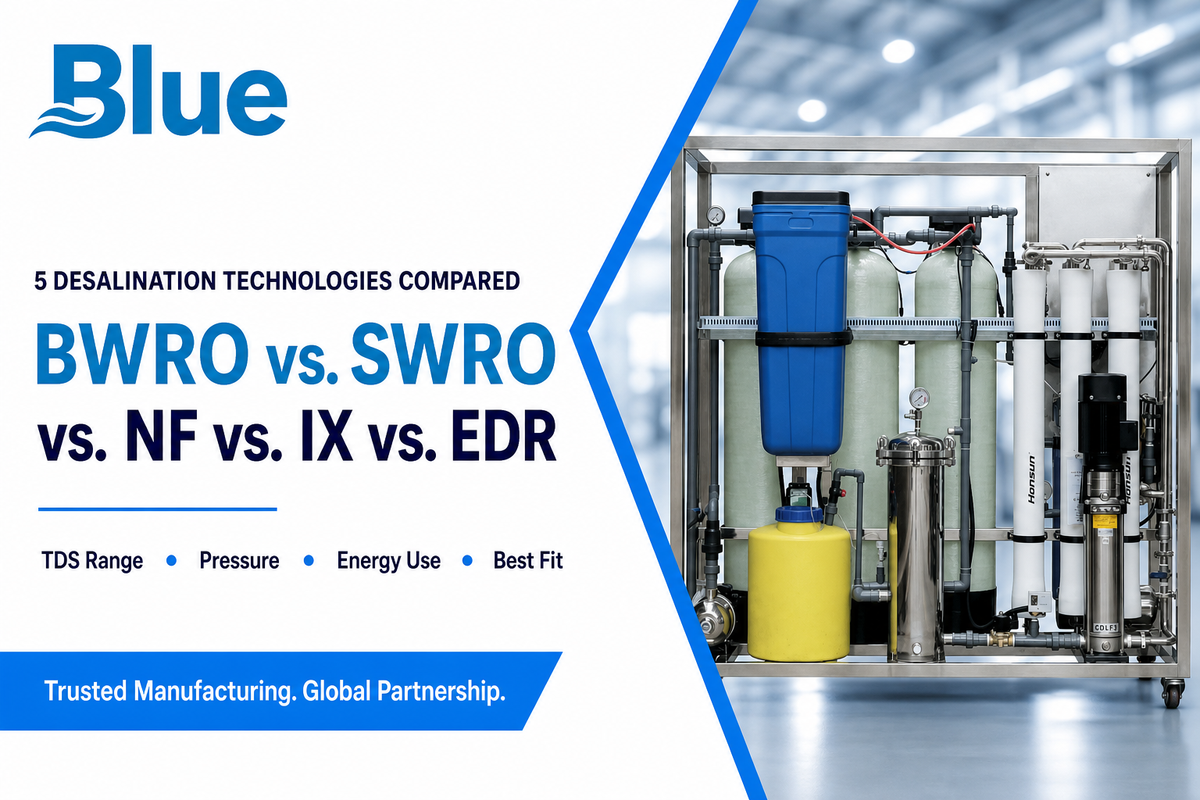
Of the five membrane and ion-exchange based desalination technologies generally discussed for treating saline water, the appropriate choice for a particular application depend on how saline the feed water is, not brand popularity or perceived “best practice.”
| Technology | Typical TDS Range | Operating Pressure | Energy Use | Best-Fit Case |
|---|---|---|---|---|
| BWRO – low-TDS band | 1,000-3,000 mg/L | 150-200 psi | ~1 kWh/m³ | Well water, light industrial process water |
| BWRO – high-TDS band | 3,000-10,000 mg/L | 200-250 psi | ~1.3-1.5 kWh/m³ | Inland groundwater, industrial effluent |
| SWRO – standard | 30,000-45,000 mg/L | 800-900 psi | 3-4 kWh/m³ | Coastal/marine feed, no ERD |
| SWRO – ERD-equipped | 30,000-45,000 mg/L | 900-1,000+ psi | 3-3.5 kWh/m³ | Coastal/marine feed, energy-optimized |
| NF – loose | <2,500 mg/L | 70-100 psi | ~30% less than RO | Higher flux, moderate divalent-ion removal |
| NF – tight | <2,500 mg/L | 100-150 psi | ~40% less than RO | Lower flux, higher divalent-ion rejection |
| IX – softening duty | <1,000 mg/L bulk | Low (gravity/pump-fed) | Low, resin regeneration rises with TDS | Calcium/magnesium removal at modest TDS |
| IX – polishing duty | Any TDS, post-RO | Low (gravity/pump-fed) | Low at ultrapure post-RO loads | Ultrapure-water polishing after RO/ED |
| Electrodialysis / electrodialysis reversal (ED/EDR) | ≤3,000 mg/L | Low-moderate (electrical) | Comparable to RO at low TDS | Low-salinity brackish feeds, high-recovery targets |
Where the research has clearest crossover between them is in a solid, scientific comparison on energy efficiency that found electrodialysis best at salinity under 3000 mg/L, reverse osmosis above 5000 mg/L – a mid-zone where either could be suitable depending on the site (Patel, ACS ES&T Engineering, 2021). An accompanying 2024 economic analysis on the same topic reaches a similar conclusion from the cost perspective, where electrodialysis proved less expensive than RO at salinity 3000 mg/L or lower (Patel et al., 2024). From the other end of the spectrum, a Federal assessment of desalination technologies indicates that ion exchange (IX) is almost never used to remove the vast bulk of salts at scale, since regeneration rates skyrocket with dissolved-solids content (Congressional Research Service, R40477). However, IX retains its distinct purpose as a final polishing stage to achieve ultrapure-water quality on the other side of an RO system – in that capacity, it works as a complement to BWRO, not as a competitor.
Is Ion Exchange Cheaper Than BWRO for Water Softening?
Only at low TDS. Ion exchange stays competitive as a softener up to a few thousand mg/L, but resin-regeneration cost rises quickly above that, and membrane processes such as BWRO or ED typically win on total cost of ownership beyond roughly 3,000 mg/L.
View Answer
Only for low concentrations. IX operating cost is largely determined by how often the resin needs regenerating. That frequency escalates rapidly as dissolved-solids levels increase, so IX remains competitive as a softener at moderate TDS but quickly falls out of favor as TDS climbs above the low thousands of mg/L. Beyond around 3,000 mg/L TDS, membrane-based processes such as BWRO or ED generally prevail in total cost of ownership compared to IX, according to peer-reviewed analyses of the two approaches. (Although as mentioned above, IX can still serve a unique niche in a BWRO system as a pretreatment softening process or a post-RO polishing process for ultra-pure applications.)
✔ Advantages of Packaged BWRO
- Factory-tested before shipment, shorter site commissioning window
- Far lower energy use than seawater RO for the same volume (~1-1.5 vs. 3-5 kWh/m³).
- Modular, can add trains as demand grows
- Mature, well-documented technology base (decades of installed capacity)
⚠ Limitations
- Output limited by feedstock scaling potential rather than any predetermined ratio.
- Produces a concentrate/brine stream that requires a disposal plan
- Pretreatment quality directly determines membrane life – cutting corners here is the most common source of downstream problems.
- May not be the most cost-effective option below 1000-3000 mg/L TDS (at which point IX or ED might be more economical).
Packaged, Skid-Mounted, and Containerized, Comparing BWRO Configurations
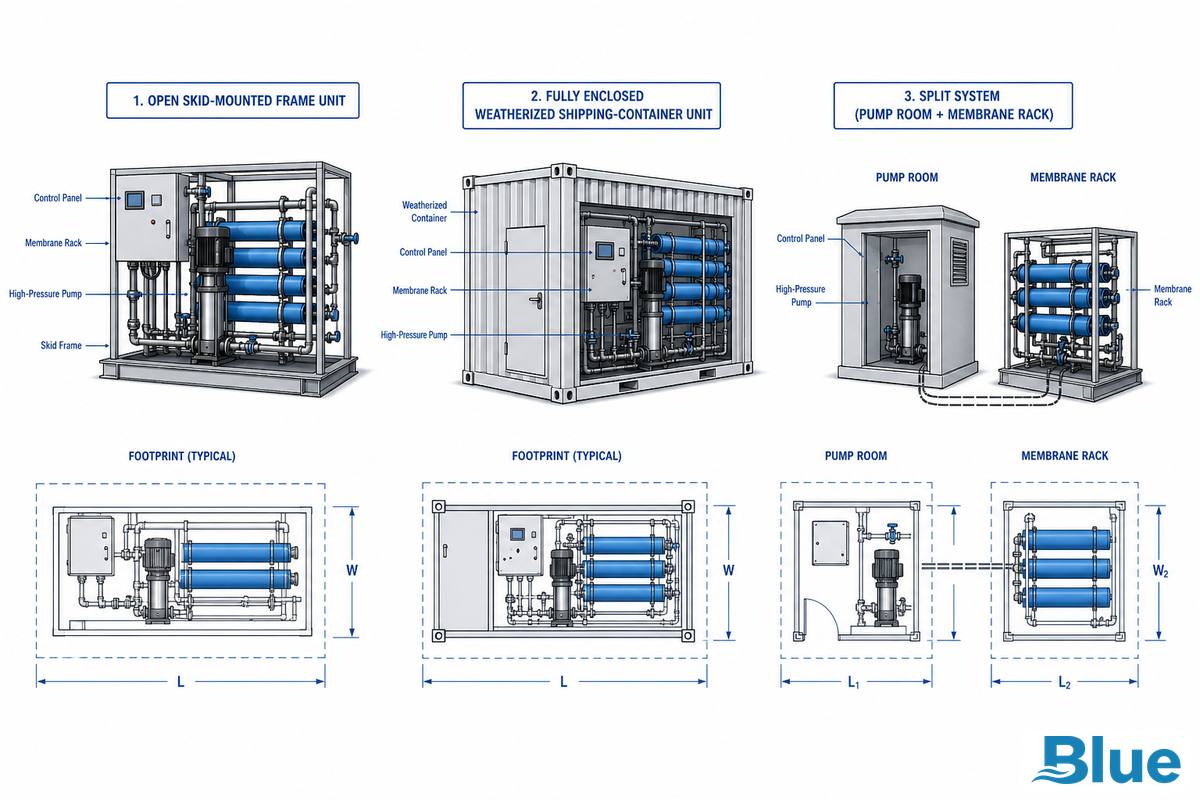
Manufacturers generally classify packaged BWRO units into a small number of physical configurations; the selection between them depends more on the physical site than the technical capabilities-the underlying membrane train and PLC control layer stay roughly similar across different formats, and it’s merely the skid, piping, and enclosure that are customized for a specific site. The common mistake here is picking the smallest configuration that fits today’s flow target: an industrial buyer who chooses a single integrated skid for a site that will double capacity within two years is trading a small up-front saving for a much more expensive re-engineering job later, instead of a straightforward added train.
| Configuration Type | Typical Capacity | Best Fit | Site Notes |
|---|---|---|---|
| Integrated skid – compact | 1-25 TPD | Small inland community, small commercial | Single hookup, smallest footprint |
| Integrated skid – standard | 25-50 TPD | Larger inland community, commercial | Single hookup, compact footprint |
| Split system – small | 50-100 TPD | Facility with dedicated pump room | Pump and membrane rack separated |
| Split system – large | 100-200 TPD | Larger facility, dedicated pump room | Pump and membrane rack separated |
| Skid-mounted – mid-capacity | 50-150 TPD | Industrial process water | Pre-plumbed, single-lift install |
| Skid-mounted – high-capacity | 150-300 TPD | Larger industrial process water | Pre-plumbed, multi-lift install |
| Containerized – single unit | 100-300 TPD | Remote sites, rapid deployment | Weatherized, drop-and-run |
| Containerized – paired units | 300-500 TPD | Remote sites, larger rapid deployment | Weatherized, drop-and-run, dual container |
| Modular (parallel trains) | 200-500+ TPD | Municipal or expandable industrial | Add trains for future demand growth |
After your site constraints are matched to one of these types, you need to compare individual capacity and configuration options from the manufacturer. The packaged BWRO systems range of Blue Membrane spans 1-500 TPD across five build formats that come pre-installed on a skid and include high-pressure wetted parts made of SS316L.
Sizing Your System, A Worked TDS-to-Recovery Walkthrough
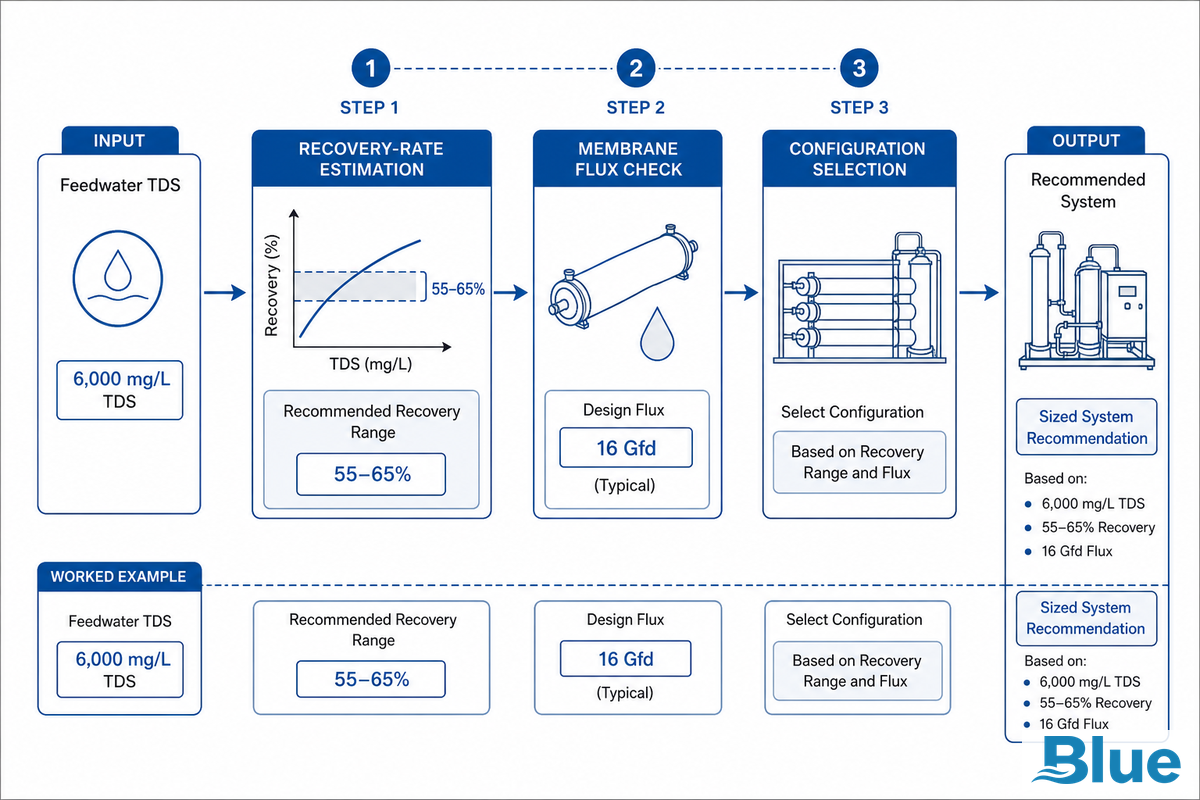
capacity is a size variable where the majority of customers make errors; the quickest way to demonstrate how the pieces fit together is to illustrate it with an example, rather than use a static lookup table.
Suppose your well report shows 6,000 mg/L TDS. Your expected starting recovery for that range, according to general consensus among engineering professionals, is in the vicinity of 55-65% – not 75%+, which you could achieve with a lower-TDS feed. One practitioner put the underlying logic plainly.
“We try to design at 75-80% recovery for brackish feed, but that really depends on the scaling potential of the feed water.”
With 6,000 mg/L TDS, the silica and/or calcium sulfate concentrations in the contracting concentrate stream will reach their saturation points faster than with, say, 2,000 mg/L. Brackish RO typically runs at a flux of around 16 gallons per square foot per day (Gfd); if you undersize your membrane area in an attempt to achieve a certain flow at that flux, and fail to account for the lower recovery that your TDS warrants, you’ll likely find yourself needing an unplanned second stage.
What TDS Level Requires a Second RO Pass?
Consider a second RO pass once your target product quality is tighter than a single BWRO pass can reliably deliver for your feedwater, or once silica, calcium sulfate, or barium sulfate caps first-pass recovery below your required flow. It is an engineering judgment tied to your water analysis, not a fixed TDS number.
Show Answer
While there’s no single threshold, it becomes cost-effective to consider a second pass (i.e., re-treating the first pass’s permeate with a second membrane stage) if your required product water quality is tighter than what a single pass of BWRO can deliver for your specific water chemistry, or if your feed water contains components such as silica, calcium sulfate or barium sulfate which limit first-pass recovery to a level below your required flow. Whether a second pass makes sense is an engineering judgment, specific to your water analysis and not based solely on TDS. The same 6,000 mg/L feed may need a second pass when there’s significant silica present and may not when there is not.
This highlights the practical implications of the osmotic-pressure calculations performed earlier. While TDS gives you a good starting point for RO recovery estimates, the ion-specific scaling properties of your actual feedwater are the determining factor, not a generic TDS value, in assessing the maximum recovery rate that you can achieve without significant fouling. Getting this wrong is a common and expensive mistake in practice: an application sized purely off a headline TDS number risks hitting a scaling wall well before the target flow is reached, which is why virtually every worthwhile RFP requires a complete water analysis instead of a single TDS number (see the buyer’s checklist below for more on this topic). Blue Membrane engineers each system’s element count around the full water analysis rather than a catalog default. Blue Membrane’s BWRO sizing calculator is an excellent resource for running your own preliminary calculations for a specific feed profile.
Real-World Applications and Case Studies
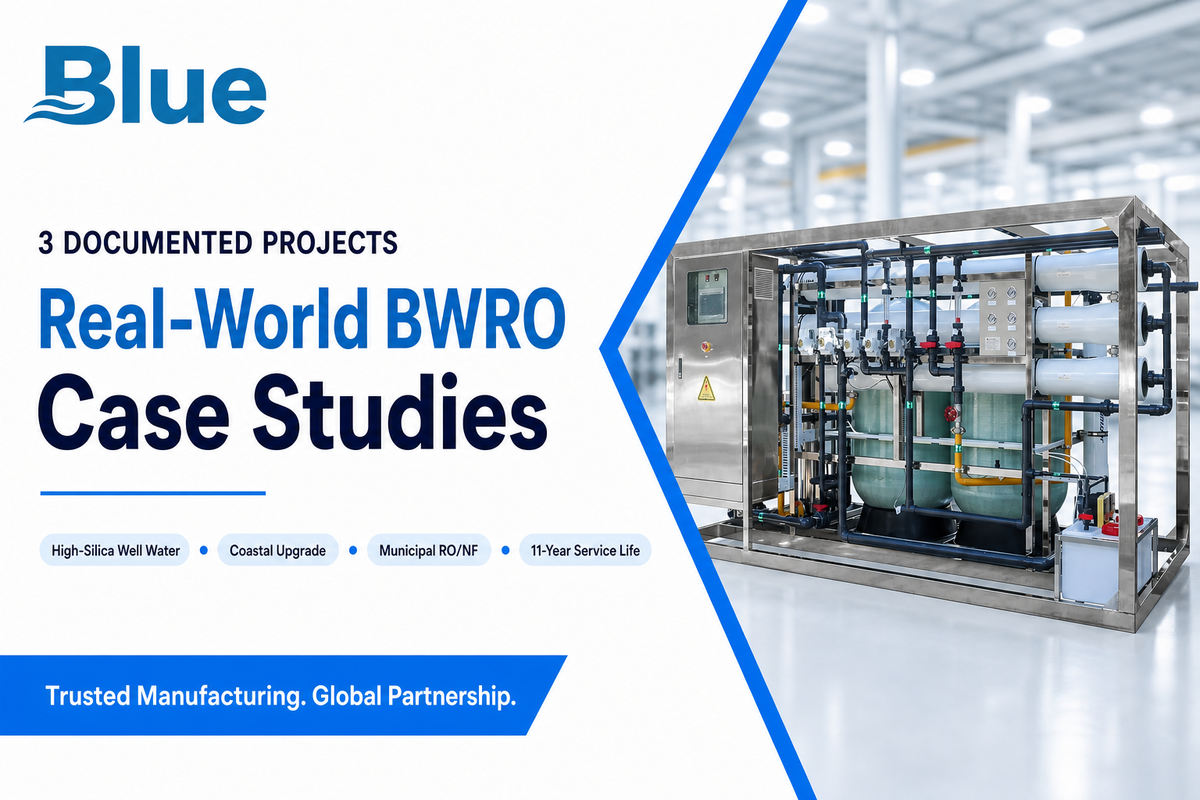
Below are three documented projects that illustrate how these sizing trade-offs are implemented in the real world.
- Virginia 11-year high-silica well water system. A BWRO system that treats high-silica well water reported eleven years of consistent operation on its initial membrane elements-a practical demonstration that targeted control of flux and recovery (rather than maximization of recovery) contributes to longevity of RO membranes well beyond their typical service life. (Source: AMTA digital library)
- Pasquotank County, NC coastal BWRO upgrade. In North Carolina, a coastal BWRO system optimized with an energy recovery device, achieving a reduction in high-pressure pump duty while maintaining the system’s product quality and recovery rates. (Source: AMTA case study)
- North Miami Beach Norwood Oeffler plant. This municipal scale, 16 MGD, RO/NF hybrid system operating at 75% recovery on a high TDS feed demonstrates that municipal BWRO can combine RO and NF stages instead of relying solely on RO. (Source: AMTA technical paper)
One common thread across all three, in the field: none of them chased the highest theoretically possible recovery. Each was engineered around what the specific feedwater’s scaling chemistry actually supported, the same “higher recovery isn’t automatically better” point this guide opened with. For a project centered on a well-water source specifically, see Blue Membrane’s well water brackish RO treatment page.
Where Packaged BWRO Fits Into a Plant, Municipal, Industrial, Commercial
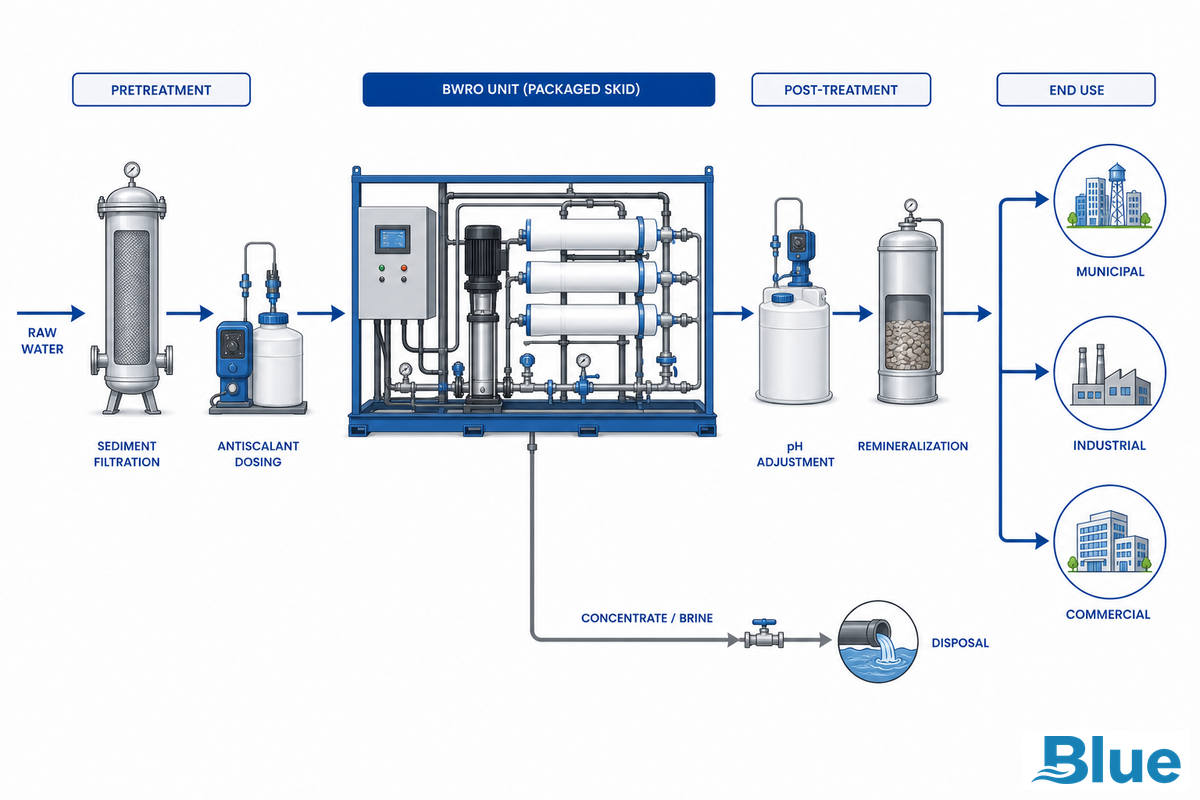
Packaged BWRO fits inside a larger water-handling sequence rather than standing alone: pretreatment ahead of it, post-treatment or remineralization after it, and a defined concentrate-disposal path downstream. That sequence applies whether the end user is a municipality, an industrial plant, or a commercial facility, just at different scale and TDS targets.
An individual packaged BWRO unit rarely stands alone in the field – it sits inside a larger water-handling sequence whether the end user is a municipality, an industrial plant, or a commercial facility. There’s pretreatment upstream (sediment filters, antiscalant injection, sometimes softening) protecting the membrane, post-treatment downstream for product water (pH adjustment, remineralization for drinking water, or none for some industrial applications), and the concentrate stream needs a defined disposal or discharge destination – getting that sequence wrong at any single point is the risk that undermines an otherwise well-specified system. States as varied as Florida, Texas, and California have all studied full-scale municipal desalination applied to inland saline aquifers or coastal aquifer systems (California DWR, 2025).
At the industrial end, the same logic feeds boiler feed water, cooling tower make-up, and general plant process water – an industrial reverse osmosis train sized the same way as a municipal water plant’s, just at a different scale – where consistently low TDS feed protects downstream equipment from scale and corrosion (University of Florida IFAS Extension). For potable use, final product water needs to meet EPA drinking water quality requirements (or equivalent local standard), not just internal TDS goals. However, the design challenge is consistent at every scale: how much pretreatment is necessary for this specific feed water, and what will be done with the concentrate. Manufacturers who supply both the membrane elements and the packaged system, like Blue Membrane, can engineer that pretreatment-to-RO handoff as one integrated design rather than requiring the buyer to reconcile mismatched components from separate vendors.
The Buyer’s Checklist, What to Ask Before You Sign a BWRO RFP
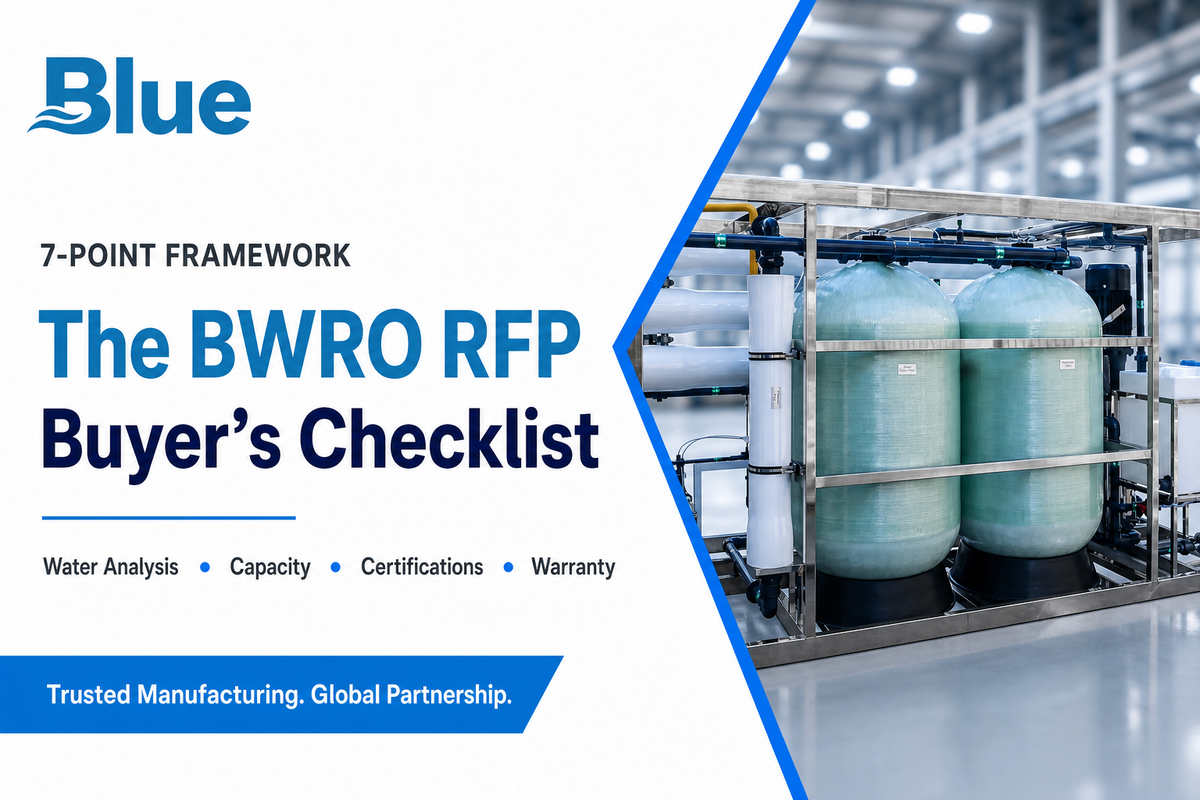
It doesn’t matter which one you go with ultimately, but here are seven things that make the difference between an RFP with the right parameters and one where you’ll receive wildly inconsistent bids.
7-Point Buyer Readiness Framework
- Water – total analysis, silica, iron, manganese, hardness, pH, any individual element limit which applies to your use (see below)
- Flow rate and capacity target – in GPD or m³/day, plus expected growth over the next 5-10 years.
- brine/concentrate disposal path and permit – A long-term Congressional Research Service report on the challenges of desalination adoption singles out the existence/regulation of disposal options as an inherent barrier to large scale inland deployment, which remains true even with current technologies. Double-check your proposed brine and concentrate disposal method and the associated permit status before expending any significant capital. (Congressional Research Service R40477)
- Pretreatment scope included in the quote – sediment filtration, antiscalant dosing, and softening are sometimes quoted separately, so be clear which you’re buying.
- Standard and certifications – what components have NSF/ANSI/CAN 61 material safety rating and do the pressure vessels meet ASME BPVC Section X?
- Manufacturer / membrane provenance – Is the manufacturer producing its own membrane elements, or ordering them at market rate from a third party? Either is a perfectly reasonable business model, but the two have differing supply-availability and price-stability implications.
- Start-up, warranty and expansion headroom – What’s covered during start-up, the warranty duration, and whether the skid has room for adding a parallel train in the future?
Perhaps the most important thing that buyers overlook and the item that the strongest evidence exists for: A federal review of desalination Adoption Issues noted that the regulation and availability of waste disposal option is a genuine barrier to projects – particularly the large-scale, inland projects characteristic of many packaged BWRO buyers. Take the following completed checklist to every vendor – including the team from Blue Membrane’s packaged BWRO systems – and you’ll begin receiving comparable quotes from all of them.
Materials, Standards, and Regulatory Landscape
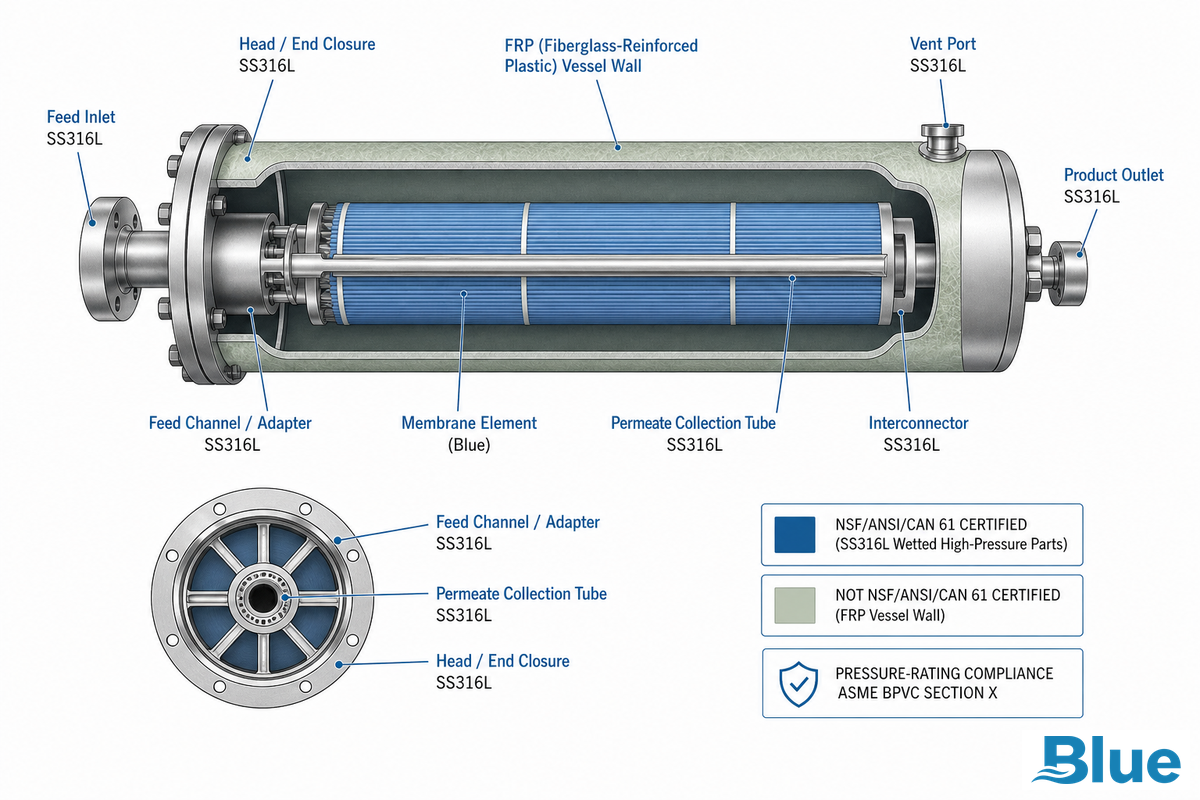
Any reputable packaged BWRO system will have specific standards to refer to beyond vague assurances of quality. Two such standards are commonly referred to, each measuring a separate and important thing:
- ✔NSF/ANSI/CAN 61 certifies that a component (a membrane housing, fitting, or coating) meets the drinking water standard for safe contact, this is the standard most relevant to industrial and municipal packaged systems, since it’s evaluated at the component level (NSF).
- ✔NSF/ANSI 58 is specifically scoped to point-of-use reverse osmosis systems, per NSF’s own standard description, a whole-house or under-sink RO unit, not a 200-TPD industrial skid (NSF). If a vendor cites NSF/ANSI 58 as blanket proof of an industrial packaged system’s certification, ask which components actually carry it, the more relevant standard for that scale is component-level NSF/ANSI/CAN 61.
- ASME BPVC Section X – the pressure vessel certification standard for FRP vessels, which include membrane housings constructed of fiberglass-reinforced plastic (FRP). The 2025 edition of the standard is the current one (ASME).
Does a Packaged BWRO System Need NSF/ANSI 61 Certification?
Yes, for any system producing drinking water. Every wetted component, membrane housings, coatings, fittings, should carry NSF/ANSI/CAN 61 certification, since the standard certifies individual parts rather than a complete system. Ask a vendor which specific components carry the certification rather than accepting a blanket claim.
Read Answer
In the case of any process intended to produce drinking water: Yes – all the individual components that come into contact with water, such as membrane housings, coatings, and fittings, should be certified under NSF/ANSI/CAN 61. Because the certification evaluates components and not an entire system, the better question for a vendor is “Which parts of your unit are NSF/ANSI/CAN 61 certified?” rather than just “Is your unit NSF certified?”
The most likely failure mode for corrosion in brackish water applications comes from its higher salinity. So it’s not surprising that high-pressure parts such as pressure vessel use SS316L, but materials don’t necessarily have to get that exotic; a process engineer on Eng-Tips, discussing BWRO pipe material selection, noted that in an indoor application the cheapest option is most often CPVC, closely followed by 304 stainless steel, with FRP and more exotic materials usually unnecessary given the feed chemistry. One more point: your bulk TDS value doesn’t promise any particular concentration for your individual constituents, so if you have brackish water with, for instance, elevated boron due to a marine influence, make sure your full water analysis matches your target standard. For individual components like the membrane elements, Blue Membrane lists specs at its brackish water RO membrane elements page.
Industry Outlook, What’s Changing for Packaged BWRO Buyers
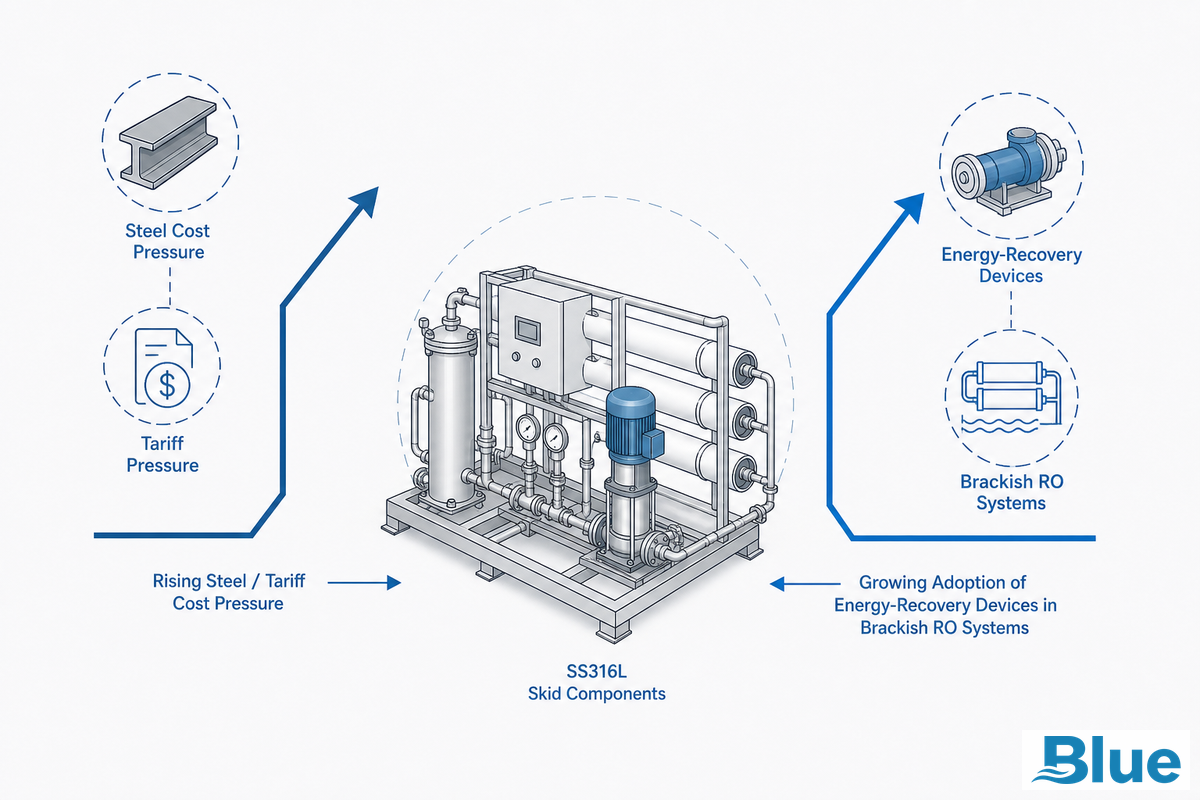
Two developments matter more to a 2026 buyer than overall market growth. First, steel and aluminum tariffs already pushed the average effective tariff rate to 7.1% by March 2025, with proposed measures on Canada, Mexico, and autos modeled to push it well above 12%. Steel is a direct cost for SS316L pressure vessels, frames, etc for a skid-mounted BWRO, all of which feed directly into the levelized cost of water a buyer ultimately pays. Locking down vendor quotes and lead times sooner rather than later is a reasonable hedge against that. Second, energy-recovery devices are getting real engineering attention specifically for brackish (not just seawater) RO: a 2026 peer-reviewed pilot BWRO unit held roughly 80% recovery and sub-500 mg/L product TDS while an energy-recovery device cut high-pressure pump load, narrowing part of BWRO’s already-large energy advantage over seawater reverse osmosis (SWRO) even further (ScienceDirect, 2026). Separately, Lawrence Berkeley National Laboratory is investigating electrically conductive membranes to improve salt-separation efficiency, an early-stage signal worth watching rather than specifying against today. Buyers planning a 2026-2027 project face one practical risk, timing: locking a vendor quote too late risks absorbing the tariff-driven cost increase above, while over-specifying for hypothetical future energy-recovery gains wastes capital now. Manufacturers who engineer both the membrane and the skid in-house, like Blue Membrane, can generally hold quoted pricing longer than integrators exposed to third-party membrane cost swings in application.
For a project planning past 2026, ask vendors now about energy-recovery-device compatibility, and build tariff-driven cost and lead-time volatility into your procurement timeline rather than treating it as a future concern. Note that BWRO market-size estimates vary by analyst, and the figures cited (roughly $583M to $821M for 2025-2026) are directional market context only, not a specific claim about your project’s costs.
Frequently Asked Questions
How long does it take to install and commission a packaged BWRO system?
View Answer
Installation and commissioning for a packaged, skid-mounted BWRO system typically runs 2-6 weeks from delivery to start-up, since the unit arrives factory pre-plumbed, pre-wired, and pre-tested. The main site-side work is connecting inlet/outlet piping, power, and any pretreatment interlocks, then running a commissioning water-analysis check against the original feed data. A custom-engineered plant, built on-site rather than pre-assembled, can take several months longer.
What’s the real difference between BWRO and ion exchange for desalting brackish water?
Show Answer
Ion exchange swaps dissolved salt ions for hydrogen or hydroxide ions via resin beads instead of forcing water through a membrane, and it’s cheap at low TDS. But federal desalination research finds IX is almost never used for bulk salt removal at scale, since resin regeneration becomes too frequent as dissolved-solids levels rise. BWRO scales better above roughly 1,000-3,000 mg/L, while IX keeps a real role polishing water after RO.
Can a packaged BWRO system be expanded later if my capacity needs grow?
Read Answer
Yes most pre packaged BWRO systems are modular ‘trains’, you will be able to install a parallel skid or ‘multi-train’ solution in time rather than having to replace the original one. In practice, the limits are usually site space, feed pump power and capacity, and RO train pretreatment throughput and, if there’s any need for clarification at specification stage on your future requirements for this, discuss expansion headroom with your vendor.
What water analysis data do I need before requesting a quote from any vendor?
View Answer
Bring a complete water analysis, not just a TDS number. Vendors need feed TDS plus silica, iron, manganese, hardness, and pH, plus any constituent-specific concerns like boron, since bulk TDS alone doesn’t guarantee the water meets a specific standard. Also bring flow rate (GPD or m³/day), site power specs, footprint dimensions, and end use, since drinking, boiler-feed, and process-water targets differ. A one-page analysis is the most useful document for sizing.
How often do BWRO membranes need to be replaced, and what drives that interval?
Show Answer
Typical service life runs 3-7 years before membrane replacement, driven by fouling and scaling rate rather than a fixed calendar limit. Poor-quality feedwater or inconsistent pretreatment shortens that window considerably, while disciplined clean-in-place cycles and steady operating conditions can extend it toward the higher end of the range.
Is a packaged BWRO system practical for a small well-water community system?
Read Answer
Frequently, but it’s a question of scale. Typical small community well water systems run 10,000-100,000 gpd, which falls within standard packaged/skid-mounted capacity rather than requiring a custom-engineered plant. Check concentrate disposal early, since small inland sites generally have fewer disposal options, based on federal desalination research. A factory-tested, packaged unit also carries less on-site construction risk than a custom-built facility, a real benefit for a utility with limited in-house engineering capacity.
Why We Write This
Created to provide engineers and procurement departments with a starting point for comparing packaged BWRO systems – all the technical comparisons, standards definitions, and case studies below use published peer-reviewed papers, government desalination reports, and trade group case studies, not a specific company’s portfolio. Reviewed by the Blue Membrane technical team, who manufacture packaged BWRO systems and BWRO membrane elements in Nantong, Jiangsu.
References & Sources
- Economics and Energy Consumption of Brackish Water Reverse Osmosis — National Library of Medicine (PMC)
- The Potential of Electrodialysis as a Cost-Effective Alternative (Patel et al., 2024) — ScienceDirect
- Energy Recovery in Brackish Water Reverse Osmosis (2026) — ScienceDirect
- Mathematical Modelling and Numerical Simulation of Reverse-Osmosis Desalination — arXiv
- Desalination and Membrane Technologies: Federal Research and Adoption Issues — Congressional Research Service
- Treating Brackish Groundwater in Texas — U.S. Bureau of Reclamation
- Desalination (Brackish and Seawater) Resource Management Strategy 2025 — California Department of Water Resources
- Desalination Systems and Their Environmental Impacts — University of Florida IFAS Extension
- NSF/ANSI 58: Reverse Osmosis Drinking Water Treatment Systems — NSF
- What NSF Standards Reference NSF/ANSI/CAN 61 — NSF
- 2025 ASME Boiler and Pressure Vessel Code — ASME
- 11 Years of Successful Brackish Water RO Membrane Operation With High Silica in Well Water — American Membrane Technology Association
- Optimizing High Brackish Coastal Reverse Osmosis With Energy Recovery, Pasquotank County, NC — American Membrane Technology Association
- Brackish Water RO and NF Operation on High TDS Feed Waters — American Membrane Technology Association
- Tariffs: Estimating the Economic Impact of the 2025 Measures — Federal Reserve Bank of Richmond
Related Articles
- Packaged Brackish Water RO Systems — Blue Membrane’s factory-direct BWRO skid product line, 1-500 TPD
- Brackish Water RO Systems — full product category overview
- Well Water Brackish RO Treatment — application-specific guidance for groundwater sources
- High-Recovery BWRO Design — technical deep dive on pushing recovery rate safely
- Nanofiltration for Water Softening — a lower-pressure alternative for hardness-only removal