Get in touch with Blue Membrane Company

Brackish Water RO Membrane Elements
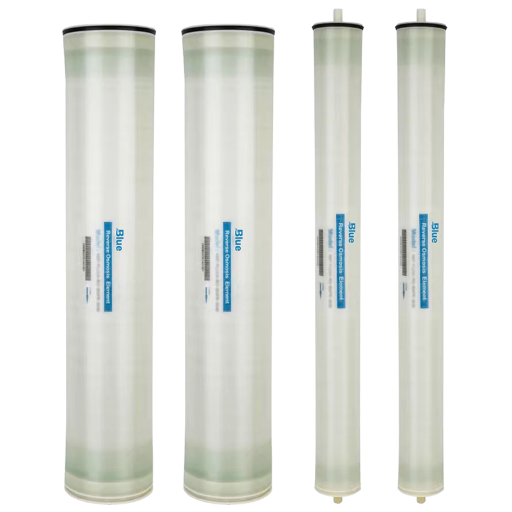
Brackish Water RO Membrane Elements, Blue Membrane Z1 Series
Factory direct spiral wound elements designed as a verified cross-reference to the DuPont FilmTec BW30 — with datasheet grade specs you can verify before you buy.
brackish water ro membrane elements in our Blue Membrane Z1 Series can desalinate feedwater up to 10,000 ppm TDS with a stable 99.6% salt rejection, and are dimensioned to drop into the same pressure vessels you use for DuPont FilmTec BW30 elements. Since we manufacture the membrane sheet ourselves and wind the element in-house, you’re working directly with the factory that control the polyamide chemistry, rather than a distributor who resells someone else’s inventory.
Z1 SERIES
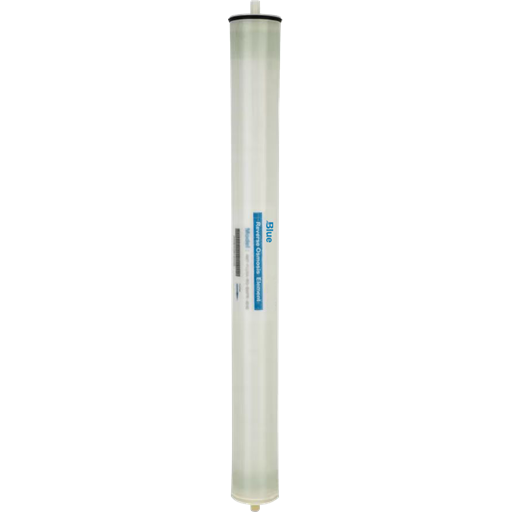
Datasheet-Grade Specs
99.6%
Stable salt rejection (min 99.5%)
400 / 440 / 85
Active area ft² (8040 / PLUS / 4040)
34 / 28mil
Feed spacer options
600psi
Max operating pressure (4.14 MPa)
SDI ≤ 5
Feedwater limit (ASTM D4189)
BW30 ⇄
Cross-reference to FilmTec™ BW30
What Brackish Water RO Membranes Solve: Fouling, Scaling & Energy Cost
brackish water ro membrane is a spiral-wound thin film composite (polyamide) element for removing dissolved salts from feedwater with dissolved solids between approximately 1,000 ppm and 10,000 ppm, and operating pressures well below seawater RO conditions. It serves as the heart of the brackish water reverse osmosis system, treating saline feed water to fresh water with the membrane layer yielding low-salinity permeate, while leaving concentrated salts behind.
Blue Membrane Z1 Series RO Membrane Elements, Models, Sizes & Specs
Z1 Series element formats are available for the three most popular sizes used for brackish and most industrial water treatment applications, as well as the smaller diameters as needed. Each element presented below has been manufactured to the same operating conditions – 2000 ppm NaCl, 25°C (77°F), 225 psi, 15% recovery and pH 7-8 – ensuring you can make like-to-like comparisons with other element datasheets.
Most brackish projects end up quietly losing money through element oversizing or under sizing. Oversizing an element for a low-flow skid wastes energy at 600 psi on an element that doesn’t need it, while an undersized element over-fouls and can be out of service within the year. This over or under sizing is most often the result of focusing on a ‘ headline’ rejection rate, when the optimum energy and cleaning costs are set by element to feed profile matching, and not by the specification superlative from the spec sheet. Each Z1 element size has been engineered by the Blue Membrane engineers for a specific work load range; for example, the 4040 ro membrane element for the space tight 4-inch system trains, or the 8040 RO membrane for large industrial rack systems. All of the reverse osmosis elements we wind have been wound to a consistent 15% flow tolerance and the figures quoted on our spec sheet will reflect what seats in your system, even if your operating rejection rates may differ -unlike the generic element selected from a shelf by a distributor, we’ll cross-reference with your water profile first.
MB-Z1-8040
10,500 GPD (39.7 m³/d)
400 ft² (37.2 m²) · 34 mil
99.6% rejection
MB-Z1-8040 PLUS
12,000 GPD (45.4 m³/d)
440 ft² (40.9 m²) · 28 mil
99.6% rejection
MB-Z1-4040
2,400 GPD (9.1 m³/d)
85 ft² (7.9 m²) · 34 mil
99.6% rejection
8040 elements are 1016 mm (40”) in length, and 201.9 mm (7.95”) in diameter, and have a standard 28.6 mm (1.125”) permeate connector fitting 8 inch diameter membrane housings without an adapter. 4040, 4021 and 2540 diameters are available as standard or by request for pilot plants, secondary polishing treatment, and smaller commercial units.
Parameter
Value
Maximum operating pressure
600 psi (4.14 MPa)
Maximum temperature
45°C (113°F)
Maximum feedwater SDI15
5 (ASTM D4189)
Maximum free chlorine
< 0.1 ppm
pH range, continuous operation
3–10
pH range, chemical cleaning
2–11
Maximum pressure drop per element
15 psi (0.1 MPa)
Permeate flow tolerance
±15%
Application-to-Model Selection Map
This chart take a water feed profile and finds the element which matches the water, for optimum energy and cleaning cost, not the element with the highest specification rejection rate.
Application
Recommended model
Active area
Typical feed TDS
Why it fits
Municipal groundwater desalination
MB-Z1-8040
400 ft²
1,000–5,000 ppm
Balanced flow & rejection at low pressure
High-recovery industrial reuse
MB-Z1-8040 PLUS
440 ft²
3,000–8,000 ppm
+10% area, 28-mil spacer for productivity
Commercial / process water
MB-Z1-4040
85 ft²
1,000–6,000 ppm
4-inch housings, skid & polishing trains
Pilot & compact systems
MB-Z1-4021 / 2540
on request
1,000–8,000 ppm
Small-diameter test and point-of-entry
Factory-fitted brine seal and interconnector come with each format; all formats are either stocked or built to order for OEM and distributor supply. Please see the guide to ordering for details of minimum order quantities and lead times.
Anti-Fouling Polyamide Chemistry & High-Recovery
Each active layer in each Z1 element is an aromatic polyamide thin-film composite-an interfacially polymerized discrimination layer supported on a porous polysulfone substrate. That’s the fundamental construct that enables a reverse osmosis membrane to reject dissolved salts and other contaminants by 99.6% while simultaneously transmitting water at useful flux rates.
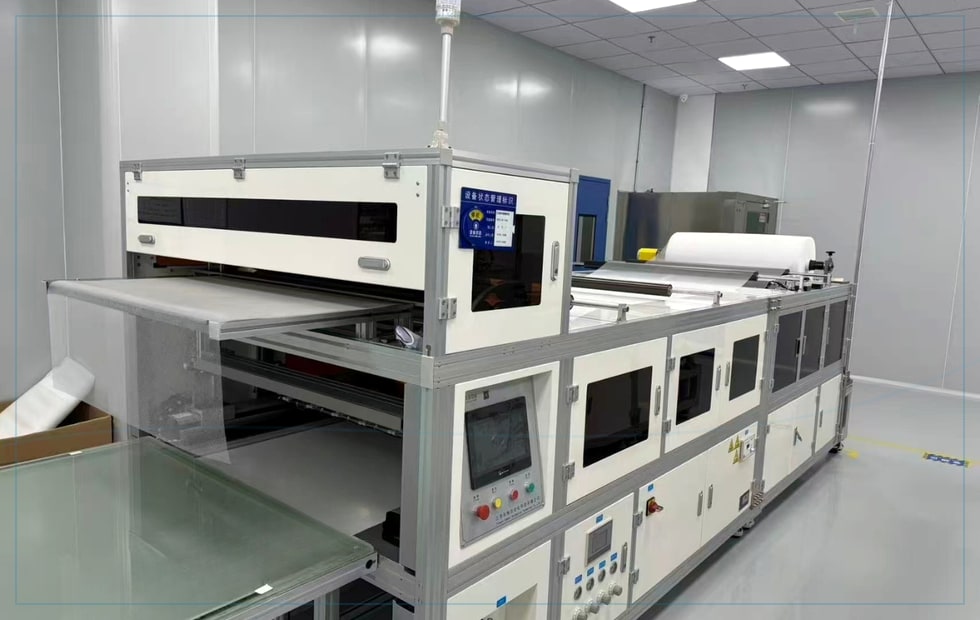
Seminal RO Patents
The same class of chemistry is at the core of the seminal RO patents, from early interfacial synthesis membranes yielding 99.3%+ rejection (US 4,277,344) to later composite membranes engineered for exceptional fouling tolerance (US 6,177,011).
It’s the same polyamide platform that supports the next-generation nanofiltration membranes for partial salt applications, and that forms the durable durability layer under continuous operation which preserves long-term water quality.
Where fouling resistance comes from
A pair of surface characteristics-roughness and surface charge-dictates the rate of foulant buildup on a brackish membrane element: roughness provides anchorage for organic foulants and biofilm growth, while a charged surface attracts or repels negatively charged colloids in the feedwater, depending on its own charge.
Z1’s active layer has been refined for both – reduced surface roughness minimizes foulant and scale adhesion, and an optimized surface charge enhances antifouling and antiscaling behavior (WO 2024/154978). Paired with a wider 34-mil feed spacer, a rigid element structure holds the feed channel open longer.
Enduring the Feed Stream
Beyond maintaining performance under testing, the element must endure the real world of the feed stream. The Z1 tolerates operation across a broad pH range of 3 to 10, cleaning across pH 2 to 11, a SDI15 value up to 5, and free chlorine concentrations below 0.1 ppm-the limit for all polyamide membrane, as chlorine readily attacks the amide bond.
Rated under standard conditions (2,000 ppm NaCl at 225 psi, 25°C, pH 8), this semi-permeable membrane holds permeate quality steady across its membrane life. Meeting these treatment challenges starts upstream: multimedia filtration and antiscalant dosing protect the membrane before high-pressure pumps pressurize the feed.
Overcoming Commoditization
A potential disadvantage of a non-branded, commoditized element is that lot-to-lot inconsistency is inherent: a sample might demonstrate 99.6% rejection, but a subsequent production run may deviate. We spin every Z1 element on our in-house lines and closely control the active layer’s properties within strict tolerance specifications.
In contrast to a distributor who can only repeat what’s on the product box, we can directly answer your technical questions on chemistry, tolerance and operating conditions. We’ll also be straightforward about when higher rejection isn’t the best solution for your application, even at challenging conditions such as 45°C and 600 psi.
We hold the Z1 line to the same standard test conditions on every production lot, 2,000 ppm NaCl at 225 psi and 25°C. If a lot does not stabilize at 99.6% rejection within the tolerance band, it does not ship. That consistency is worth more to a plant operator than a headline number on one golden sample.
Applications, Municipal, Groundwater, Industrial Reuse & Process Water
Brackish water is the foundation of inland water security — saltier than fresh water, less saline than seawater, and drawn from wells and reclaimed streams where the ocean is off-limits. What they share is one hardship: fresh water sources are shrinking, aquifers are over-pressured, and ever-tighter discharge limits raise the stakes — standing still can cost the water permit that keeps a plant in business. Blue Membrane sizes the Z1 to the duty because the fouling failure mode differs by application, not by brand, and each of these water resources runs its own pressure and recovery envelope up to 600 psi. The Z1 Series is built for four duties where brackish water sources become product:
Municipal & groundwater desalination.
Inland utilities blend brackish groundwater into supply to offset pressure on freshwater sources, and municipal water treatment at 1,000–5,000 ppm feed is where the MB-Z1-8040 delivers drinking-water-grade clean water at low pressure — minimizing energy, the dominant operating cost.
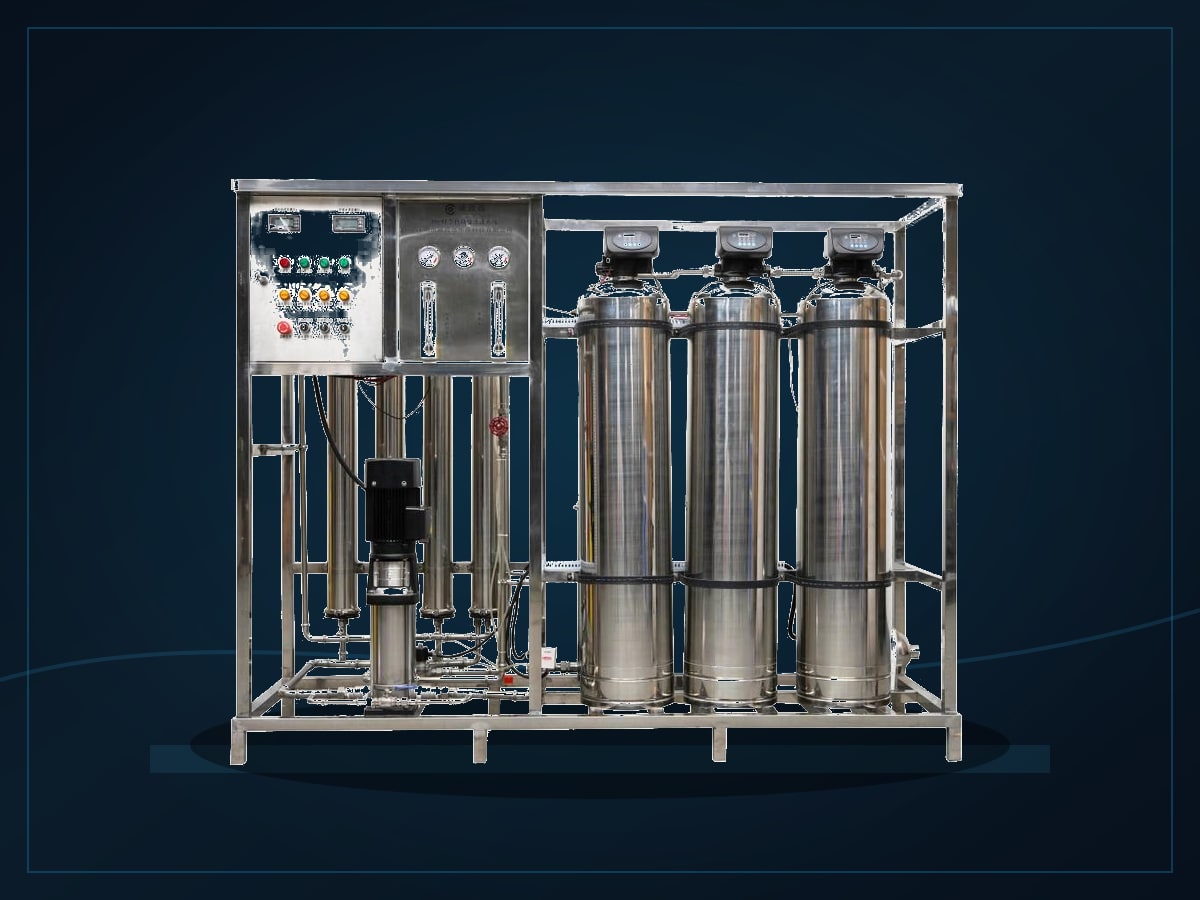
Industrial water reuse & wastewater reclamation.
Returning plant water and treated wastewater to process cuts fresh-water demand and discharge — industrial reverse osmosis and wastewater treatment trains run harder against scaling, which is where the MB-Z1-8040 PLUS, at 440 ft² and a disciplined 75–85% recovery, earns its place across these industrial applications.
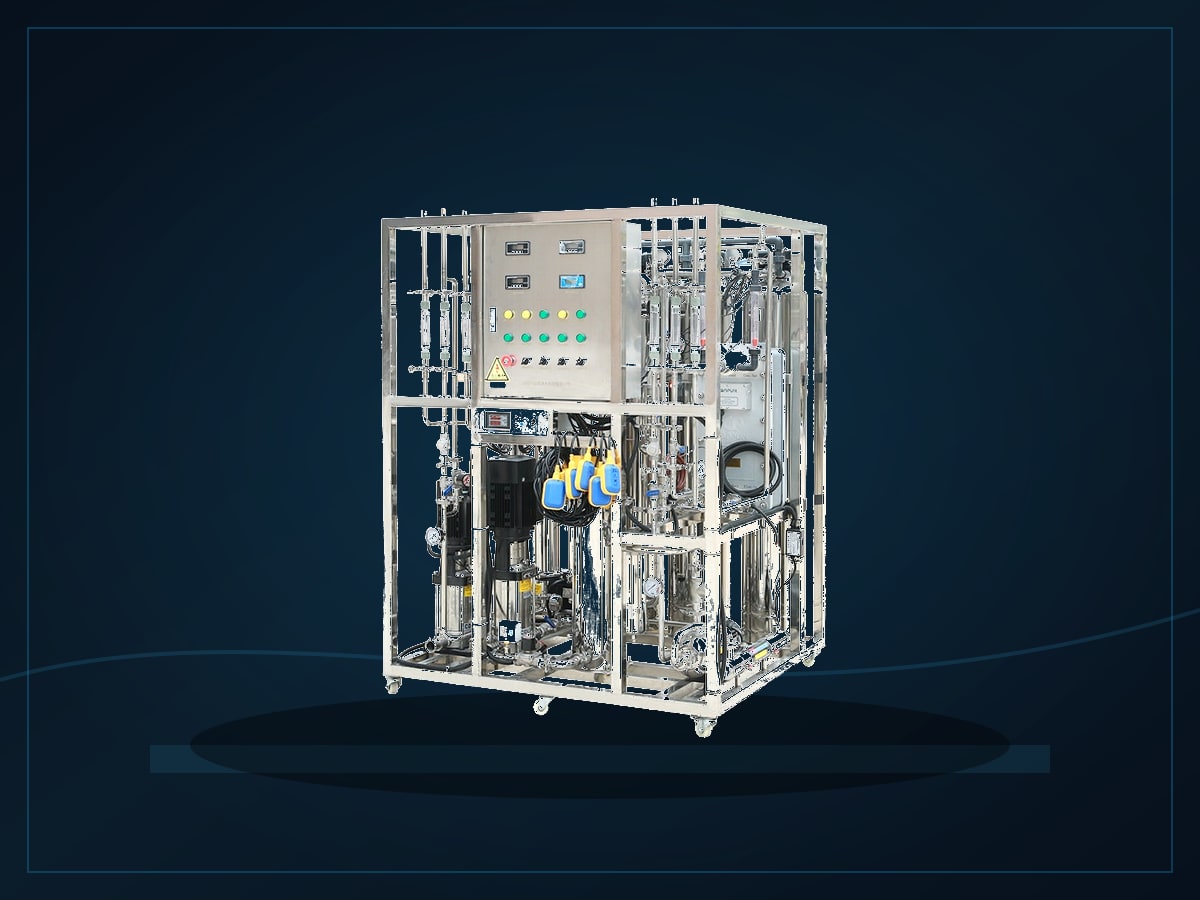
Process, boiler feed & specialty purification.
Whether for cooling tower makeup, boiler feedwater, or food and beverage process water, a steady, low conductivity desalination is the target. The 4040 format, and small diameter formats, can be fit to polishing skids or compact commercial applications.
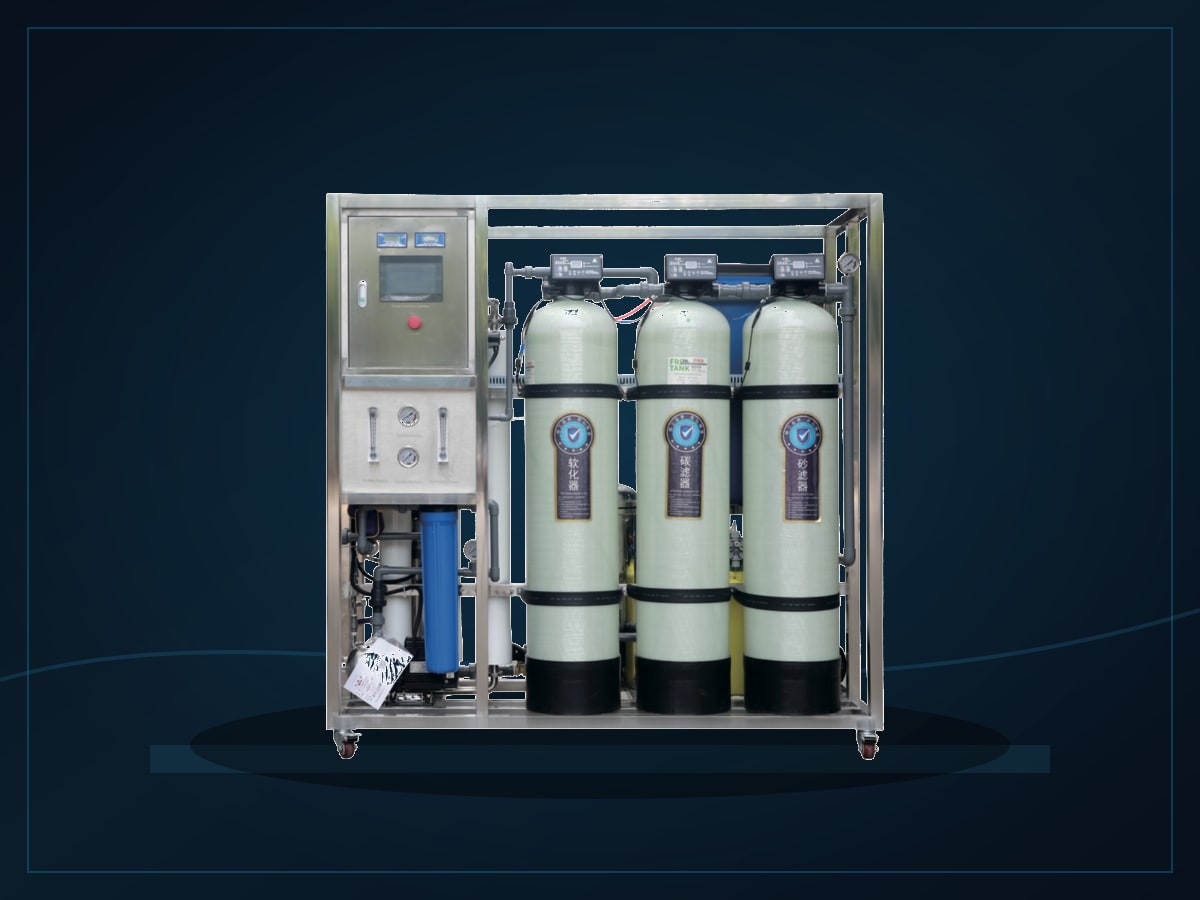
Whether the duty is industrial RO or a commercial RO membrane, reliable water purification — and an RO system that holds high-quality water as conditions change season by season — depends on the filtration element at the center. Low-energy operation and real energy efficiency are what decide the economics of that filtration.
Field guidance
Select element to match your water analysis, not your competitor’s spec sheet. This unique mechanism that fouls your silica-loaded groundwater or your high-organic reuse stream should define both your recovery and pretreatment strategy-not a default to the highest rejection possible; tell us about the feed analysis and we’ll determine the best recovery rate and the element that will provide it.
Manufacturing, Quality Control & Standard Test Conditions
Buying unbranded means accepting the unknown: we can’t tell you that you can trust the spec for something that can’t be traced, and that’s how you end up with lot-to-lot rejection variance. Blue Membrane closes the distance: we manufacture the membrane film and wind it into spiral elements at our own facility, so you can trust that every reverse osmosis element meets the same standard published test condition at 2,000 ppm NaCl, 225 psi and a 15% tolerance, not a vague assurance. Unlike a “high-rejection” spec with no basis, you know the Z1 number: what it measured, what it will be at its limit, and that it will be consistent, repeat by repeat. A brine seal and interconnector are factory attached to every element to make it install properly.
Standard Test
2,000 ppm NaCl · 225 psi · 25°C · 15% recovery
SDI ≤ 5
Feedwater limit per ASTM D4189
±15%
Permeate flow tolerance, per element
Polyamide TFC
Aromatic thin-film composite active layer
Anti-Fouling
Reduced roughness · optimized surface charge
What Blue membrane won’t promise you is a certification logo it can’t verify. If your job spec calls out a particular certification or third-party test report on the element, ask for it by name in your RFQ, and we’ll confirm in writing which documentation is available for that model – before you order, not after. That’s the same level of transparency we bring to performance: the tolerance band is specified (15% on permeate flow), the test condition is specified, and the operating limits are specified (600 psi, 45C, SDI 5). An honest specification is one you can hold us to.
Brackish Water RO Membrane Calculation & Cross-Reference Tools
Z1–FilmTec™ BW30 Cross-Reference Finder
Select the DuPont FilmTec™ BW30 element you run today to find the matching Blue Membrane Z1 cross-reference and side-by-side specs.
Brackish Membrane Sizing Selector
The 4-Factor Fit Test: enter your feed and target output to get a Z1 model recommendation and an element-count estimate. For scoping only — final sizing is confirmed in your RFQ.
Recovery → Concentration Factor Calculator
System recovery sets how concentrated your reject stream becomes. Move the slider to see the concentration factor and scaling-risk band for a brackish RO system.
We’re providing a true, own-brand element – it’s not a relabeled, counterfeit, or other “equivalent” FilmTec. We document the Z1’s specs in full under standard test conditions and supply a written cross-reference so you can match models on the basis of comparable numbers. Each Z1 lot is tested at 2,000 ppm NaCl and 225 psi before it ships, and the cross-reference names the exact FilmTec equivalent for your model, so you compare like with like rather than marketing claims. Buying from a trusted, verified brand like ours is the surest way to avoid the counterfeit-FilmTec problem that circulates in the market.
Typical life expectancy ranges from 2-5 years in industry. A well-maintained industrial system can realize life between 3-5 years. Element life tends to be on the order of 1-2 years if scaling, chlorine, or high SDI go unmanaged. While branding matters, real-world life depends more heavily on your pretreatment regimen and recovery discipline – that’s why proper model matching and an anti-fouling surface are critical factors.
Yes for the housing configuration and general operating parameters. The 8040 elements are built to standard 8-inch housing dimensions (1,016 mm length, 201.9 mm diameter, 28.6 mm connector) and operate within the same 600 psi, pH 3-10, SDI 5 envelope. Use the cross-reference matrix to determine the right Z1 model and verify that it’s consistent with your housing and vessel configuration in your RFQ.
The Z1 is designed for brackish feeds with TDS up to 10,000 ppm. We generally recommend designing for 75-85% recovery in brackish water applications, as operating at higher recovery rates will increase the concentration factor and promote scaling. Provide us with a feed analysis and we’ll help you select the most appropriate model and recovery rate.
Yes — 8040, 8040 PLUS and 4040 are standard, with 4021 and 2540 on request. We ship OEM private-label and distributor stock; specify branding in your RFQ.
Trending now