Get in touch with Blue Membrane Company

Brackish Water RO Solutions
Brackish Water Reverse Osmosis Systems
Brackish water reverse osmosis systems don’t come in one size. A plant chasing 90% recovery to cut concentrate volume needs a different hydraulic design than a packaged skid meant to ship in six weeks, and a wellfield with iron and manganese in the feed need pretreatment neither of the other two carries. Blue Membrane builds three purpose-engineered BWRO systems rather than one generic platform stretched across all three jobs.
Each configuration is sized 1-500 TPD, treats feed water up to 10,000 mg/L TDS, and is built on all-stainless-steel framing with SS316L on the high-pressure wetted parts. What changes between them is the recovery target, the feedwater chemistry they’re engineered around, and how fast they go from quote to water-out.
Request a Configuration Consultation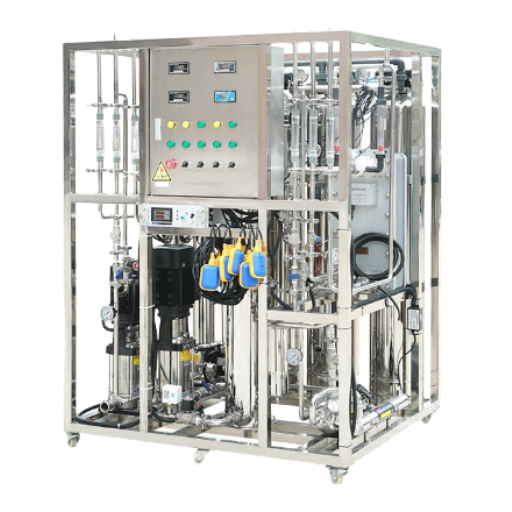
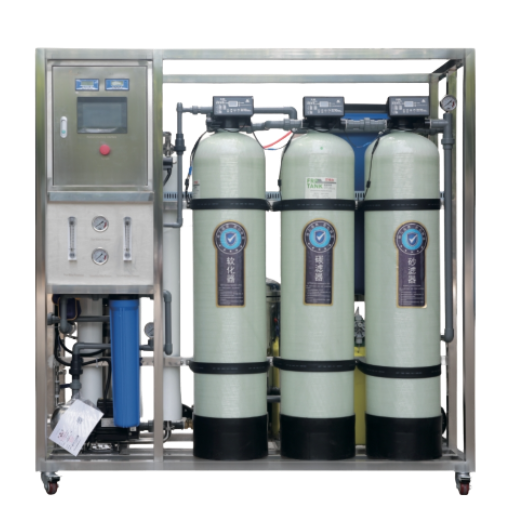
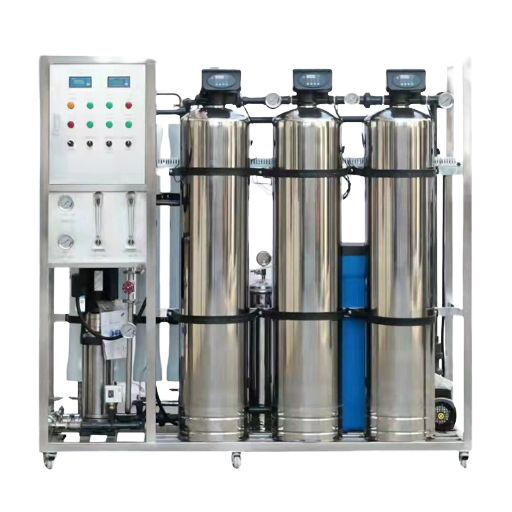
50-90% Recovery
≤10,000 mg/L Max feed TDS
98-99.5% Desalination rate
1-500 TPD Capacity range
3 Purpose-built systems
SS316L Wetted materials
The Core Challenge in Treating Brackish Water, and How BWRO Solves It
Brackish water sits between tap water and seawater on the salinity scale, and that middle position is exactly what makes it hard to treat with one generic system. The U.S. Geological Survey’s National Brackish Groundwater Assessment and Rice University’s Baker Institute both define brackish water as roughly 1,000-10,000 mg/L total dissolved solids, wide enough to span a slightly saline municipal wellfield and a near-seawater industrial effluent under the same label.
Water Source vs Typical TDS Specifications
Specification Matrix
WATER SOURCE VS TYPICAL TDS
WATER SOURCE
TYPICAL TDS
Tap water
Up to 1,000 mg/L
Brackish water
~1,000-10,000 mg/L
Highly brackish water
~10,000-12,000 mg/L
Seawater
~12,000-45,000 mg/L
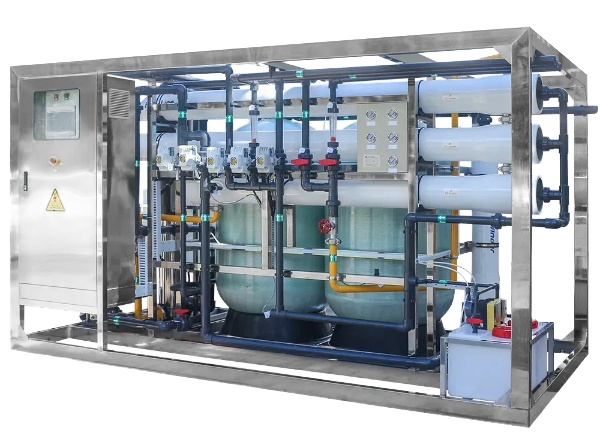
BWRO Core Mechanism & Membrane Options
Reverse osmosis pushes feed water through a semi-permeable RO membrane at pressure high enough to overcome the water’s natural osmotic pressure, leaving dissolved salts and contaminants behind in a concentrate stream.
For most brackish sources, RO is the dominant desalination technology, but it’s not the only membrane option on the table. Where finished-water targets are less demanding (softening or partial-salt removal rather than full desalination), nanofiltration can do the job at lower operating pressure and lower energy draw. Our customers’ feed chemistries and target purities are why we build RO product lines rather than something else; a lower-rejection NF path is worth asking about if your application doesn’t need RO-grade rejection.
Every brackish water reverse osmosis system on this page shares that same core mechanism. What separates one Blue Membrane system from another is how far past that baseline it’s engineered to go, toward maximum recovery, toward rapid deployment, or toward a specific feedwater chemistry problem.
Unlike a single generic BWRO platform stretched thin across all three jobs, we start from your feedwater and recovery target, not from whichever skid happens to be next off the line, a mismatch here’s an expensive one to walk back once concrete is poured.
Not sure whether your source water counts as brackish?
Send feed TDS number →Three Configuration Paths, The 3-Path BWRO Configuration Selector
Most brackish water RO suppliers sell one platform and adjust the skid size. We start from the opposite direction, the same question water-treatment buyers are told to ask first: what problem are we solving, quality, compliance, protection, or cost control? The answer usually points straight to one of the three paths below, and that’s the system you start from, not whichever one carries the highest margin.
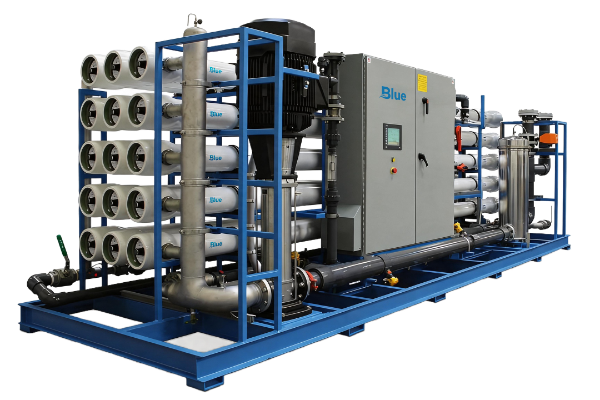
High-Recovery BWRO Design
Recovery75-90%
Feed TDS≤10,000 mg/L
Desal rate≥98.5%
Pressure200-450 psi
For sites where concentrate disposal cost or volume is the binding constraint, inland desalination, ZLD-adjacent loops, high-yield irrigation.
See Config →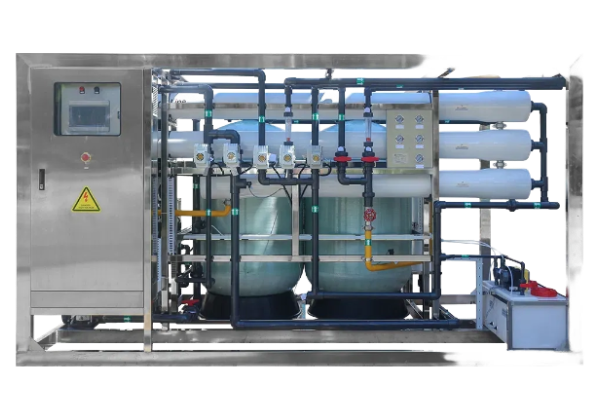
Packaged BWRO Systems
Recovery50-75%
Feed TDS≤10,000 mg/L
Desal rate≥98%
Pressure150-250 psi
For projects where install speed and configuration flexibility (skid/split/containerized) matter more than squeezing out the last few points of recovery.
See Config →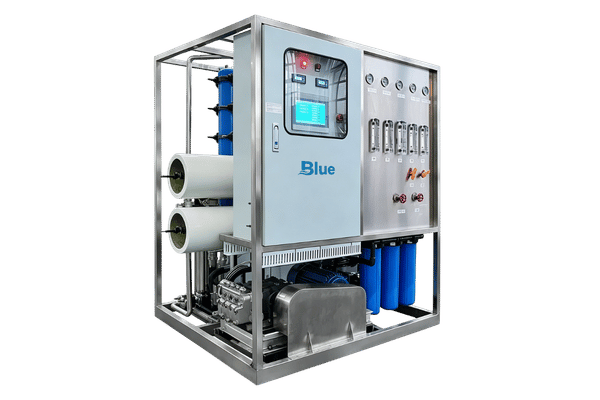
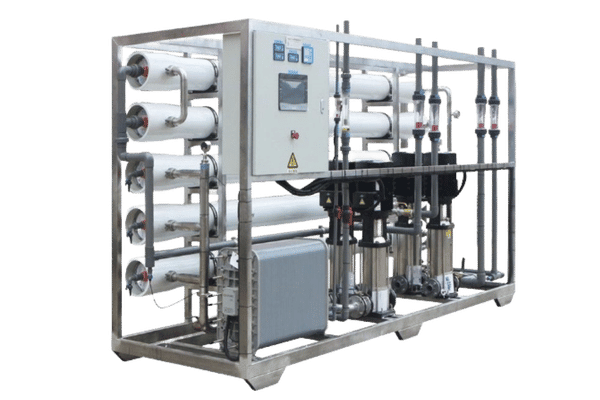
Well Water Brackish RO Treatment
Recovery50-75%
Feed TDS≤5,000 mg/L
Desal rate≥99-99.5%
Pressure150-250 psi
For eg. water sources with bicarbonate, fluoride, arsenic, hardness or manganese/B and filtrate, a generic BWRO skid isn’t prese ozidized.
See Config →Feedwater-to-Configuration Compatibility Map
| If your feed water is… | Start with | Because |
|---|---|---|
| Under 10,000 mg/L TDS, disposal cost/volume is your main constraint | High-Recovery BWRO | 75-90% recovery cuts concentrate volume the most |
| Under 10,000 mg/L TDS, standard industrial/municipal source, need it installed fast | Packaged BWRO | Skid/split/containerized builds built for rapid integration |
| Groundwater with iron, manganese, fluoride, arsenic, or high hardness (LSI concerns) | Well Water BWRO | Only configuration with integrated Fe/Mn pretreatment and anti-scalant dosing tuned for high-LSI well water |
Remember these aren’t mutually exclusive options – a wellfield that’s got iron in the feed with a demanding 90 day construction schedule will likely require a hybrid approach between options one and two. Give us your feed TDS, contaminant profile and your recovery requirements and we’ll advise on the actual fit rather than just offering up our latest/highest profit system.
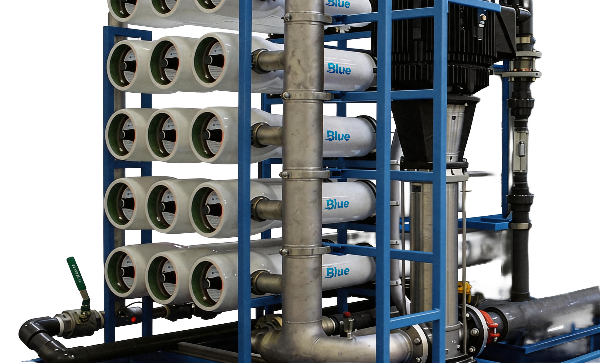
Check CompatibilityHigh-Recovery BWRO, Recovery-Rate Investment Threshold
Project Evaluation
Project Data
“We do not market High-Recovery as the default upgrade. It earns its keep when the disposal path is the expensive part of your project, deep-well injection, a permitted evaporation pond, land application. If your site already has a cheap discharge pathway, the Packaged configuration often has the best total delivered cost.”
Since there’s no generic CAPEX/OPEX number that applies to all feed and disposal pathways we don’t quote a “generic” ROI percent.
Instead we calculate the balance between the desired recovery rate and disposal costs based on your actual feed TDS, scaling capacity and disposal method once we’ve your data.
Get Instant Quote →Packaged/Containerized BWRO, Containerized Deployment Timeline Blueprint
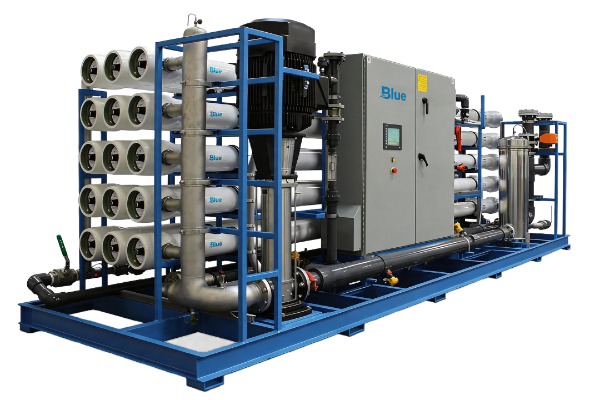
Packaged BWRO systems are built skid-mounted, split, or fully containerized, with modules pre-wired and pre-plumbed before they leave the factory, that part of the timeline really is fast. What isn’t automatically fast is everything a containerized shell doesn’t replace.
The Texas Commission on Environmental Quality’s technical guidance on groundwater desalination for public water systems lays out a two-step approval process regardless of how the equipment ship: a sealed engineering report and plans reviewed before construction, then post-construction documentation proving the installed membrane system actually meets drinking-water standards. A containerized skid compresses fabrication and on-site assembly time, it doesn’t compress engineering review, permitting, or commissioning sign-off. Being honest about that split is part of scoping the project correctly, not a knock against containerization.
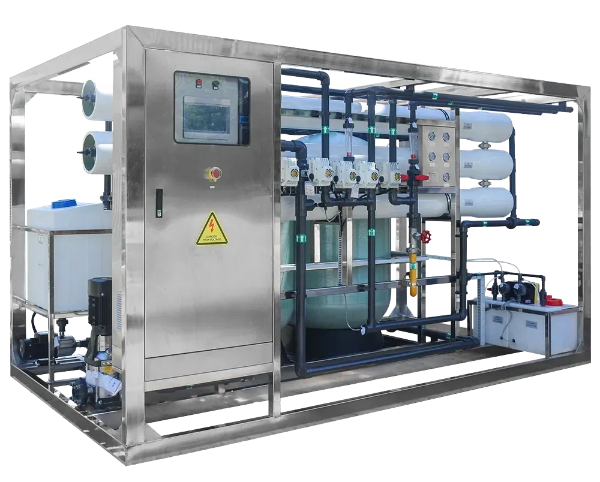
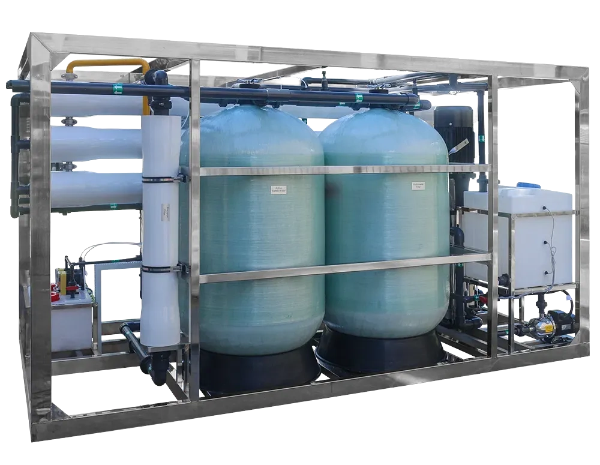
What containerization actually speeds up
In skid and containerized construction the two most time consuming activities in a stick built plant on site pipe fabrication and the coordination of the various trades is eliminated. TCEQ guidance also corroborates that the expected BWRO operating pressures are typically 125-300 psi for lower TDS brackish feeds and 350-600 psi for higher TDS feed stocks – all within the expected range for which our Packaged configuration operating pressure is set (150-250 psi).
Configuration Specifications
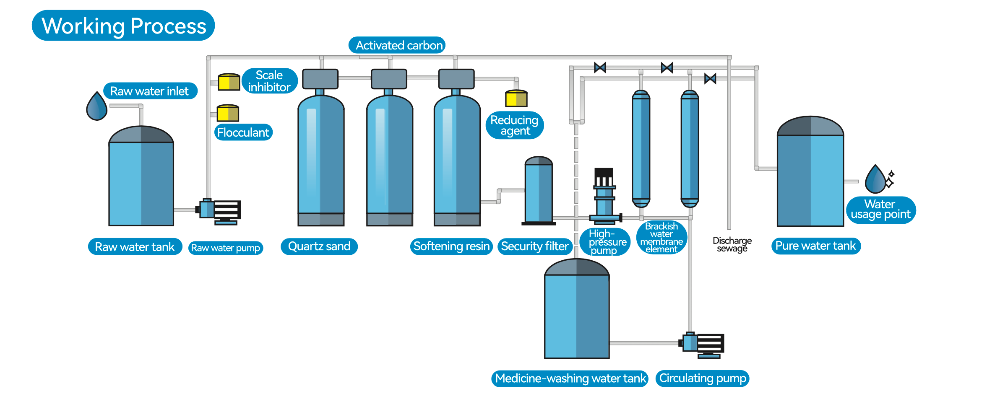
Configuration options range from integrated to split to skid mounted to containerized and fully modular, all driven by AC110-440V single-phase, AC380-440V three-phase, or DC24V supply dependent on site electrical availability, powered by a PLC plus relay control system and an in-line conductivity meter, to monitor product water. That inherent versatility is key to being able to re-apply the same fundamental BWRO plant on an industrial process-water retrofit project, a cooling-tower makeup expansion, or an irrigation project, all without a specific hydraulic rethink each time.
Our truthful quote-to-water-out timeline consists of two legs: the time it take us to manufacture the hardware and get it out the door (this is the leg we’ve control over) and your time required to engineering the design and to receive regulatory permits (this is the leg that the regulator has control over). That two-leg breakdown is deliberate, rather than one timeline number that only covers the part that make us look fast.
Want the two-leg timeline for your project?
Get Instant Quote →Well Water / Groundwater Brackish Treatment, Hardness & Heavy Metal Pretreatment
A problem all their own, compared to municipal or surface water, groundwater sources contain fewer organic colloids and less COD, but contain significantly more dissolved mineral solids, hardness cations (Ca2+, Mg2+) and – again depending on local geology – dissolved iron, manganese, fluoride and/or arsenic. Feed a raw well to the same standard BWRO skid which treats municipal water and without any pretreatment you’ll rapidly trash the membrane from iron fouling and scaling.
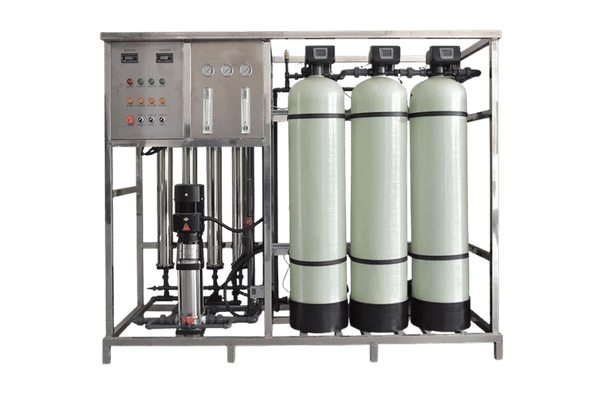
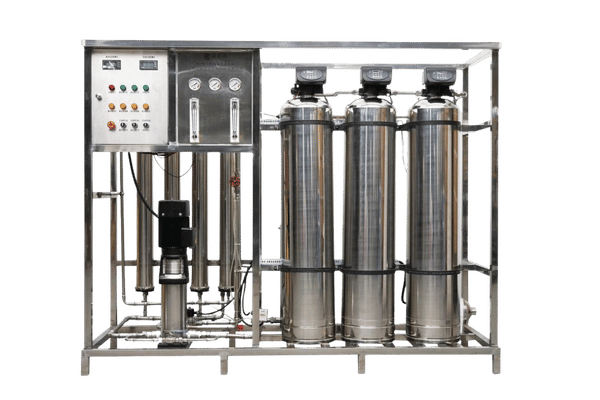
Specifications
Targeted hardness and heavy-metal rejection, engineered to aggressively remove high hardness, sulfates, iron, manganese, and inland groundwater contaminants like fluoride and arsenic.
Process
Integrated iron and manganese mitigation, manganese greensand or catalytic media pre-filters ahead of the membrane, so iron fouling doesn’t reach the membrane surface.
Applications
PLC-controlled anti-scalant dosing, sized for the high Langelier Saturation Index (LSI) typical of deep well water, not for a low-hardness municipal feed.
Resources
Automated forward flush with product-water permeate on shutdown, displaces concentrated mineral brine from the vessels before it can precipitate scale during idle periods.
SYS.CONFIG_ACTIVE
Because groundwater is generally lower-TDS than a mixed industrial brackish source, this system is tuned to a tighter feed window, up to 5,000 mg/L TDS rather than the 10,000 mg/L ceiling on the other two, which is exactly why it hits the highest desalination rate of the three (99-99.5%) at the same 150-250 psi operating range as our standard Packaged build. In practice, a rural wellfield application running at 150 psi with a 40°C summer feed temperature and elevated iron is exactly the case this configuration was built around, in the field where a generic BWRO skid would foul on iron within months.
Feedwater check: iron, manganese, or fluoride in your well water?
Check Feedwater Compatibility →
Data-Driven Performance Comparison, Three Setups Side by Side
All three system paths share the same production capacity range and the same SS316L high-pressure wetted materials. What changes is recovery target, feed TDS ceiling, desalination rate, and operating pressure, the four numbers that actually determine which configuration fits your project.
MARKET ANALYSIS
Whereas most competitor spec sheets publish a single recovery number and call it done, Blue Membrane shows three side by side because each one is engineered around a different constraint, not padded from one shared baseline design. That’s the risk with a one-size-fits-all data sheet: it hides which number was chosen for your feedwater and which one was chosen for the marketing page.
Want a spec-matched comparison for your feedwater?
REQUEST A CONFIGURATION CONSULTATIONCustomer Applications & Outcomes
Blue Membrane’s three BWRO configurations are applied across industrial process water, boiler feed makeup, cooling tower makeup, high-yield irrigation, inland community drinking water, and zero-liquid-discharge-adjacent wastewater recycling loops. None of that’s a niche use case, brackish groundwater desalination is now an established piece of municipal and industrial water portfolios at meaningful scale.
What these numbers don’t promise
Real-world BWRO installations still struggle with membrane fouling, changes in source water from one season to the next, and a brine that need somewhere to be disposed of. The problem isn’t that BWRO fails to scale, the problem is the tendency to expect all of the upside without understanding the on-the-ground engineering it entails. Those industry-level numbers describe where BWRO is installed and at what scale, not a guarantee of the actual performance or economics of any given installation without analysis of the specific feedwater.
As a manufacturer of brackish water ro equipment, Blue Membrane is able to conduct a feedwater analysis prior to developing a configuration estimate.
Within Blue Membrane’s own product line, the docx-sourced application list breaks down by configuration:
High-Recovery
targets MLD/ZLD industrial loops, boiler feed makeup, inland desalination, and high-recovery agricultural irrigation;
Packaged BWRO
covers general industrial process water, cooling tower makeup, and standard irrigation/drinking-water projects;
Well Water BWRO
is built for inland community drinking water, village-scale centralized stations, and rural groundwater purification.
Purchasing Guide, Pricing, Lead Time & Configuration Support
If you’re searching for a brackish water reverse osmosis system price or a brackish water reverse osmosis system cost, the honest answer is that neither is a single per-gallon rate you can look up, and there’s no single “best commercial reverse osmosis system” either, which is exactly why we build three.
Pricing is driven by capacity (TPD), recovery target, feedwater pretreatment scope, configuration format (skid vs. containerized vs. modular), and control-panel specification. Unlike a supplier quoting one blended rate off a brochure, we price against your feed water analysis and target output. In our experience, procurement is decided by salinity envelope, reject handling, and service depth, not by brand name alone; if you’re comparing a brackish water reverse osmosis system for sale from a reseller against a manufacturer-direct quote, ask which one of those three variables they actually engineered around.
Pricing factors framework
Four variables move price the most: production capacity (TPD), recovery target (Packaged/Well Water vs. High-Recovery hydraulics), pretreatment scope (standard vs. Well Water’s Fe/Mn/anti-scalant package), and configuration format (skid-mounted vs. fully containerized vs. modular split). Tell us where your project sits on each and we’ll size a quotation around itcontact Blue Membrane for a detailed quotation based on your application parameters.
Custom and OEM/ODM builds are available across all three product lines, non-standard capacity, alternate power supply (AC110-440V single-phase, AC380-440V three-phase, or DC24V), and configuration format changes are engineering decisions for this brackish water RO system manufacturer, not exceptions we’ve to escalate.
Lead time splits into two legs, same as the deployment timeline above: our factory fabrication and testing window, and your site’s engineering review and permitting window. We’ll give you both separately with your quote so you can plan the second leg in parallel with the first, rather than discovering it after the equipment ship.
Brackish Water RO System Design & Engineering Tools
-
recovery rate savings estimator
Calculate system recovery rates and evaluate potential operational cost savings for brackish water reverse osmosis systems.
Launch Engineering Tool -
feedwater compatibility checker
Verify feedwater chemistry parameters against membrane specifications to ensure operational compatibility and prevent fouling.
Launch Engineering Tool -
configuration comparison sheet
Compare different pressure vessel arrays and membrane configurations to optimize flux distribution and system footprint.
Launch Engineering Tool
Frequently Asked Questions
Can these systems be monitored remotely?
Yes, every configuration ship with dual-mode PLC-plus-HMI control and real-time conductivity/SDI tracking built in.
How fast can a Packaged/Containerized BWRO system be operational?
Fabrication and factory testing move quickly because modules are pre-wired and pre-plumbed before shipment, but the full timeline also includes your site’s engineering review and permitting process (per TCEQ-style groundwater desalination approval requirements), which runs on a separate clock from equipment delivery. We quote both legs separately.
What’s a typical recovery rate for a brackish water RO system?
Most brackish water RO and NF systems in the field run 75-85% recovery, with the practical ceiling set by brine salt concentration and scaling potential rather than membrane capability alone. Our Packaged and Well Water systems run 50-75%; High-Recovery is engineered specifically for the 75-90% band where concentrate-volume reduction matters most.
Is this the same as a residential well-water RO system?
No, and the gap is bigger than the name suggests. Residential point-of-use RO systems and household water filters are built for a single kitchen tap under NSF/ANSI 58 and, in practice, run a fraction of a gallon per minute; there’s no PLC, no multi-point safety protection, and no iron/manganese pretreatment train behind them. These are industrial and municipal systems sized 1-500 TPD, built around continuous unattended operation rather than an occasional glass of water, and (for Well Water BWRO specifically) they carry the integrated iron/manganese/hardness pretreatment that a countertop or under-sink unit simply has no room for.
Can you design a custom configuration for our specific feedwater?
Yes, custom and OEM/ODM product lines are available across all three product lines, including non-standard capacity, power supply, and pretreatment scope. Send us your feed water analysis (TDS, hardness, iron/manganese/fluoride/arsenic where relevant) and target output, and we’ll confirm the closest-fit configuration or a custom build.
I already run a BWRO system — do I need a new system or just replacement membranes?
If your skid, pumps, and controls are working and you’re only chasing declining rejection or rising fouling, you likely need fouling-resistant Z2 replacement membrane elements, not a new system. The three configurations on this page are complete systems for new installations or full system replacement — not membrane-only swaps.
Trending now