Get in touch with Blue Membrane Company

Packaged Brackish Water
Reverse Osmosis Systems
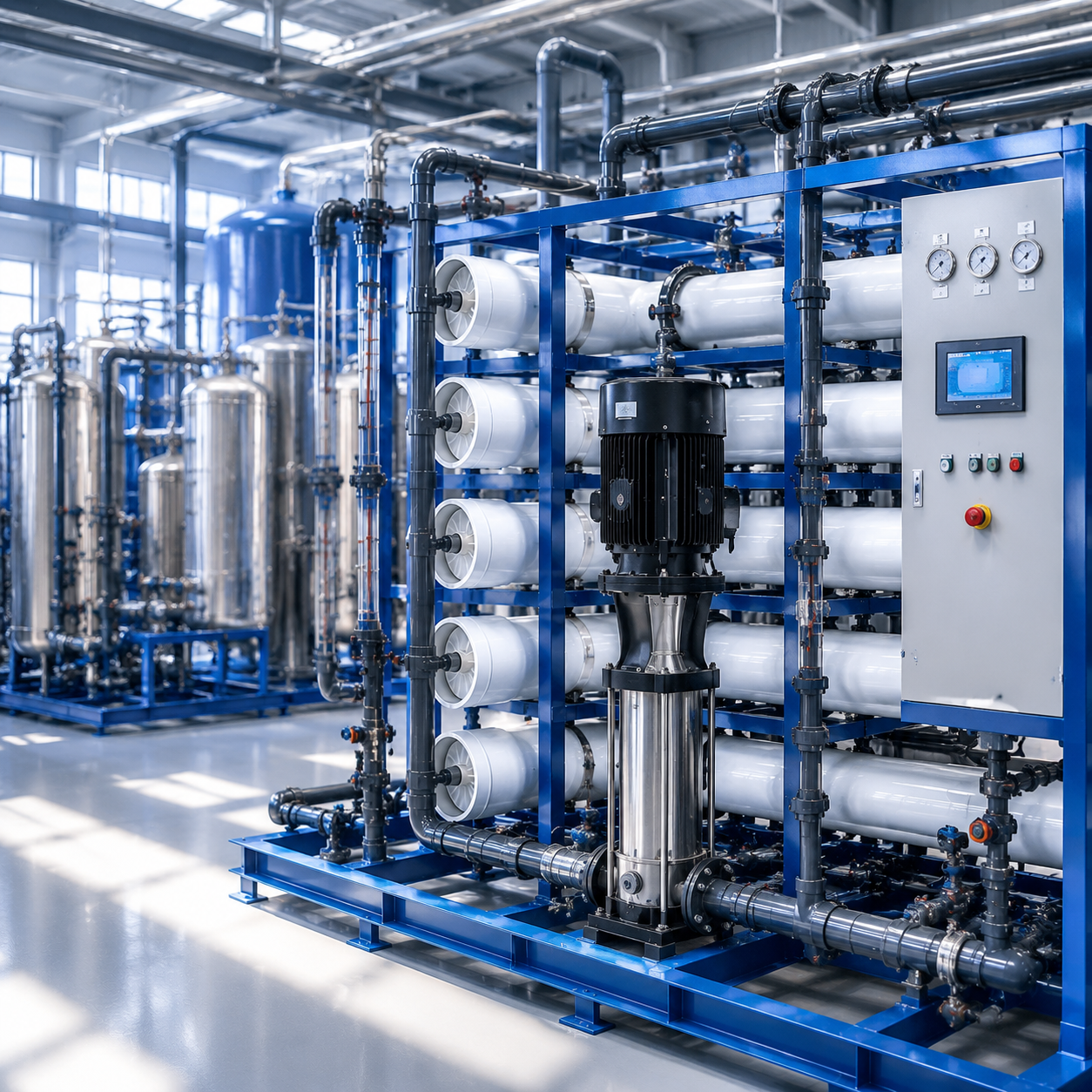
Factory Direct BWRO Skid (50 to 500 gpm), produced by reverse osmosis membrane producer, not assembler purchasing membranes at the market rate. For feeding up to 10,000 ppm tds of salt water at 98% of salt rejection.
A brackish water reverse osmosis system is the go-to answer for inland desalination, and picking one really come down to balancing feedwater chemistry with the right recovery rate, pressure, and membrane. At Blue Membrane, we design and build plug-and-play skid-mounted packaged BWRO systems from 1 to 500 TPD.
1–500 TPD
Capacity range
≥98%
Salt rejection
50–75%
Recovery rate
≤10K mg/L
Feed water TDS
150–250 psi
Operating pressure
SS316L
High-pressure parts
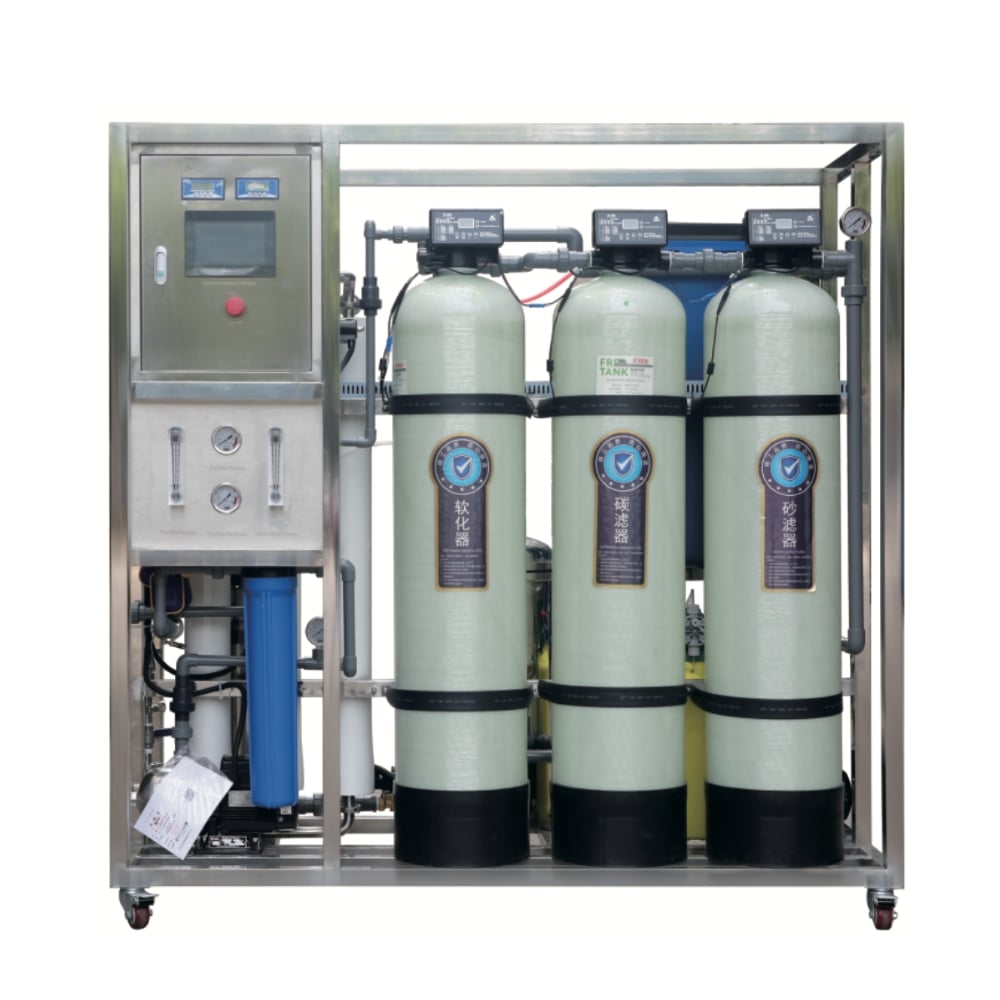
BWRO System
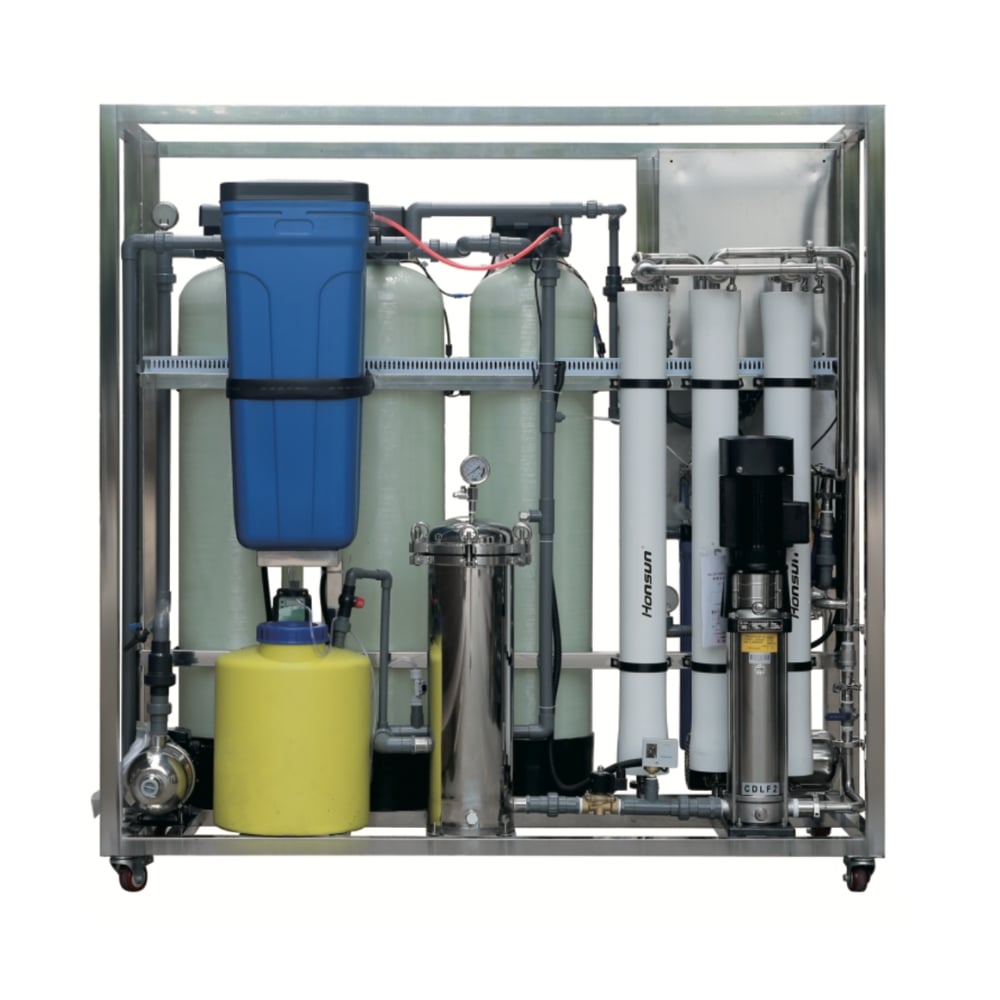
Control Panel
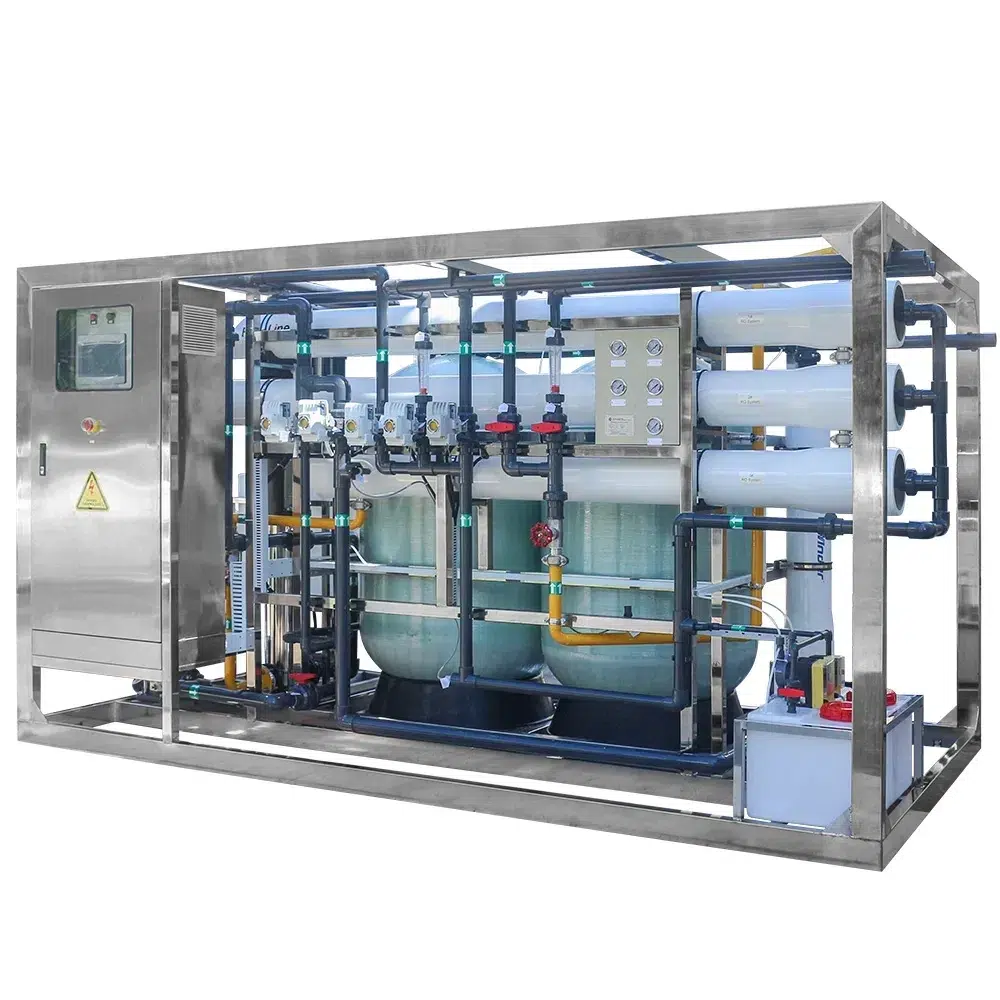
H1 Configuration
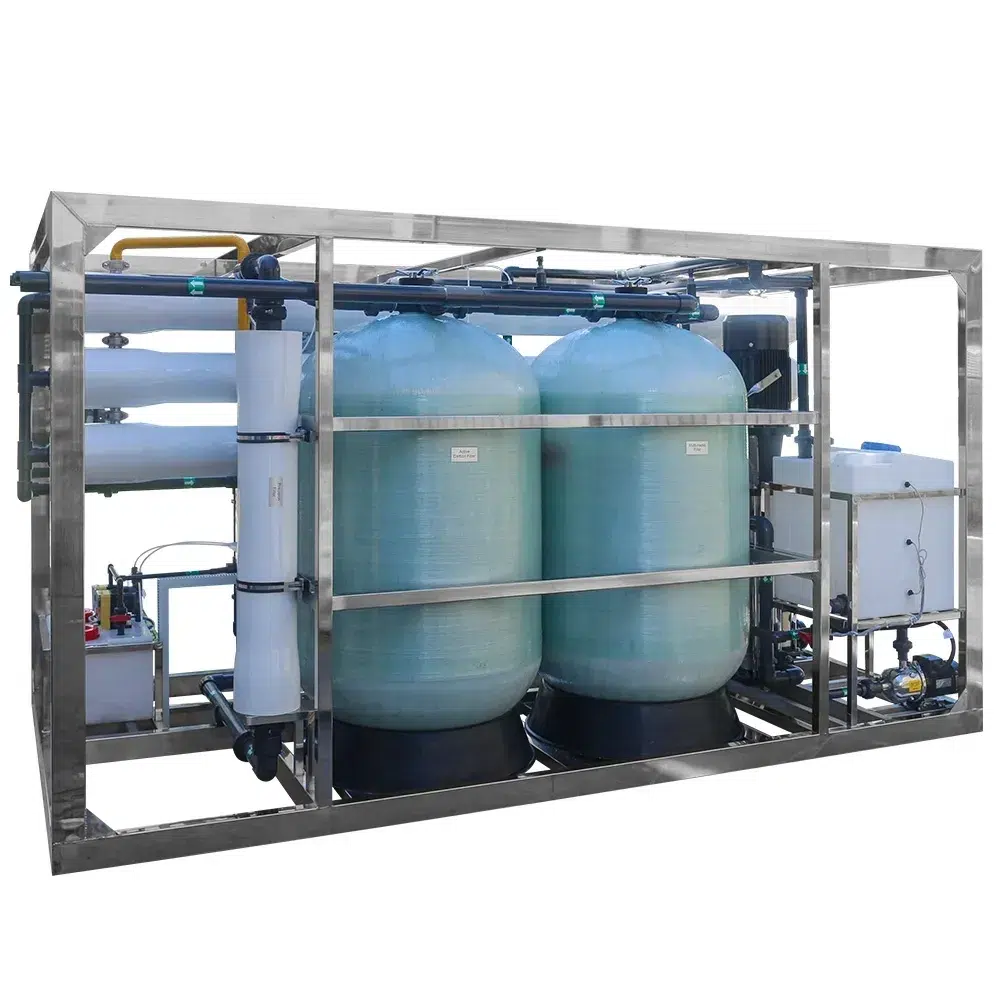
H2 Configuration
Brackish Water Is a TDS and Fouling Problem, Here's How Packaged BWRO Solves It
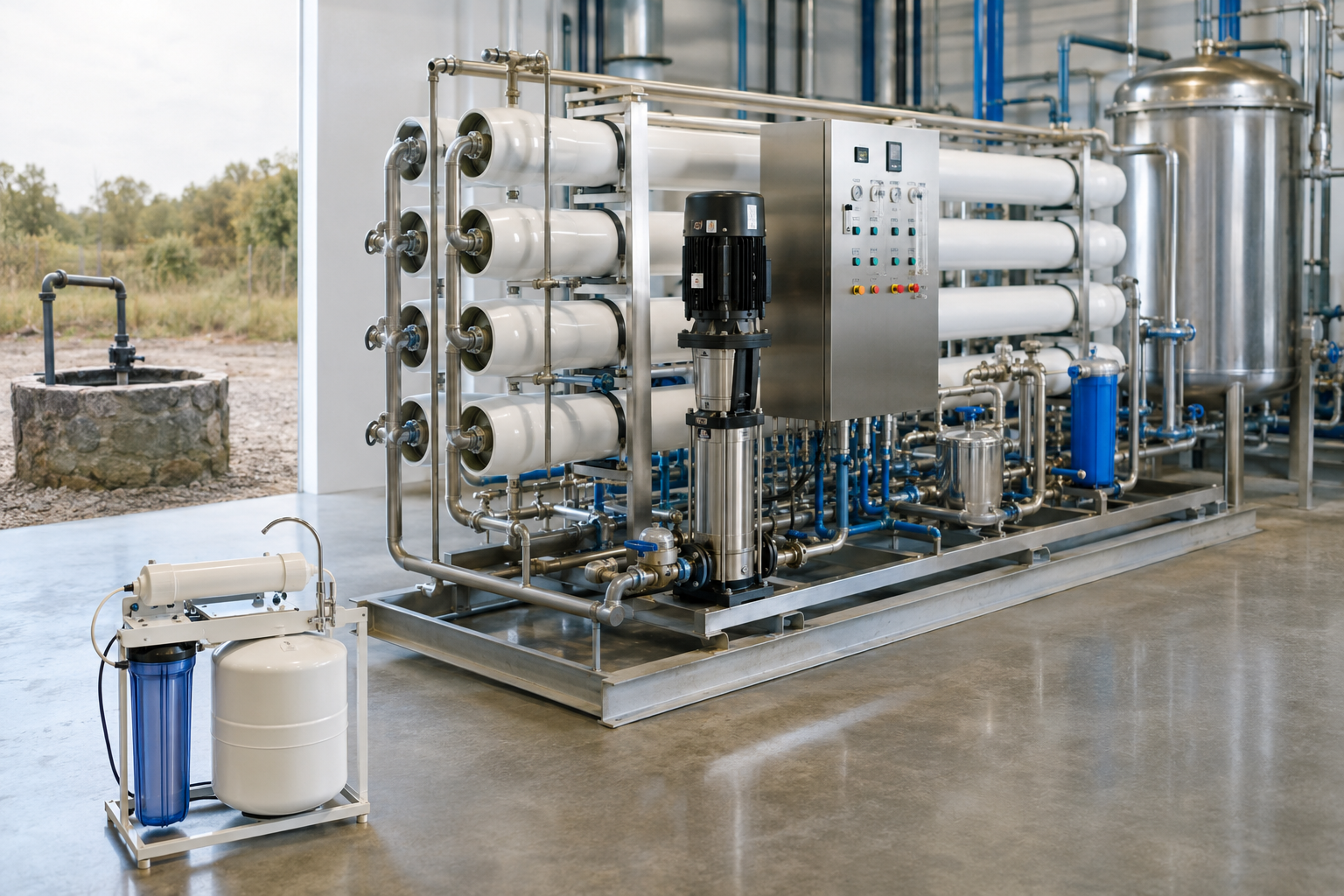
Brackish water sits between fresh and seawater, carrying 1,000 to 10,000 milligrams per liter of total dissolved solids from inland wells, groundwater, or industrial effluent. Left untreated, that salt load damages equipment and makes the water unfit for drinking.
Visualize a plant operator with the 9,000 mg/L well report worrying about wasting the $8-15k budget on a wrong system. That anxiety is justified - and it all begins with one physics error: attempting to scale up a residential, whole-house RO unit.
Reality check: A whole-house RO unit cannot desalinate industrial brackish water.
Real desalination runs at pressures far above tap-water filtration, and residential units simply cannot hold recovery or rejection at 5,000–10,000 mg/L TDS. This is why a purpose-built brackish water RO system exists as its own equipment class.
TDS Range
10,000mg/L
Pore Size
0.0001µm
Rejection
99%
Why residential RO stalls on brackish feed
 01
01
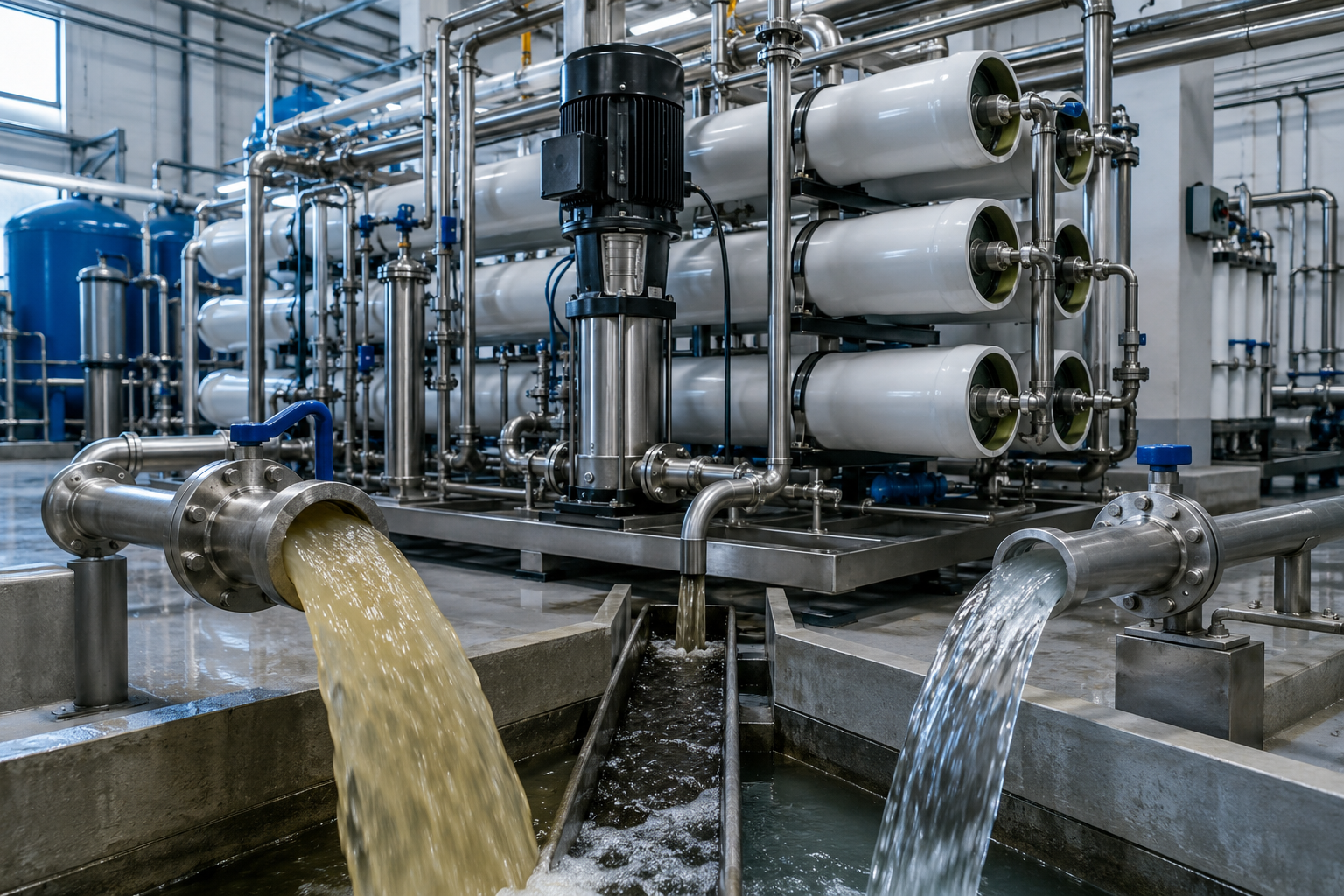
All whole house systems run off tap water pressure.
brackish desalination has to overcome a significantly larger salt gradient to push water through the membrane and consequently rejection and recovery plummet way before the feed even approaches 10,000 mg/L. All of BWRO systems are custom made to manage exactly this gradient.
 02
02
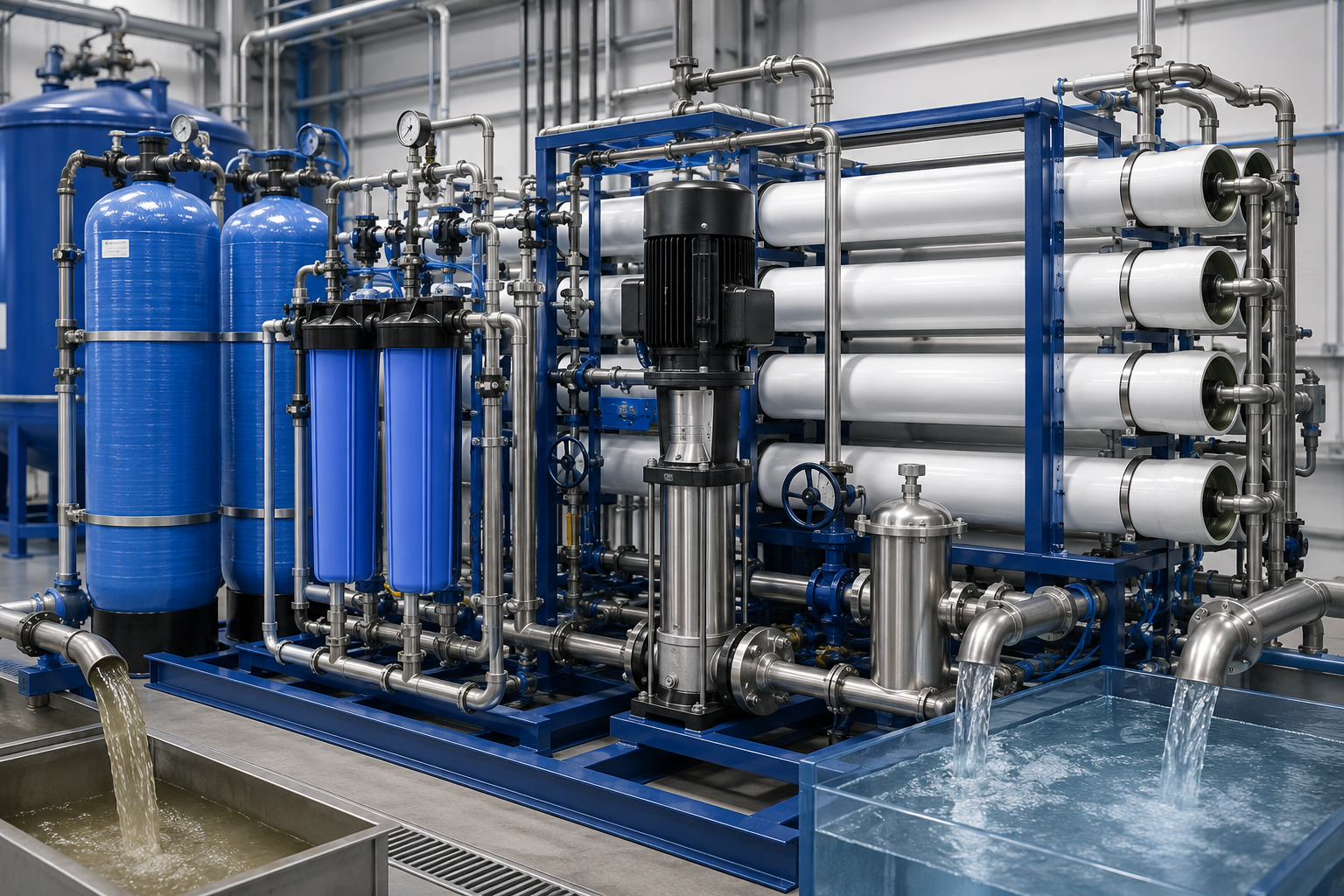
A packaged BWRO system solves 3 interconnected issues simultaneously:
there's the correct membrane pressure is imposed, membranes are safeguarded by staged pretreatment and sediment water filters, and brackish water distilled to a 0.0001-micron opening - eliminating 95-99% of mineral salts together with bacteria, viruses, heavy metal ions and pesticide fragments. Whereas a generic filter isn't designed for that salt gradient, the skid is constructed to maintain it because pressure, recovery and pretreatment are adapted to your feed - not set at a catalog default.
 03
03
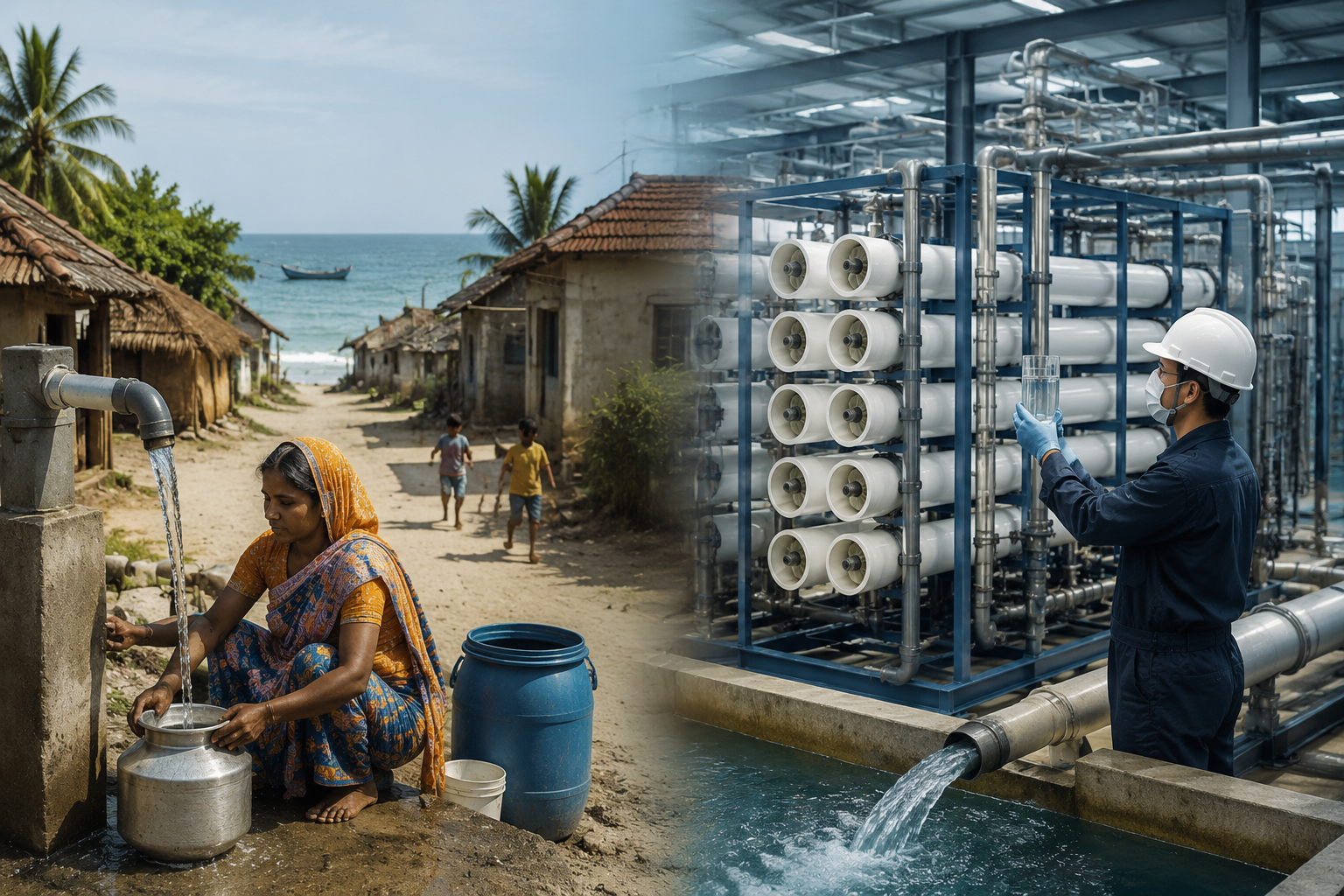
In the field, what that actually means depend on the source.
For a coastal village using groundwater with 3,000 mg/L TDS, it means safe drinking water that most brine filters would struggle to process. For an industrial facility processing an 8,000 mg/L waste stream, it means usable low-TDS water instead of paying for discharge.
Blue Membrane Packaged BWRO Systems, Capacity Range and Configuration
Standard Skid Configuration
- Stainless steel frame
- SS316L high-pressure parts
- High-pressure pump
- Spiral-wound BWRO membrane elements
- Online conductivity meter
- PLC + relay dual-mode control
- Automatic timing flush
- High-pressure / low-pressure / motor-overload protection
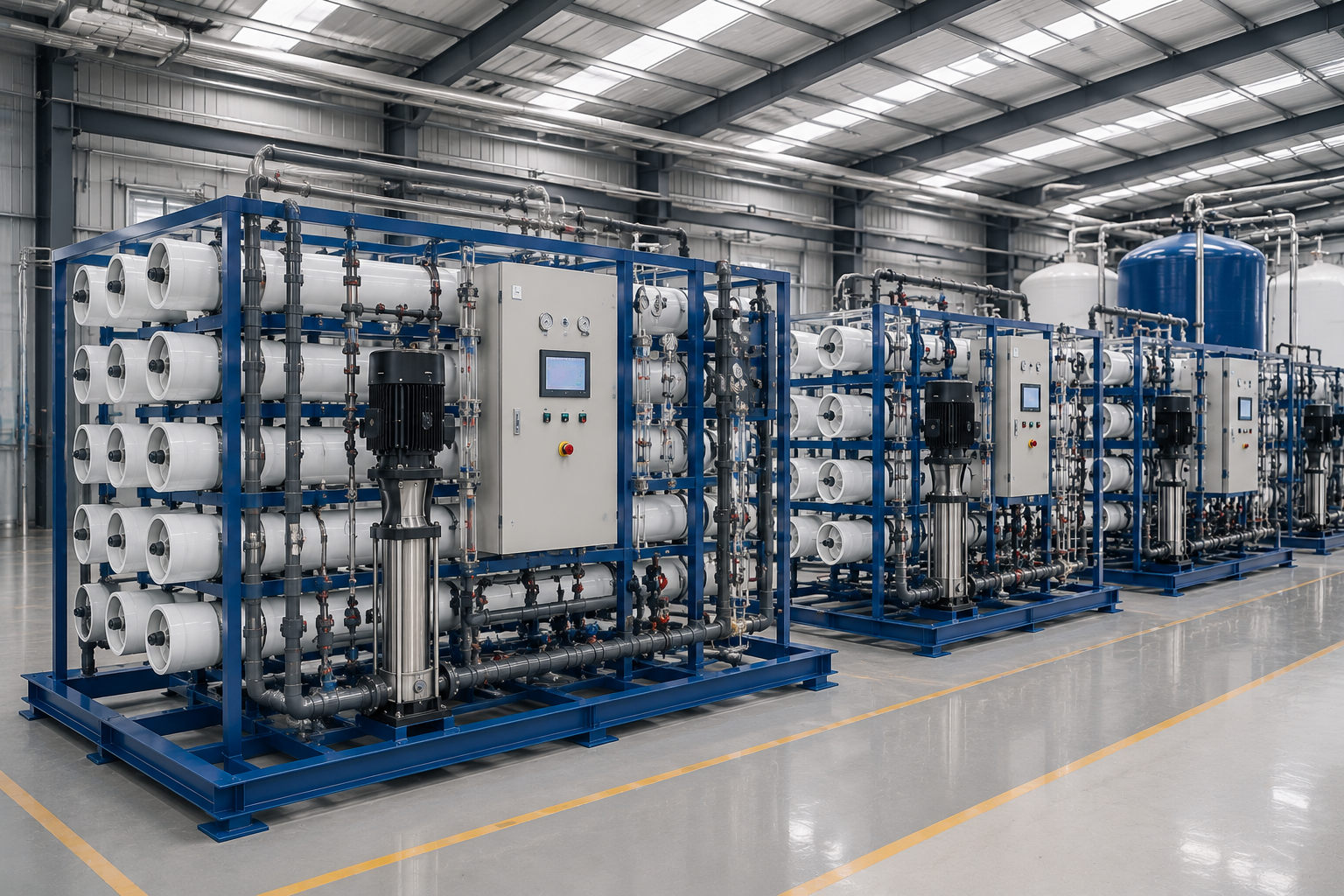
The five build formats all come pre-plumbed and are tested in our factory, meaning your order can match your site, not the other way around.
Configuration
Typical Capacity
Best For
Site Notes
Integrated skid
1–50 TPD
Inland community / commercial
Single hookup, smallest footprint
Split system
50–200 TPD
Facility with pump room
Pump and rack separated
Skid-mounted
50–300 TPD
Industrial process water
Pre-plumbed, transport-ready
Containerized
100–500 TPD
Remote / island / rapid deploy
Weatherized, drop-and-run
Modular (parallel trains)
200–500+ TPD
Municipal / expandable
Add trains for future demand
These capacity ranges translate directly to the sizing logic we’ve developed, and we find that many brackish water RO projects are won or lost in these numbers.
Performance Specifications, Rejection, Recovery, Pressure and Energy
Key insight: A higher salt-rejection number is not automatically the better spec. Rejection should be matched to your end-use quality target and energy budget — chasing the last fraction of a percent raises pressure and power cost without improving fitness for purpose.
Blue Membrane BWRO elements deliver a system desalination rate (salt rejection) of ≥98%, producing water at ≤500 mg/L TDS for drinking standards or tighter per industrial process requirement. The table below places our operating envelope against verified industry BWRO benchmarks so engineers can sanity-check every claim.
Engineering note: We deliberately don’t claim a higher recovery range of 85%+ (at which foulants accumulate rapidly), because we prefer to design around your water, not against it. We’ve put the energy use relative to seawater RO (which is dramatically lower) in the comparison table below. Get the rejection target wrong and you risk off-spec water or wasted energy at 150–250 psi, so the spec is matched to end use, not maximized blindly.
| Parameter | Blue Membrane BWRO | Industry BWRO benchmark | Source |
|---|---|---|---|
| Feed water TDS | ≤10,000 mg/L | 500–10,000 mg/L (brackish band) | US DOE / OSTI |
| Salt rejection | ≥98% | 99.0–99.7% (TFC element typical) | Membrane datasheets |
| Recovery rate | 50–75% | 75–85% (2-stage; site-dependent) | US DOE / OSTI |
| Operating pressure | 150–250 psi | 73–435 psi (5–30 bar) | ScienceDirect / AMTA |
| Product water TDS | ≤500 mg/L | Drinking water standard target | WHO / EPA |
| Filtration aperture | 0.0001 µm | RO semipermeable range | Membrane physics |
Performance Specifications, Rejection, Recovery, Pressure and Energy
Counterintuitive: A higher salt-rejection number is not automatically the better spec. Rejection should be matched to your end-use quality target and energy budget — chasing the last fraction of a percent raises pressure and power cost without improving fitness for purpose.
Blue Membrane BWRO elements deliver a system desalination rate (salt rejection) of ≥98%, producing water at ≤500 mg/L TDS for drinking standards or tighter per industrial process requirement. The table below places our operating envelope against verified industry BWRO benchmarks so engineers can sanity-check every claim.
Parameter
Blue Membrane BWRO
Industry BWRO benchmark
Source
-
Feed water TDS≤10,000 mg/L500–10,000 mg/L (brackish band)US DOE / OSTI
-
Salt rejection≥98%99.0–99.7% (TFC element typical)Membrane datasheets
-
Recovery rate50–75%75–85% (2-stage; site-dependent)US DOE / OSTI
-
Operating pressure150–250 psi73–435 psi (5–30 bar)ScienceDirect / AMTA
-
Product water TDS≤500 mg/LDrinking water standard targetWHO / EPA
-
Filtration aperture0.0001 µmRO semipermeable rangeMembrane physics
Two critical points: We deliberately don’t claim a higher recovery range of 85%+ (at which foulants accumulate rapidly), because we prefer to design around your water, not against it. We’ve put the energy use relative to seawater RO (which is dramatically lower) in the comparison table below. Get the rejection target wrong and you risk off-spec water or wasted energy at 150–250 psi, so the spec is matched to end use, not maximized blindly.
The TDS-to-Recovery Selection Matrix, Match Your Feedwater to the Right System
The mistake that costs the most: buying the highest-recovery skid on the spec sheet. Above roughly 80–90% recovery, dissolved salts and silica concentrate in the reject stream and drive fouling, scaling, and higher operating cost. The right recovery is the one your feedwater chemistry allows — not the biggest number available.
Case study: El Paso
Most engineers are limited by silica, with its true recovery cap often sitting far below theoretical. At the Kay Bailey Hutchison plant in El Paso, silica approaching 30 mg/L limited the recovery to 82.5% for feedwater TDS between 2,500-3,600 mg/L. Use the matrix below as a preliminary sizing tool. Because silica scaling is the structural reason recovery caps out and fouling risk climbs, Blue Membrane engineers each system around your full water analysis in-house, unlike a vendor pushing a spec-sheet maximum.
Recovery Map
| Feed TDS band | Recommended recovery | Typical pressure | Configuration | Pretreatment focus |
|---|---|---|---|---|
| 1,000–3,000 mg/L | 70–75% | 150–180 psi | Single-pass integrated | Sediment + antiscalant |
| 3,000–5,000 mg/L | 60–70% | 180–220 psi | 2-stage skid | Silica / iron watch |
| 5,000–8,000 mg/L | 55–65% | 200–240 psi | 2-stage + booster | Softening if hardness high |
| 8,000–10,000 mg/L | 50–60% | 220–250 psi | Reinforced skid | Full pretreatment train |
Risk Advisory
Buyer Advisory, before you request a quote
- Bring your feedwater analysis data. This should include your TDS, silica, iron, manganese and hardness.
- An RFP without complete feed-water data will likely be 15-25% higher upon award.
- A one-page water analysis is the single most useful thing you can bring to sizing.
Packaged BWRO vs Buy-and-Assemble vs Seawater RO, Cost and Performance
Procurement truth: the lowest bid is usually the most expensive system. A cheaper unit whose membranes and pumps need replacing in 12–18 months instead of 24–36 can cost double over its life — bad quality = short membrane life, short pump life, and repeated replacement.
Most buyers consider one of these three options: buying a complete skid, buying the parts and assembling the unit ourselves, or buying an over-specced seawater RO system just to be safe. Our sizing clearly separates these paths.
up to 45%
Energy can account for up to 45% of an RO system's lifecycle cost — so running brackish feed at ~1–1.5 kWh/m³ instead of seawater's 3–5 kWh/m³ is where real TCO is won.
Industry data: US DOE plant benchmarks (LCOW ~$0.38–0.56/m³ inland BWRO) · AMTA / Energy Recovery. Not a Blue Membrane-specific figure.
Why a Membrane Manufacturer Builds a Better BWRO System
The truth is most “BWRO manufacturers” are actually integrators that source standard membrane elements on the open market and bolt them to a frame. We make our own BWRO membrane elements in-house, and build our system around them. For you, the customer, vertical integration makes two important differences:
Provenance you can trace
Counterfeit and unknown membranes are a genuine market problem, so every element in our skids come with a known origin, not a market-bought unknown.
Price and supply stability [+8.3% Q2/2026]
RO membrane prices rose about 8.3% in Q2 2026 as demand climbed; integrators pass that through, while a manufacturer absorbs less volatility.
OEM & Municipal Applications
For an OEM partner or municipal water plant running a production line on demanding feed, exact-match replacements mean no requalification when an element is swapped, the system and its membranes come from one source.
Traceability
For a buyer weighing a Chinese manufacturer against a US-assembled brand, that traceability is the honest answer to the "can I trust the membrane?" question, because the membrane is ours, start to finish.
Need membrane provenance records for your audit?
REQUEST MEMBRANE SPEC SHEET →Applications and Results, Industrial, Municipal and Commercial
85%+
Industry data: over 85% of installed municipal desalination to date is BWRO
BWRO isn't niche. BWRO is over 85% of installed municipal desalination to date, and our systems are built for that same market need across all these applications. Untreated brackish feed is expensive and risky because scale and corrosion shorten equipment life, which is why Blue Membrane engineers each system to the sector, unlike a generic filter.
APPLICATION DIRECTORY System Deliverables
01
Industrial process water
Consistent low-TDS feed for manufacturing lines
02
Boiler feed water
Removes TDS that drives scale and carryover
03
Cooling tower make-up
Cuts blowdown and scaling in recirculating loops
04
Inland community drinking water
Potable water from brackish groundwater
05
Irrigation / agriculture
Salt reduction for crop-safe water
06
Wastewater recycling
Reclaims industrial effluent for reuse
Our island hotel brackish water treatments work the same way; a skid based system producing potable or process water for an inland or coastal aquifer source.
Materials, Standards and Quality Control
Engineering Rigor
Standards
International procurement means attention to standards. Here's an honest guide to what regulates industrial BWRO and where to seek information.
- Material Safety NSF/ANSI/CAN 61 certifies components that come into contact with drinking water; this is applicable to Brackish Water RO membrane elements.
- System Performance NSF/ANSI 58 is the RO drinking water performance and structural standard.
- Vessel compliance FRP pressure vessels for membrane housings fall under ASME BPVC Section X; request the vessel documentation for your project.
System Specifications
SS316L
High-pressure wetted parts
PLC + Relay
Dual-mode control
Online TDS
Real-time conductivity meter
Auto-flush
Extends membrane service life
3× Protection
High/low pressure · overload
Need the full compliance pack for your market?
DOWNLOAD COMPLIANCE DOCUMENTATION →System Simulation & Sizing Tools
Flow & Capacity Tool
BWRO Sizing Calculator
Determine optimal system capacity, membrane array configurations, and skid footprint based on your specific feed water flow requirements and target output.
Operating Cost Tool
Energy Cost Estimator
Calculate projected operational expenditures. Accurately model power consumption per cubic meter based on local electricity rates and high-pressure pump efficiency.
Chemistry & Recovery Tool
TDS & Recovery Selector
Balance feed salinity against maximum safe recovery rates to prevent mineral scaling, optimize cross-flow velocity, and maximize membrane element lifespan.
Frequently Asked Questions
What TDS range does a brackish water reverse osmosis system handle?
System Response
Brackish feed is generally 1,000–10,000 mg/L TDS. Our BWRO systems treat up to 10,000 mg/L and produce ≤500 mg/L product water for drinking standards, or tighter for industrial process needs.
What recovery rate can a BWRO system realistically achieve?
System Response
50–75% is the honest working range, set by feedwater chemistry. Higher recovery is possible with heavy pretreatment, but pushing it too far concentrates foulants and shortens membrane life, so we size recovery to your water, not to a spec-sheet maximum.
Can a residential or whole-house RO unit desalinate brackish water instead?
System Response
No. Residential and whole-house units can't sustain the pressure brackish desalination requires.
How is a BWRO system different from a seawater RO system?
System Response
Brackish systems run at 150–250 psi and ~1–1.5 kWh/m³; seawater systems need ~800–1,000 psi and 3–5 kWh/m³. Over-specifying seawater RO for brackish feed wastes energy and money.
Why buy from a manufacturer instead of a system integrator?
System Response
Because we make the RO membrane elements and build the skids ourselves, you get traceable membrane provenance, factory-direct pricing, and exact-match replacements from the same production line. Integrators, by contrast, buy their membranes at market price, which recently rose about 8.3% in a single quarter, so you carry both the provenance uncertainty and the price exposure of an unknown element.
How do I verify I'm buying from a real factory, not a trading company?
System Response
Ask for a live video walk of the production line showing the company logo on the building, plus export records and compliance documents. We manufacture directly and can provide all three.
Trending now