Get in touch with Blue Membrane Company

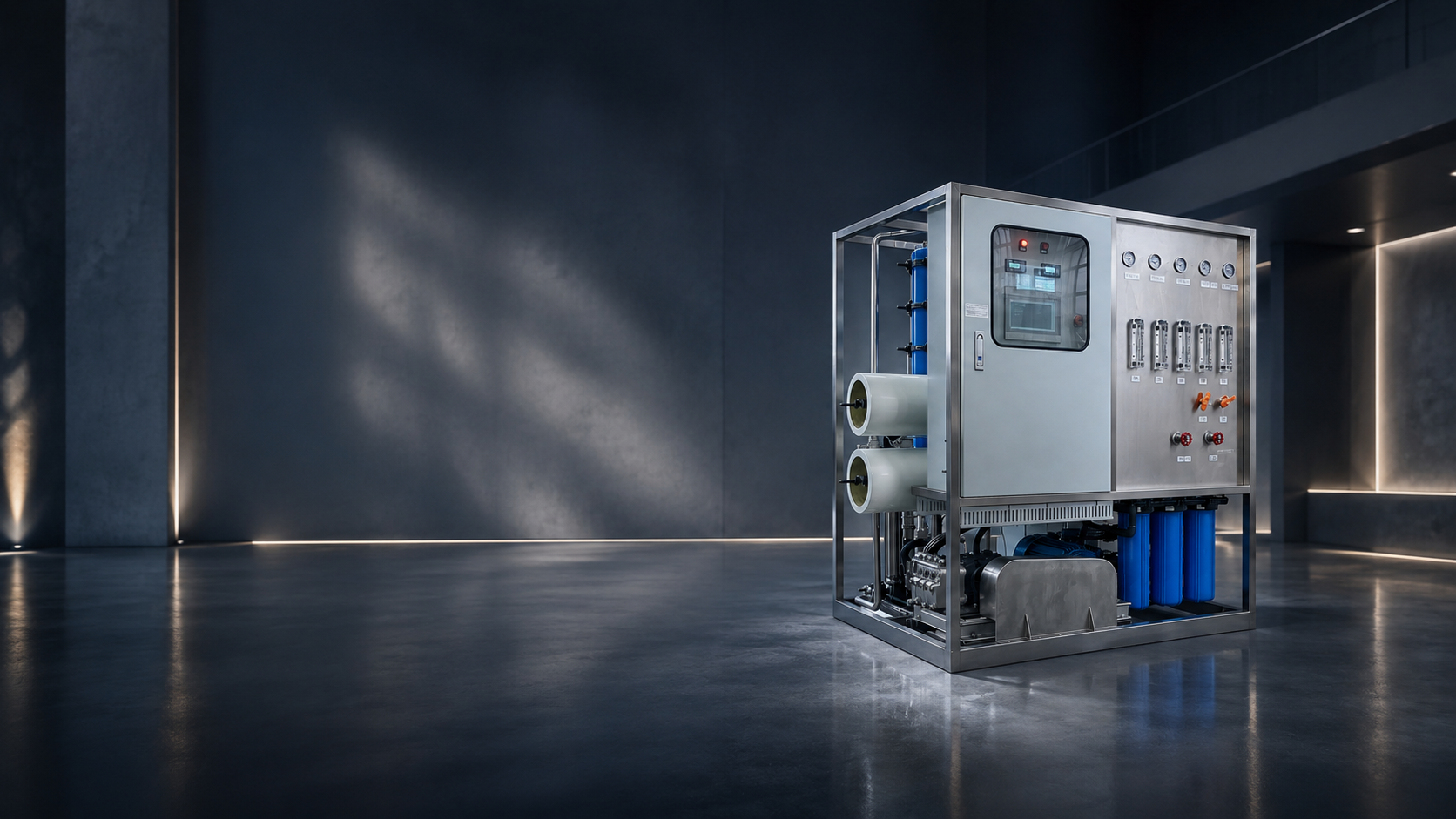
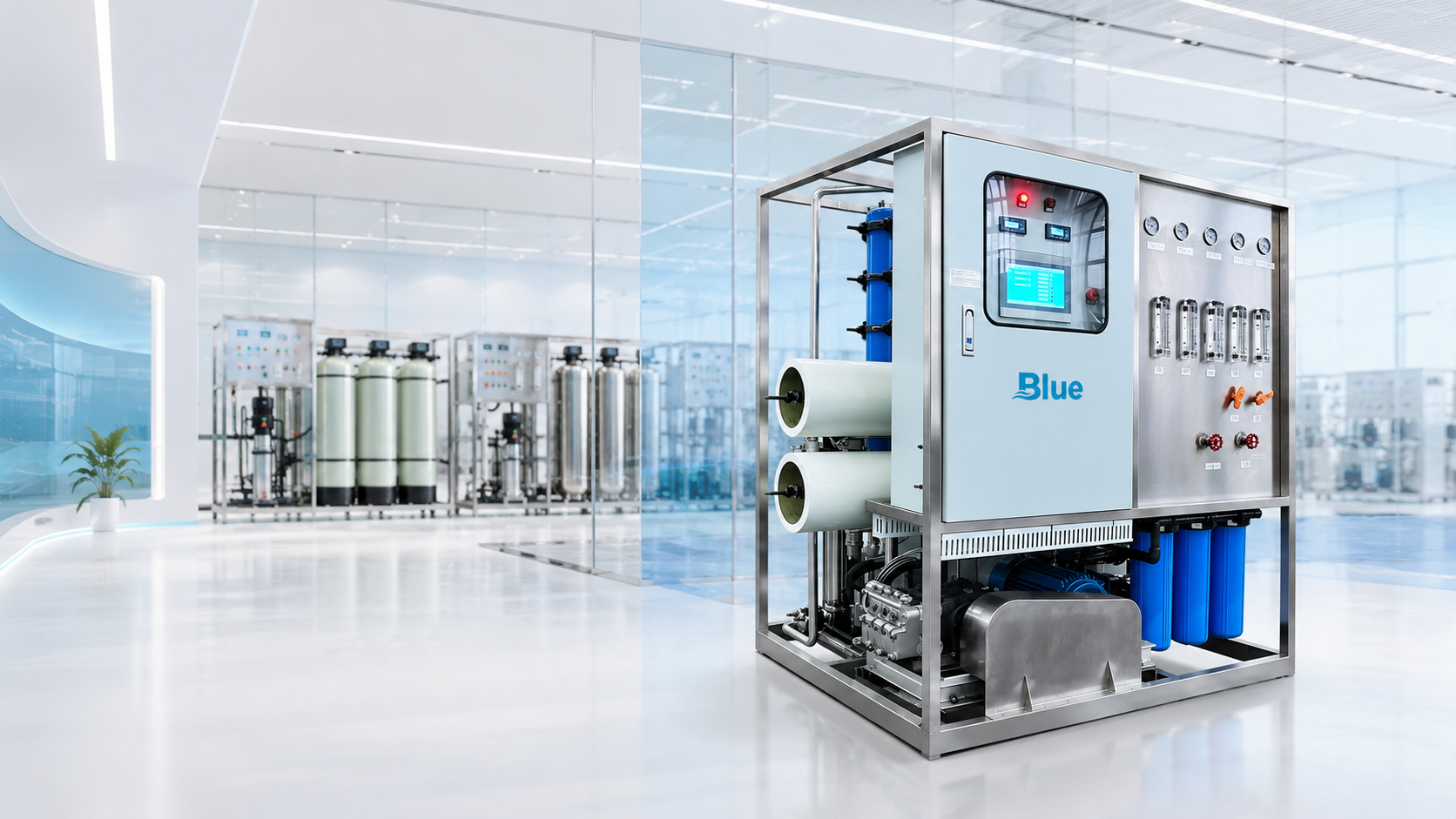
Well Water Brackish Water Reverse Osmosis (BWRO) Systems
Customized brackish water reverse osmosis system for challenging well water including high total dissolved solids (TDS), iron, manganese, fluoride, and hardness. Our system removes up to 99.5% of dissolved salt and achieves 1-500 TPD for inland towns, ranches, and plants.
Request a Quote
1–500 TPD
Modular skid capacity
≤5,000 mg/L
Feed water TDS handled
≥99.5%
Salt rejection
50–75%
Water recovery rate
≤300–500 mg/L
Product TDS (meets WHO)
SS316L
High-pressure manifolds
Why High-TDS Well Water Defeats Standard RO — and How BWRO Solves It
Appearance isn’t every thing with groundwater: even water that looks clear from a distance can register as high as 6,000 mg/L TDS and appear reddish-brown from dissolved iron or even have a slightly salty taste. That’s because brackish water, commonly defined as having a TDS level between 1,000 and 10,000 mg/L (roughly 1,000 to 10,000 parts per million), contains high concentrations of dissolved salts and contaminants that carbon water filters, such as those in whole-house filtration units, are unable to remove. While typically found in coastal aquifers, estuaries, and inland water sources tapped where freshwater is scarce, brackish water requires desalination technology, not simply an improved filter, to be rendered drinkable. To treat brackish water effectively you must remove these dissolved contaminants at their source, not just filter their particles.
Inland brackish well water is notorious for high levels of hardness, including calcium and magnesium. Additionally, iron, manganese, fluoride, and other problem ions are common, which will clog or foul the membranes in standard low-pressure RO units. The resulting calcium carbonate will scale on the surface of the RO element and can cause severe fouling of the membrane from dissolved iron and manganese particles, leading to poor performance and the early failure of RO elements.
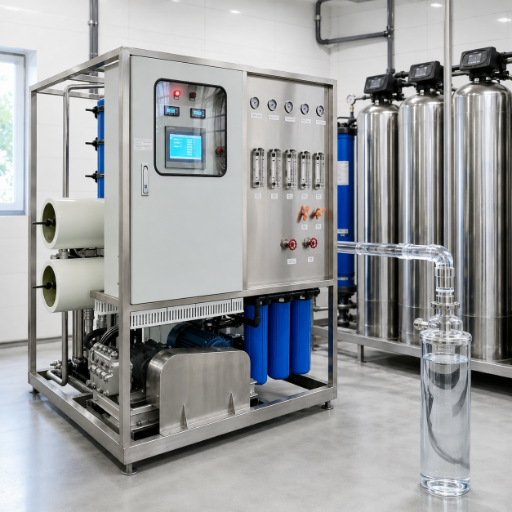
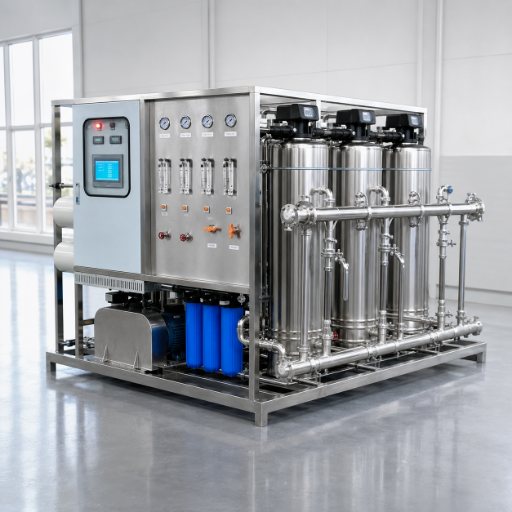
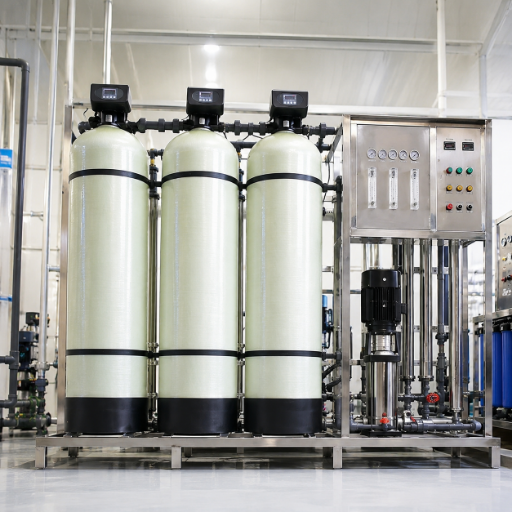
the Blue Membrane Well Water BWRO is a self-contained, single-skid brackish water RO system designed with specific pretreatment steps and high-rejection brackish water RO membranes. It can effectively remove dissolved salts, sulfates, hardness, iron, manganese, fluoride, and arsenic, and achieves 99.0-99.5% rejection of salts. These units can reduce total dissolved solids in source water up to 5,000 mg/L down to as low as 300-500 mg/L - well within World Health Organization guidelines for drinking water taste and safety.
SYSTEM INQUIRY ->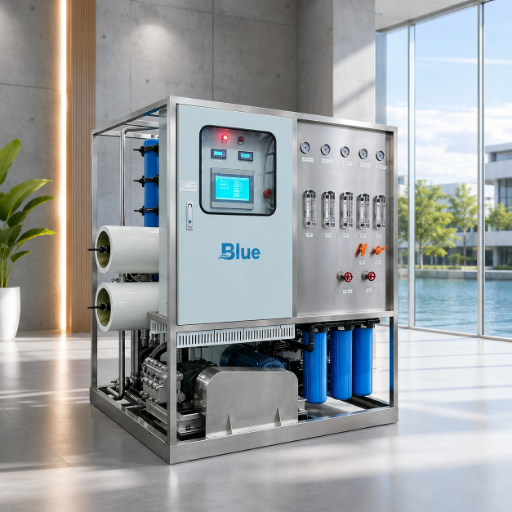
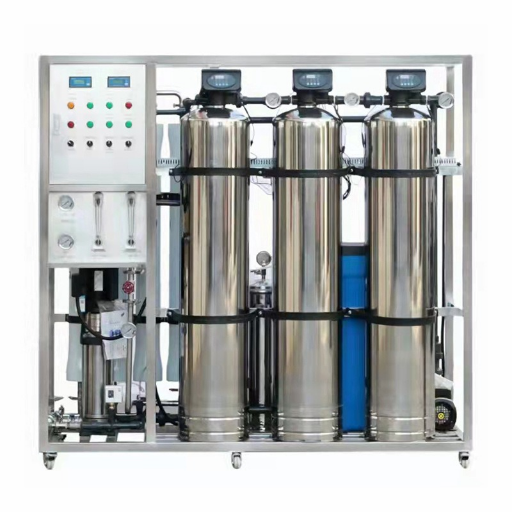
Blue Membrane BWRO Configurations — 1 to 500 TPD
Scale & Capacity: Many manufacturers in the brackish RO industry only cater to community and large farm needs, starting with units 26,000 GPD (approximately 98,400 L/d) or larger. Blue Membrane builds the full spectrum: a 264 GPD (1 TPD) unit for a small town scales up to a 132,000 GPD (500 TPD) system for industrial process water, so the unit matches the well rather than the other way around. Units ship as modular, skid-mounted packages for easy installation in inland towns, ranches, and single plants.
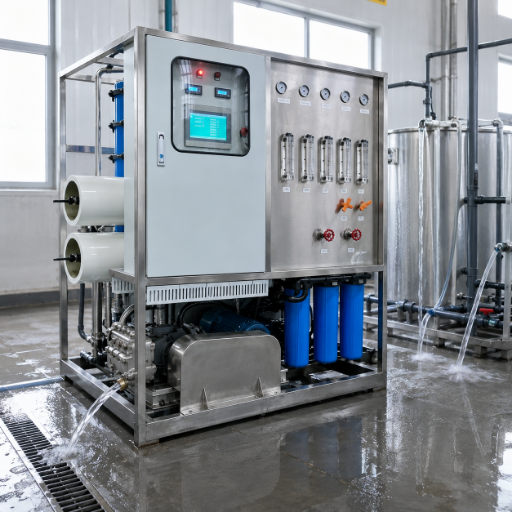
Plug & Play Design: Every Blue Membrane unit comes completely pre-piped, pre-wired, and wet-tested for quality and simplicity. Users only need to connect the well water supply line, the product water line, the concentrate line, and the electrical power supply, and then they are ready to begin producing high-quality water. The low-pressure systems operate on just 150-250 psi (1.0-1.7 MPa), and the frame is supported by a structural stainless steel skid, high-pressure SS316L manifolds, and corrosion-resistant FRP membrane pressure vessels to withstand challenging water conditions.
| Series | Capacity (TPD) | Approx. GPD | Typical use | Feed TDS fit |
|---|---|---|---|---|
| WW-BWRO Compact | 1–20 | ~264–5,300 | Rural households, ranches, village kiosks | ≤5,000 mg/L |
| WW-BWRO Standard | 20–150 | ~5,300–40,000 | Village water stations, farms, greenhouses | ≤5,000 mg/L |
| WW-BWRO Industrial | 150–500 | ~40,000–132,000 | Boiler feed, process water, municipal supply | ≤5,000 mg/L |
Authority Hook — Well Water Chemistry to BWRO Configuration Selector
| Dominant well-water issue | Feed TDS band | Recommended pretreatment | Recovery target | Membrane type |
|---|---|---|---|---|
| Iron / manganese (brown water) | Any | Greensand or catalytic media + oxidation | 50–65% | Low-energy BWRO |
| High hardness / scaling (high LSI) | 1,000–3,000 mg/L | Anti-scalant dosing (+ optional softening) | 65–75% | Low-energy BWRO |
| Fluoride / arsenic | ≤5,000 mg/L | Targeted media + high-rejection RO | 55–70% | High-rejection BWRO |
| High silica | 3,000–5,000 mg/L | Silica-specific anti-scalant, recovery capped | 50–60% | High-rejection BWRO |
Use this specification table as a guide line; optimal recovery rates are based on the specific analysis of your water and are adjusted to ensure the solution remains below silica and hardness saturation points.
Not sure which series fits your well? Get a free TPD sizing estimate →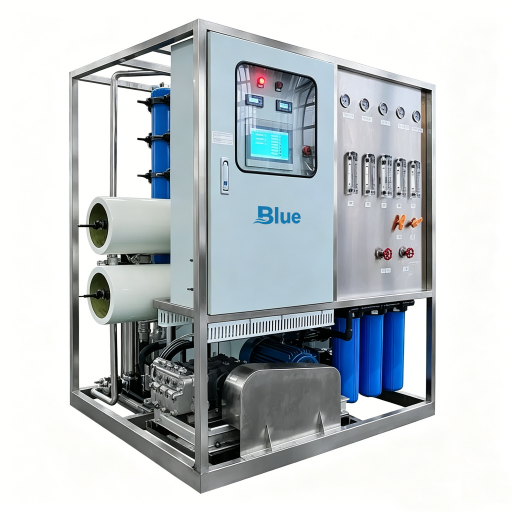
BWRO vs Water Softeners vs Whole-House Filters — What Actually Removes Salt and TDS
The Costliest Mistake in Brackish Well Treatment is Picking the Wrong Type of system upfront. Water softeners cost less than BWRO systems and as such are the default recommendation - yet they cannot reduce tds; water softeners merely substitute sodium for calcium and magnesium and will barely budge conductivity or salinity and sediment and carbon filters can do nothing at all about the dissolved salt. Out of the four methods listed here, reverse osmosis is the only method that can significantly reduce total dissolved solids. At a minimum of 90%, maximum 99% reduction depends on the specific reverse osmosis membrane and the pretreatment employed.
| Capability | BWRO (Blue Membrane) | Water Softener | Sediment / Carbon Filter | Ion Exchange (DI) |
|---|---|---|---|---|
| Reduces TDS / salinity | ≥99% removal | ~0% (swaps ions) | ~0% | High, resin-limited |
| Removes hardness (Ca / Mg) | Yes | Yes | No | Yes |
| Removes iron / manganese | Yes (+ pretreatment) | Partial | Partial | Partial |
| Removes fluoride / arsenic | Yes | No | No | Selective |
| Adds sodium to water | No | Yes | No | Varies |
| Handles 1,000–5,000 mg/L feed | Yes | Not for TDS | No | Costly at high TDS |
Inside the System — Pretreatment, Anti-Scalant and Membrane Chemistry for Well Water
The two common ways that most brackish RO systems are destroyed are as follows and most plant operators admit that membranes degrade more rapidly than their intended lifespan in the event of one or both of these failures occurring. The Blue Membrane system design process actively safeguards against these potential problems from the initial point of entry.
"We prefer running 60 percent recovery in high-hardness inland wells, with the anti-scalant loop set for the Langelier index rather than the over-driven 75 percent where we clean elements on a monthly basis. Since membrane replacement is the largest single operating expense, we base our recovery figures on the water analysis, not on what a manufacturer brochure states."
01
Pretreatment - Iron and Manganese First.
Even before it becomes a problem, dissolved iron and manganese begin to contaminate and foul the membrane. As a result, a greensand or catalytic media pretreatment system has been incorporated to oxidize and capture iron and manganese before the water passes through the membranes; the most typical cause of brackish RO systems not meeting expected performance targets.
02
Number - based Treatment for Scale.
Hard groundwater will leave a scale layer of calcium carbonate on the membranes when the concentration becomes too high. In this type of application, a plc-controlled, precisely metered anti-scalant injection pump maintains a safe value in the langelier saturation index. This permits high recovery rates with the absence of precipitation at the membrane exit. However, due to excessive levels of silica and hardness, a reasonable recovery limit has been enforced and is strictly observed as the operational parameter rather than some arbitrary or exaggerated number derived from an unresearched brochure.
03
Water Specific Reverse Osmosis Membrane Selections.
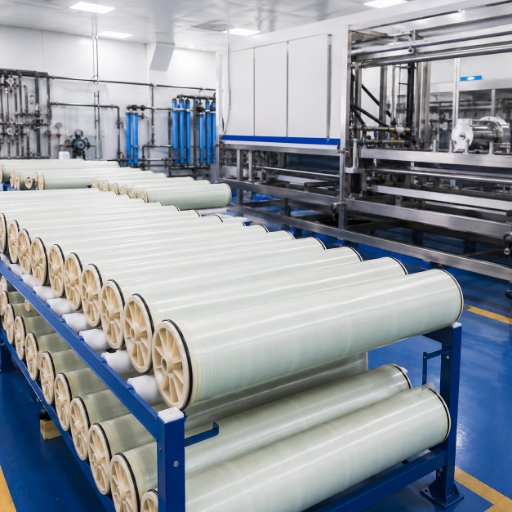
We use high-rejection, low-energy, brackish water RO membranes with high affinity for divalent ion removal, allowing us to achieve up to 99.5% rejection at only 150 to 250 psi-unlike the considerably higher operating pressures required by high-rejection sea water membranes. The element vessels feature an automatic, low-pressure, forward flush that removes mineral concentration build-up every time the system is shut down, thus prolonging the life of the elements.
Where BWRO Delivers — Inland Communities, Farms, Ranches and Industry
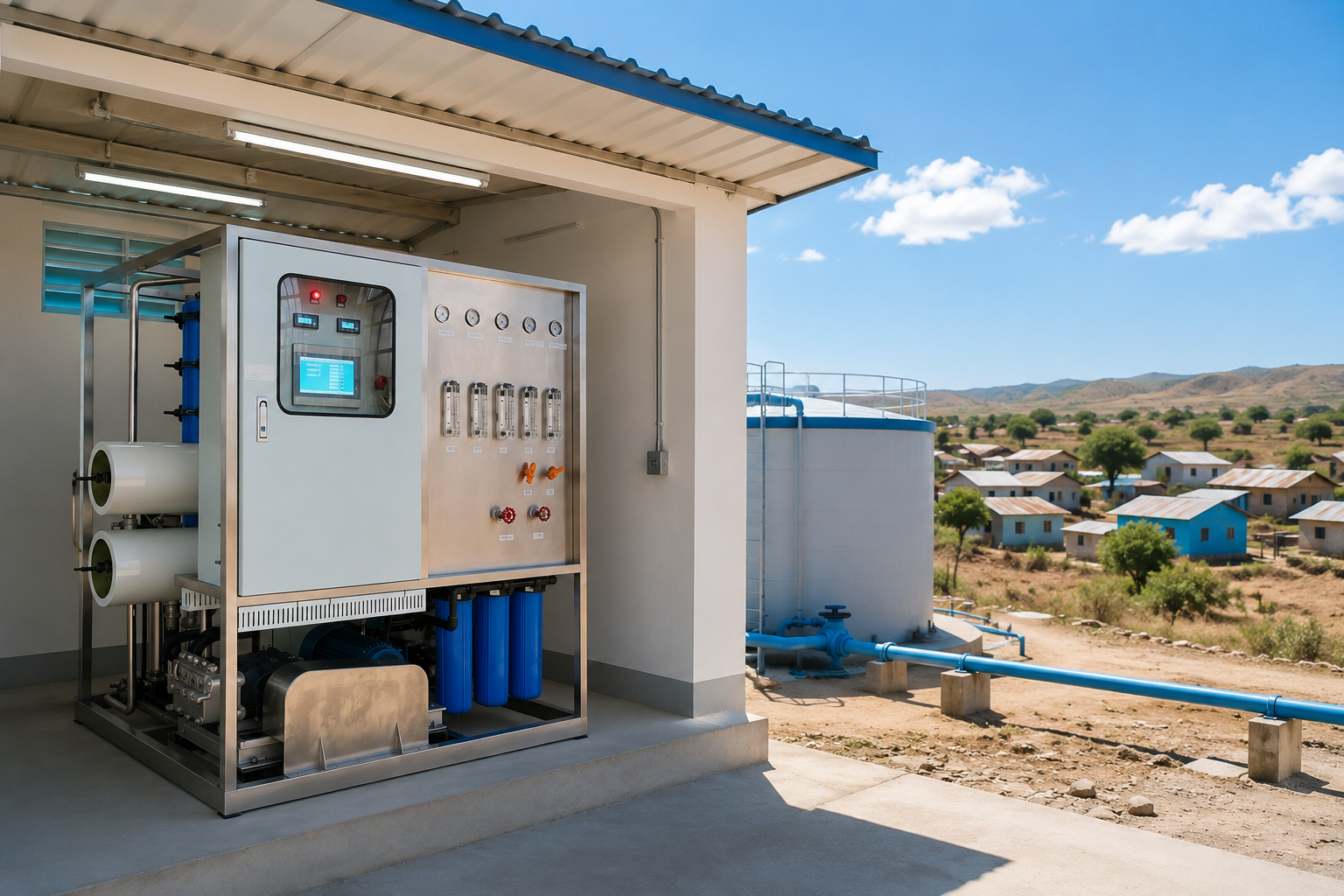
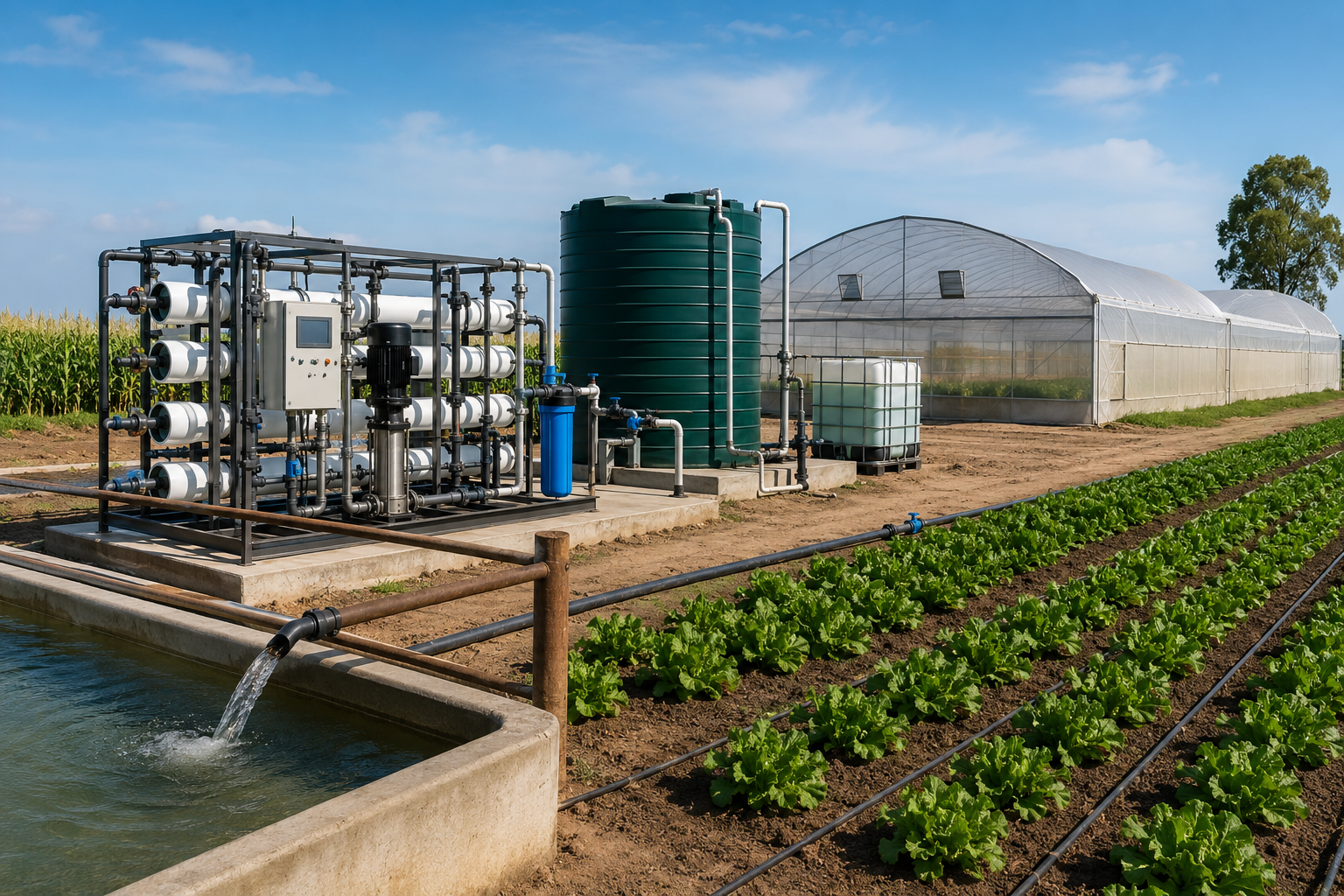
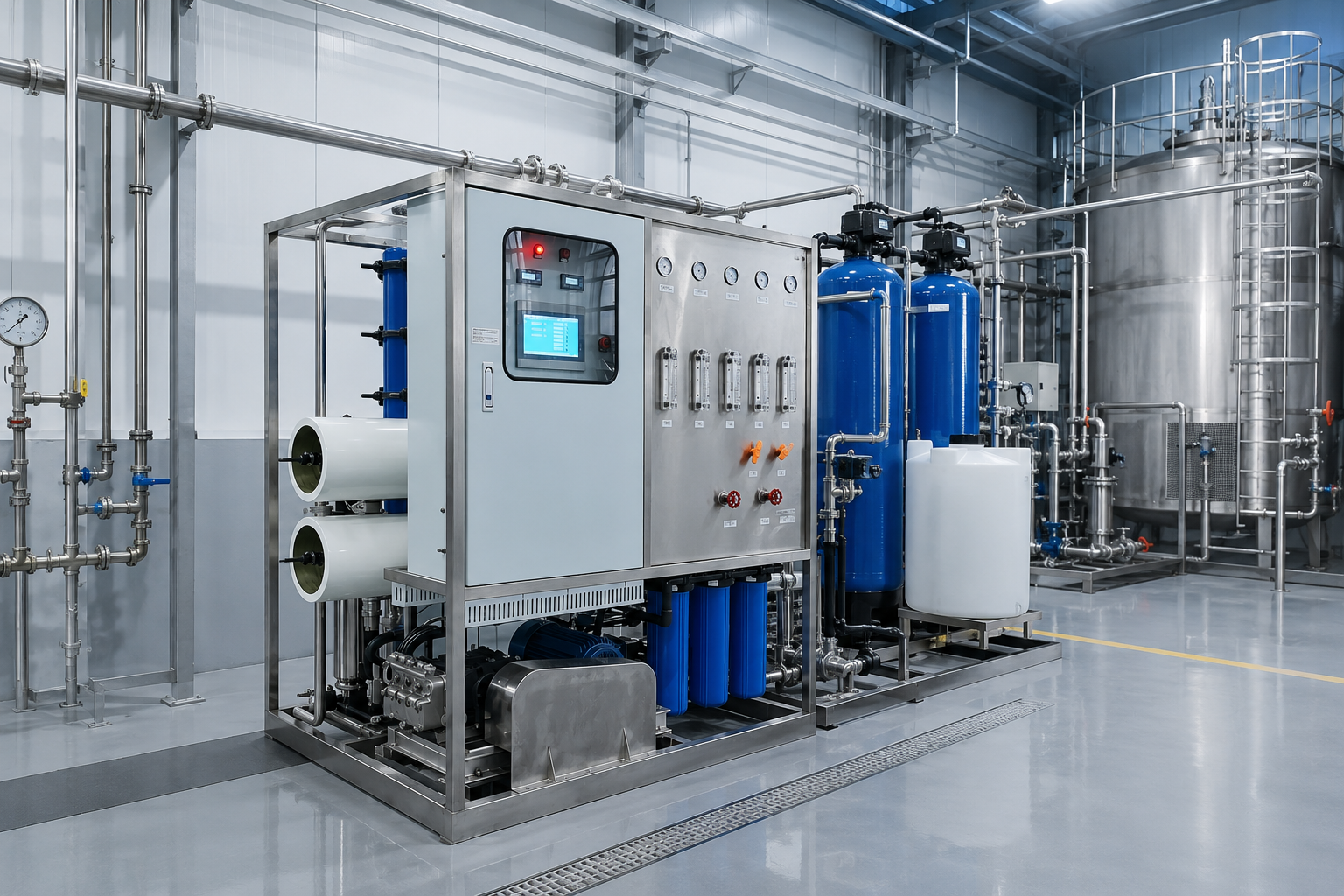
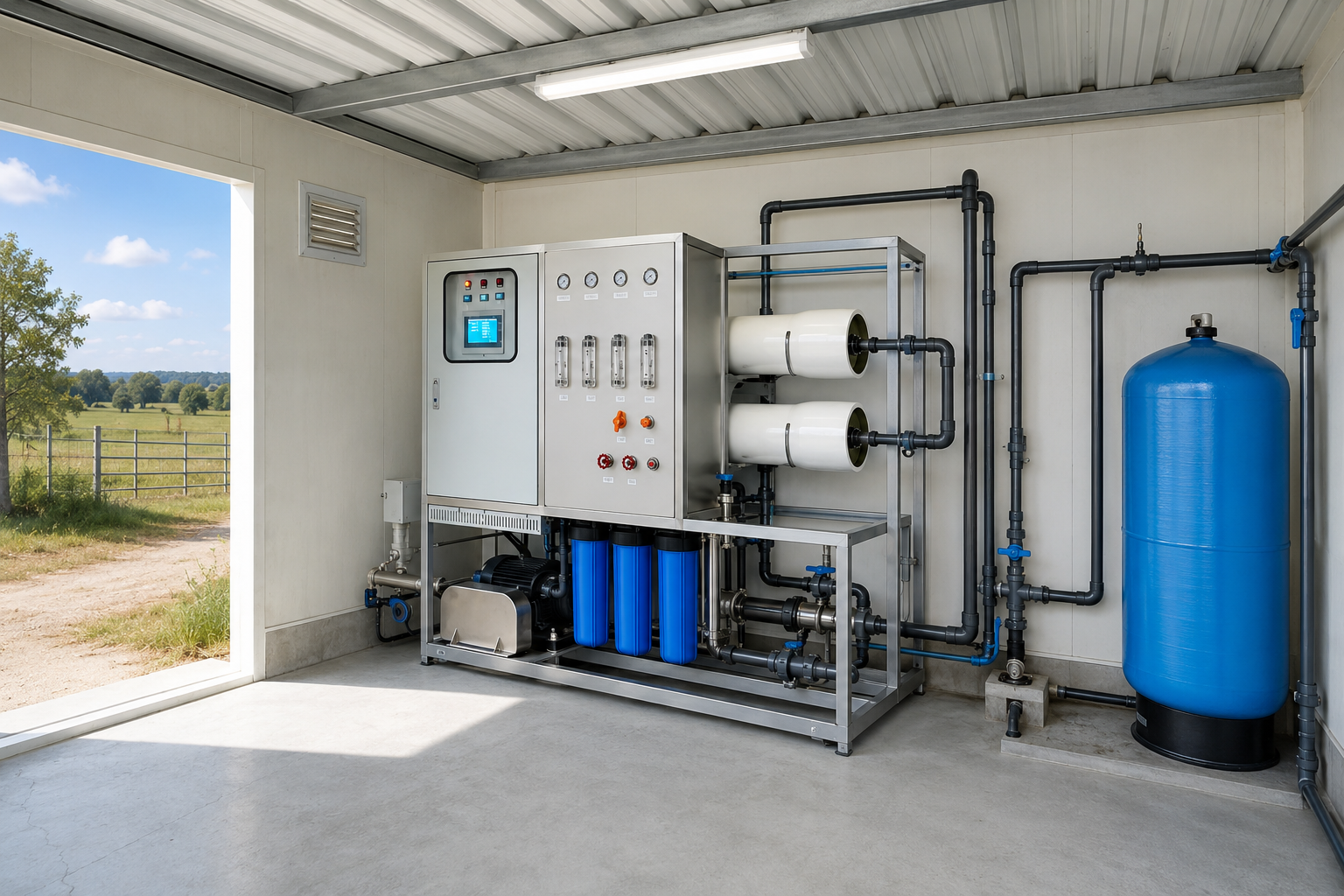
A brackish groundwater source can serve as an alternative resource when water is scarce and otherwise difficult to acquire, yet because most equipment ignores smaller inland users, this water resource stays underused. Scaled by series, one core brackish water treatment system serves very different jobs:
Given that inland brackish water desalination is substantially less expensive than for seawater desalination, it often represents the most economical approach to meeting a site’s fresh water needs.
~$1.50 / 1,000 gal
Typical production cost of desalinated brackish groundwater — against $3.60–$5.80 / 1,000 gal for seawater desalination.
Source: Texas Water Development Board, Cost of Brackish Groundwater Desalination in Texas (O&M $0.53–$1.16 / 1,000 gal).
Water Quality Standards and Build Compliance
Product water at 300-500mg/L TDS (which also improves on WHO aesthetic standards for drinkability); every system is tested for performance and sent wet before it leaves our factory. Every system comes built using corrosion-resistant materials designed to withstand tough well water; we’re not simply chasing the lowest purchase price.
Specifying and Buying a Well Water BWRO System — Sizing, Lead Time and What to Send Us
The purchase of a BWRO system is not like choosing a menu; your optimum system configuration will be driven by both the quality of your water and the volume you consume. Because we're the membrane manufacturers, your quotation will be based on the real numbers you supply, rather than on fixed pricing. Therefore, your fastest route to an accurate quotation is to send us the correct information.
What to send with your RFQ
-
01
A recent well water analysis, including: TDS, hardness, iron, manganese, fluoride/arsenic, silica and pH.
-
02
The daily water volume your application will require, in TPD or GPD.
-
03
Your site's physical characteristics, such as: water temperature (our systems work best from 5–45 °C), available electrical supply and physical footprint available for equipment.
-
04
Your application (drinking water, irrigation, livestock, boiler feed, industrial process water).
Cost determinants
Cost is a function of the TPD output capacity, the specific pretreatment steps dictated by the water's analysis, the membrane array and its rejection rate, materials used for construction, and the extent of instrumentation and automation required; it is not set by a single price. A cleaner well (lower TDS) will require less costly pretreatment compared to a muddy well with higher TDS, and your quote will reflect this. Delivery timing varies by capacity and configuration, and will be provided in the quotation for your review.
Engineering Resources
Well Water Brackish RO Treatment Tools
Frequently Asked Questions
What TDS or salinity can a brackish water reverse osmosis system handle?
These systems are optimized for feed water up to 5,000 mg/L TDS — the low-to-medium end of the brackish range that authorities put at 1,000–10,000 mg/L — and bring it down to a 300–500 mg/L product for drinking, irrigation or process use.
How is a brackish RO system different from a seawater RO system?
Quite a lot, and it matters for your budget. Brackish water is far less saline than seawater, so a BWRO system runs at much lower pressure — 150–250 psi here rather than the 800+ psi a seawater membrane needs — and therefore at much lower energy. In production-cost terms that is roughly one-third to one-half of seawater desalination. Specifying a seawater system for an inland brackish well simply over-builds and over-prices the plant.
Will it remove iron, manganese, fluoride and arsenic from well water?
Yes. Iron and manganese are captured by integrated greensand or catalytic-media pretreatment ahead of the membrane, and the high-rejection elements take out fluoride, arsenic, sulfates and hardness along with dissolved salt.
Isn't a water softener cheaper and good enough?
No — a softener does not lower TDS. It swaps calcium and magnesium for sodium, so brackish water stays salty. Only reverse osmosis removes the dissolved salt.
What recovery rate can I expect on high-hardness well water?
Typically 50–75%, set deliberately from your water chemistry. High hardness or silica caps recovery lower to prevent tail-end scaling, while the anti-scalant dosing loop and Langelier Saturation Index control let the system run at the safe upper end for your particular water rather than a generic brochure figure.
My need is small — a ranch or village. Is an industrial BWRO overkill?
Not at all. Its Compact series starts at 1 TPD, about 264 GPD, so you get a system sized to the well — the same engineering simply scales up to 500 TPD.
Do I need to send a well water analysis first?
It is the single most useful thing you can provide. TDS, hardness, iron, manganese, fluoride, arsenic and silica decide the pretreatment chain, membrane selection and achievable recovery — and therefore an accurate quote.
Trending now