Get in touch with Blue Membrane Company

Manufacturer-Direct NF Elements
Nanofiltration Membrane Elements, N1/N2/N3 Selectivity for Industrial Water Treatment
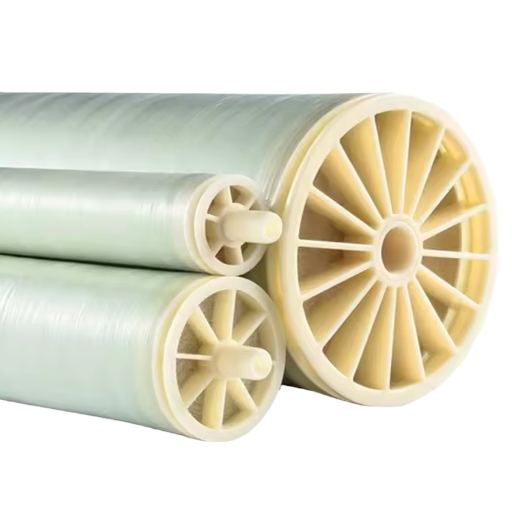
A nanofiltration membrane sits between reverse osmosis and ultrafiltration, and choosing one is a selectivity decision — not a race toward the highest rejection figure. Blue Membrane casts its own polyamide sheets and publishes the full N1/N2/N3 specification table — tested at 2,000 ppm MgSO₄ and 100 psi — so you can match a membrane to your water instead of guessing from a brochure.
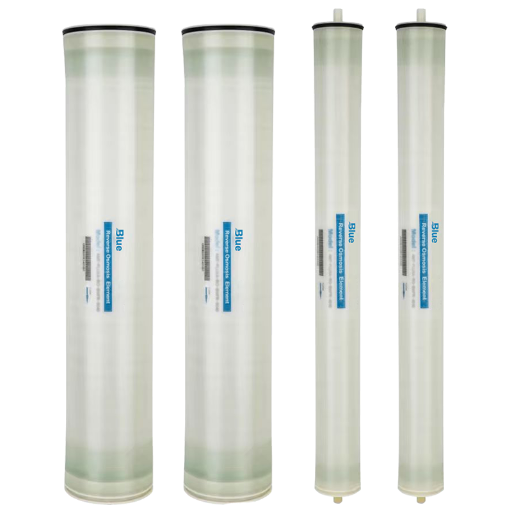
SYSTEM / SPECIFICATIONS
What a Nanofiltration Membrane Actually Does
Most issues relating to hardness, color, and organic matter are typically addressed using reverse osmosis by default, which quietly leads to unnecessary energy consumption while simultaneously removing desirable minerals. A nanofiltration membrane uses a pressure-driven filtration and separation process: a thin polymer barrier selectively rejects multivalent ions like calcium, magnesium, and sulfate at high rates, while allowing solvent water and a calculated portion of monovalent solutes to pass through. This unique ion-selectivity capability distinguishes NF as a separate tool for water purification, not as an inferior version of RO.
In essence: Nanofiltration (NF) is a spiral-wound membrane process characterized by a pore size of approximately 1 nanometer and a molecular weight cut-off of around 200-1,000 Daltons. It efficiently removes divalent hardness and organics at 50 to 150 psi, roughly half the pressure required for reverse osmosis, while retaining beneficial monovalent minerals, making it a highly selective nanofiltration membrane for water treatment.
Not every job needs reverse osmosis
Reverse osmosis effectively removes nearly all dissolved solids, which “may not always be desirable” when the primary objective is softening rather than demineralization. Peer-reviewed research and utility field data put NF energy for brackish water near 0.56 kWh/m³, well below RO, because the less restrictive barrier runs at lower pressure. For feed TDS in the 200–1,500 ppm range, where the goal is to remove hardness and organics without a mineral-free permeate, NF is generally the most suitable choice.
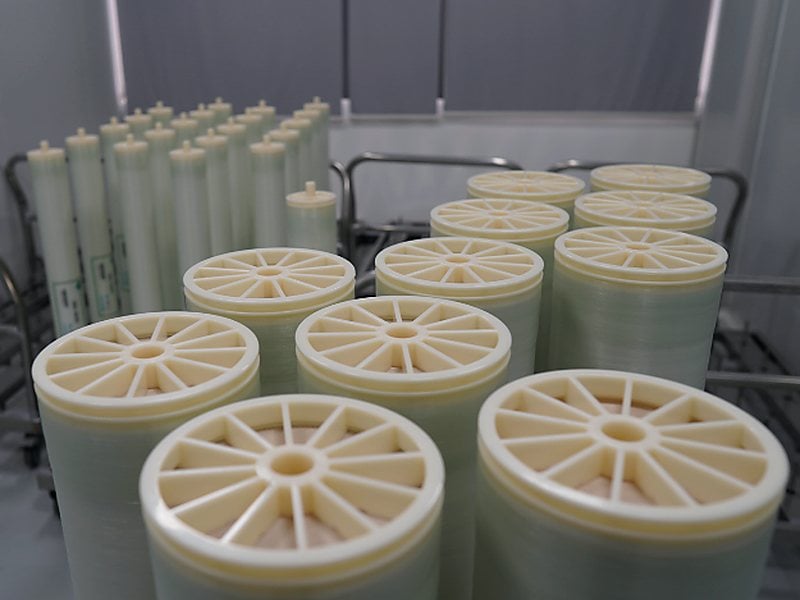
SPEC 01
1.Divalent ions (Ca²⁺, Mg²⁺, SO₄²⁻) are rejected 90–98%
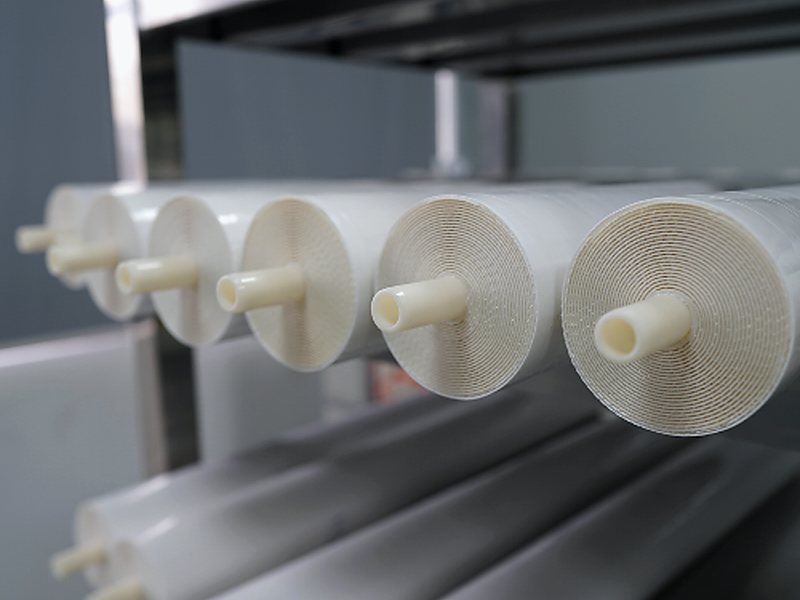
SPEC 02
2.Monovalent ions such as sodium and chloride pass through with a rejection rate of 20% to 80%, which can be adjusted by grade.
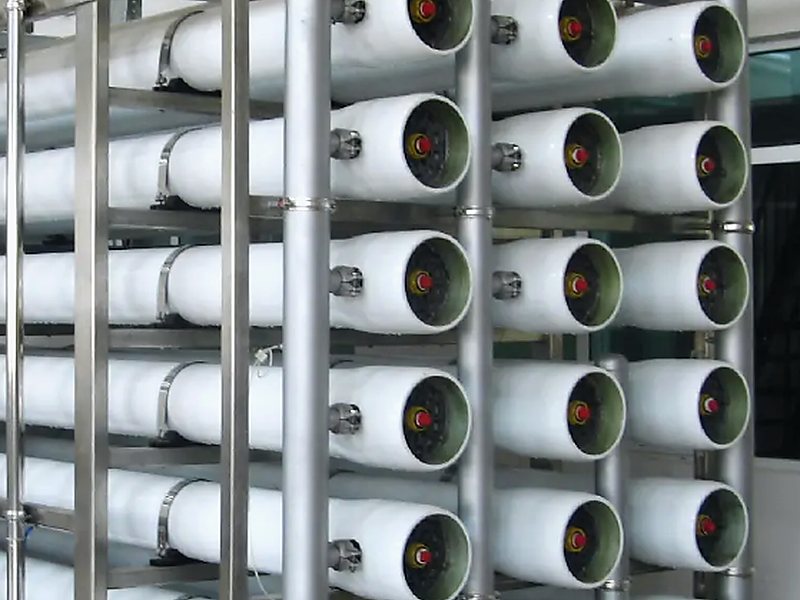
SPEC 03
3.Energy and Recovery: Operates at roughly half the pressure of RO and achieves an 80-95% recovery rate compared to 50-75% for RO.
The engineering background of these membranes is derived from the manufacturing process itself: interfacial polymerization, which creates thin-film polyamide barriers documented in published membrane patents. A working understanding of this barrier material is what lets you correctly interpret a specification sheet, which is often the source of most purchasing errors.
Get that call wrong and an oversized reverse-osmosis system becomes an expensive over-spec — it burns extra pump energy and strips minerals in a hard-water softening, color-removal, or sulfate-reduction duty where NF would have done the job.
Not sure NF fits your feed water?
Ask for a quick selectivity check →
The N1/N2/N3 Selectivity Ladder
Blue Membrane NF Elements, Models, Specs & How to Choose
Choosing the wrong grade can result in double the cost: a membrane that’s too tight wastes energy and removes desired minerals, while a membrane that’s too loose fails to meet the hardness target, necessitating reordering. Purchasers frequently inquire about whether a specific membrane is “good enough for my TDS,” and the most accurate answer is that the tightest membrane is seldom the best option.
Low-rejection NF is deliberately designed: rejection isn’t a measure of overall performance but a design parameter that must be aligned with the target. Unlike distributors who stock one or two general-purpose elements, we offer three distinct grades on our Selectivity Ladder, enabling you to precisely balance rejection and flux to meet your needs.
N1 — TIGHT
98.0%
Highest divalent rejection, lowest flux. Best where hardness/organic removal and permeate quality matter most.
N2 — BALANCED
97.0%
Mid-flux workhorse. Softening plus throughput for general industrial and municipal treatment.
N3 — HIGH-FLUX
97.0%
Highest permeate flow (up to 12,000 GPD on 8040). Decoloring, concentration, and lower energy per volume where maximum rejection isn’t required.
Full specification table (real, published)
| Model | Stable Rej. % | Min Rej. % | Avg Permeate GPD (m³/d) | Area ft² (m²) | Spacer mil |
|---|---|---|---|---|---|
| N1-8040 | 98.0 | 97.5 | 9,000 (34.0) | 400 (37.2) | 34 |
| N2-8040 | 97.0 | 96.5 | 10,500 (39.7) | 400 (37.2) | 34 |
| N3-8040 | 97.0 | 96.5 | 12,000 (45.4) | 400 (37.2) | 34 |
| N1-4040 | 98.0 | 97.5 | 2,000 (7.5) | 85 (7.9) | 34 |
| N2-4040 | 97.0 | 96.5 | 2,400 (9.1) | 85 (7.9) | 34 |
| N3-4040 | 97.0 | 96.5 | 2,700 (10.2) | 85 (7.9) | 34 |
| N1-2540 | 98.0 | 97.5 | 650 (2.46) | 26.4 (2.5) | 34 |
| N2-2540 | 97.0 | 96.5 | 750 (2.84) | 26.4 (2.5) | 34 |
| N3-2540 | 97.0 | 96.5 | 850 (3.22) | 26.4 (2.5) | 34 |
Test conditions: 2,000 ppm MgSO₄, 100 psi (0.69 MPa), 25°C, pH 7–8, 15% recovery, ±15% flow tolerance. Sizes also include 4021.
Decision Matrix, which grade for your water
| If your priority is… | Feed / target | Grade | Why |
|---|---|---|---|
| Maximum hardness & organics removal | TDS 200–1,000 ppm, tight color/DBP control | N1 | 98% divalent rejection, cleanest permeate |
| Balanced softening + output | TDS 500–1,500 ppm, general treatment | N2 | 97% rejection at higher flux |
| Throughput / decoloring / concentration | Higher flow, lower energy per m³ | N3 | Up to 12,000 GPD, loosest of the three |
The design trade-off to tune coating conditions so as to get a better balance between rejection and flux is the same one patented in the polyamide membrane literature, which is why the same line item “nanofiltration membrane element” can refer to three different products.
Get a membrane selection recommendation for your feed water →
Nanofiltration vs Reverse Osmosis vs Ultrafiltration
NF vs RO vs UF, the Numbers That Decide It
Over-specifying reverse osmosis is a common, expensive mistake, it adds almost 100% to pump energy and sends 20–40% more feedwater to drain than a nanofiltration membrane sized for the same softening duty.
“Choosing between nanofiltration and RO usually hinges not on ‘which brand’, but whether you need demineralization or just selective softening, since nanofiltration takes out roughly 80% of the TDS while RO takes out 98%+.”
Instead of designing a data sheet around a single technology, we’ll help you determine the right separation process for your specific water – even if that means recommending a lower revenue NF sale. Below is a specific data table of nanofiltration water treatment capacities (not High/Medium/Low).
| Parameter | Ultrafiltration | Nanofiltration | Reverse Osmosis |
|---|---|---|---|
| MWCO / pore | ~10,000+ Da | ~200–1,000 Da | <100 Da |
| Operating pressure | 15–75 psi | 50–150 psi | 300–1,200 psi |
| Divalent (Ca/Mg/SO₄) rejection | low | 90–98% | >99% |
| Monovalent (Na/Cl) rejection | ~0% | 20–80% | >99% |
| Typical recovery | 90%+ | 80–95% | 50–75% |
| Energy (brackish) | lowest | ~0.1–0.56 kWh/m³ | higher |
| Keeps beneficial minerals | yes | partial (monovalent) | no |
Ranges are industry-consensus; NF energy figure peer-reviewed (brackish). Your exact numbers depend on feed water and recovery.
Engineering note, the TDS band that flips the decision
Nanofiltration is the economic choice for feed TDS from ~200–1,500 ppm when organics or hardness are your concerns. Anything above that range, or anything approaching complete demineralization, warrants RO’s additional pressure.
Because low-pressure and high-recovery means less pump energy and less water sent to drain per gallon or cubic meter produced – at just ~0.56 kWh/m³ (from a published brackish-water comparison) NF adds up. Unlike a distributor quoting a generic efficiency curve, we cast, wind, and pressure-test each N-series element on our own line, so we know exactly which grade delivers those efficiencies on your feed. That leads into the grade-selection guidance.
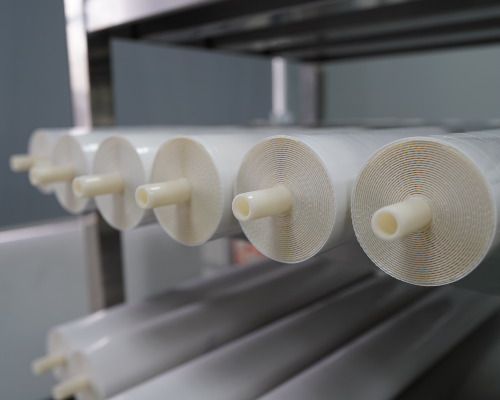
Hover/Click to reveal field insight
Field Operator Insight
“RO works, but you’ll get better-quality water with NF while using less energy.”
The Rejection Spec Decoder
How to Read NF Rejection Specs Without Getting Fooled
Don’t buy by headline rejection value! That common mistake can leave you with a membrane that’s significantly less effective than its quoted statistic. Just because one membrane claims 99% rejection and another claims 97% doesn’t automatically mean one is better; a single number is only meaningful relative to the exact test conditions, which vary by manufacturer. The DuPont FilmTec Technical Manual bluntly states that “standard element test conditions vary depending on the membrane type.”
That’s precisely the reason for the Rejection Spec Decoder below, the inverse of the misleading single number published by most vendors. Instead of hiding their conditions, we reveal them, enabling you to compare apples to apples.
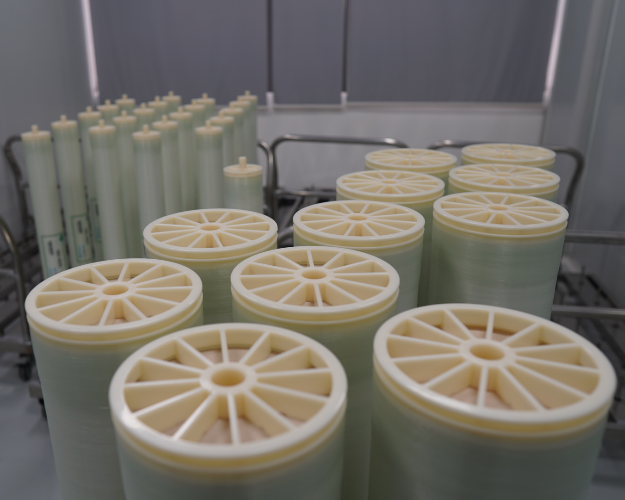
Buyer checklist, before you compare two NF datasheets
- What salt was used to test rejection? (A MgSO₄ divalent basis reads higher than a NaCl monovalent basis, the salt matter.)
- What pressure and temperature were used? (Higher pressure inflates rejection.)
- What recovery rate did the membrane run at? (Rejection drops as recovery rises.)
- Standardize to one condition, or run a side-by-side element test
The Rejection Spec Decoder, same membranes, different rulers
| Source | Test salt | Pressure | Temp | Comparable? |
|---|---|---|---|---|
| Blue Membrane (N-series) | 2,000 ppm MgSO₄ | 100 psi | 25°C | divalent basis |
| Synder NF | 2,000 ppm MgSO₄ | 110 psi | 25°C | +10 psi |
| FilmTec catalog (typical) | 2,000 ppm NaCl | 150 psi | 25°C | monovalent, higher P |
A MgSO₄ rejection figure and a NaCl figure describe different ions at different pressures — they cannot be ranked directly.
“We publish the exact salt, pressure, temperature, and recovery for every N-series number because a rejection percentage without its test condition is marketing, not a spec. If a buyer can’t reproduce the test, they can’t compare suppliers honestly.
NF in the Field
Applications: Softening, Organics, PFAS & Water Reuse
Match the wrong grade to your contaminant and the cost show up fast-a membrane that removes only 20% of a short-chain compound is money spent on the wrong barrier. Nanofiltration earns its place wherever selective removal beats total demineralization, and where its pore size band is a fit rather than a compromise. Unlike a generic “NF removes everything” claim, the representative uses below map each application to a grade, and flag where NF alone isn’t enough.
| Application | What NF does | Suggested grade |
|---|---|---|
| Water softening | Removes Ca/Mg hardness without adding sodium | N1 / N2 |
| Color & organic compounds (NOM/DBP precursors) | Cuts total organic carbon and disinfection-byproduct precursors | N1 |
| Sulfate removal | 90–95% sulfate rejection for process & injection water | N1 / N2 |
| Food & beverage concentration | Demineralization / lactose & sugar concentration | N2 / N3 |
| Industrial wastewater reuse | Selective removal enabling high-recovery reuse | N3 |
PFAS: strong on long-chain, honest on short-chain
High-pressure membranes like NF and RO have been “extremely effective at removing PFAS,” per the U.S. EPA. Peer-reviewed work reports NF rejection above 90% for long-chain PFAS and >95% for diverse PFAS.
Honest limit, short-chain PFAS
Rejection is chain-length dependent. Short-chain species such as PFBS can drop to roughly 20% while PFOS stays near 92%. If short-chain PFAS is your target, NF alone may not be sufficient and should be paired with additional treatment. We would rather tell you that up front than oversell a membrane.
Fouling and pretreatment, the objection we won’t dodge
A common field warning is real: “a nanofiltration system will plug up quicker especially with hard water” if it’s fed without pretreatment. That’s why our elements specify a maximum feed SDI15 of 5 and free chlorine below 0.1ppm-meet those, run scheduled cleaning, and fouling stays manageable.
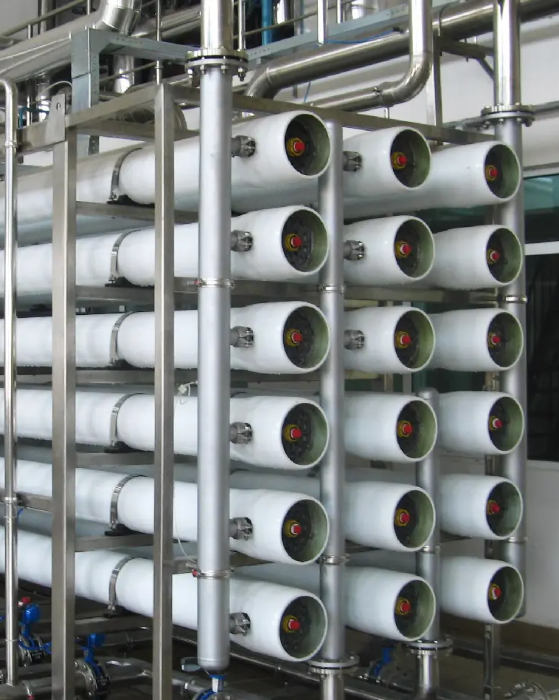
Click to reveal energy & recovery data
~50%
lower operating pressure & energy than RO on comparable brackish feed, with 80–95% recovery vs 50–75%
Industry/peer-reviewed framing (PMC7824122; recovery ranges typical). Not a client-specific guarantee — request a project-specific analysis.
How We Make It
Membrane Casting, Winding & Quality Control
When a membrane’s rejection drifts from batch to batch, you find out only after it’s installed and the permeate is off-spec-a failure that traces straight back to inconsistent casting. Most sellers in the nanofiltration space rewind sheets they buy in, so they can’t answer for that variability. We cast the polyamide barrier ourselves, which is why we can publish and stand behind every number in the table above.
The barrier is formed by interfacial polymerization — the same method documented across the NF patent literature — then wound, cured, and sealed in-house.
Our in-house process, in order
01
Sheet casting
A polyamide thin-film composite membrane surface is formed on a polyester/polysulfone support, tuned for permeability and fouling resistance.
02
Precision winding
Automated spiral winding holds element-to-element consistency.
03
High-temperature curing
Stabilizes the barrier layer.
04
Seal & Verify
A Y-ring seal is fitted, then every element is verified before packaging.
Because we control the coating step, we can hold the rejection-versus-flux balance that separates N1 from N2 and N3-and modern fouling-resistant membrane technology is an active patented field we track closely.
Compliance, stated honestly
NF thin-film composite membranes for food-contact service fall under U.S. FDA 21 CFR 177.2550, and our polyamide elements are produced to meet that basis for unmodified, good-manufacturing-practice use. We are a Chinese manufacturer publishing real, reproducible specifications-we do not badge our membranes as Japanese or European.
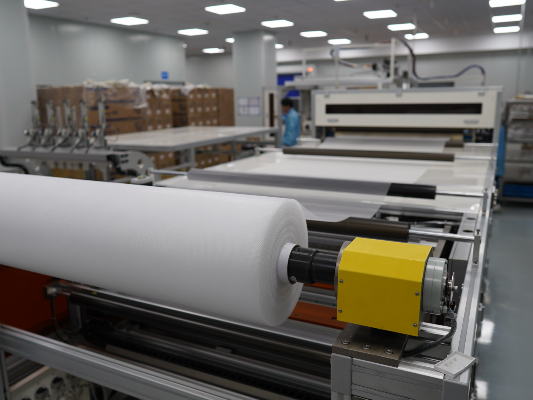
Click to reveal factory QC specs
Factory QC Specifications
Polyamide TFC
self-cast barrier
21 CFR 177.2550
food-contact basis
Standardized test
2,000 ppm MgSO₄ / 100 psi
Element QC
every unit tested
Procurement Guide
Sizes, Compatibility, Lead Time & OEM
A single wrong-size order leads to money tied up in inventory that doesn’t work on your vessels, and a supplier who can’t hit lead time delays an entire build. Our industrial nanofiltration elements come in standard industry sizes 2540, 4040, 4021, and 8040, which means they’ll slip right into your existing ASME-coded pressure vessels without requiring a redesign of your skid. That’s important when your plant is built around existing FilmTec NF270 or AXEON NF4 housings and you simply need a supply that drops in.
Unlike a distributor selling somebody else’s stock, we quote straight from our own production line — casting, winding, and testing every element in-house — which gives us full control over grade, packaging, and schedule.
DIMENSIONAL COMPATIBILITY VERIFIED
What actually drives your nanofiltration membrane price
We don’t have a single price on a page because every specification is unique. Here are the elements that go into an NF element quote:
- 01 Grade and Size: (e.g., N1, N2, N3; 2540 vs. 4040 vs. 8040)
- 02 Volume and Manufacturer: (e.g., Custom Private-labeling vs. Off-the-Shelf Stock)
- 03 Packaging & preservative: wet vs dry, storage requirements
- 04 Lead time: stock availability vs scheduled production
Sourcing tip, how to benchmark a quote
Prices published in the market for similar NF elements generally range from ~$60-$70 for small spiral elements to a few hundred dollars for high-end branded 4040’s. Use this as a general benchmark and ensure all suppliers are testing on the exact same conditions (see our Rejection Spec Decoder) so you can compare the same membranes not just marketing claims.
If you’re an OEM or Distributor partner, we offer support for your private label membrane needs and guarantee consistent, predictable supply-the very same principles that go into building our membranes. Submit your feed water and target flow rates and we’ll provide an appropriate membrane recommendation for size and grade.
Request a Quote
Engineering Resources
Technical Calculators & Decision Tools
Utilize our suite of technical calculators and decision matrices to specify the correct membrane parameters, compare separation processes, and size your industrial water treatment system accurately before procurement.
TOOL 01
NF Grade Selector
Determine the appropriate NF grade (N1, N2, N3) based on target rejection, feed water composition, and required flux.
TOOL 02
NF vs RO Decision Helper
Compare nanofiltration and reverse osmosis separation processes to identify the optimal technology for softening versus demineralization.
TOOL 03
Element Size & Quantity Calc
Calculate the required number of membrane elements and standard vessel sizing based on your target system capacity.
RESOURCES / FAQ
Nanofiltration Membrane Sourcing
Straight answers to the most common engineering and procurement questions regarding nanofiltration capability, grade selection, and operational lifespan.
A nanofiltration (NF) membrane is a spiral-wound, pressure-driven membrane that has a molecular weight cut-off range of 200-1000 Daltons. NF elements have high rejection of multivalent ions (such as calcium, magnesium, sulfate) (90-98%) and 20-80% of monovalent salts (like sodium and chloride), softening water and removing organics at half the pressure of reverse osmosis while retaining some beneficial minerals.
Let’s focus on your target rejection not on the highest possible value. We offer N1 (98.0% MgSO4 rejection), N2 (97.0% MgSO4 rejection), and N3 (97.0% MgSO4 rejection, highest flux). Our N1 grade will provide the most softening and organics rejection. Our N2 offers a balance between softening and flux and our N3 grade has a higher flux suitable for decolorization and organic concentration. Submit your feed TDS and desired flow and we can help determine the best grade for your needs.
NF efficiently removes hardness and long-chain PFAS above 90% by molecular size. However, shorter-chain PFAS (such as PFBS) may be rejected at a lower percentage, and may require supplemental treatment. We’re honest about whether NF alone can effectively meet your specific PFAS reduction targets.
Rejection Specs: N1=98.0% MgSO4 rejection; N2 and N3 = 97.0% MgSO4 rejection. Testing was conducted at 2000ppm MgSO4 concentration at 100 psi pressure, 25 C and pH 7-8 with a 15% recovery rate. When comparing rejection data, remember that every figure must come from identical testing conditions; rejection numbers from different test parameters, like 150 psi or a different ion such as NaCl, aren’t directly comparable.
Yes, even if fed without pretreatment. A common field warning about nanofiltration is that it “plugs up more easily, especially with hard water.” Keeping the feed water at SDI15 of 5 or less, under 0.1ppm of free chlorine, and implementing regular cleanings is usually enough to prevent excessive fouling. In field practice, NF membranes are lower maintenance than RO and more resistant to fouling in the same duty.
NF/RO spiral-wound elements typically last 2–7 years, driven by feed water, operation, and cleaning. Proactive cleaning can extend a typical service life from about 3 years to 5–7 years, the single largest factor in a membrane’s total cost of ownership.
Yes. NF elements are manufactured to meet the industry standard sizes of 2540, 4040, 4021 and 8040, ensuring they’ll install in existing pressure vessels and replace off-the-shelf commercial elements without modification to the piping or vessel.
Usually when the application lends itself to NF treatment. Low operating pressures and 80-95% recovery significantly reduce pump energy and feedwater discharge compared to RO, and standardized sizes simplify replacement. Please provide your application flow rate and feedwater composition, and we can develop a custom cost-payback model.
Trending now