Get in touch with Blue Membrane Company

N-Series Specifications
Standard NF Membrane Elements
Polyamide Spiral-Wound (N1/N2/N3)
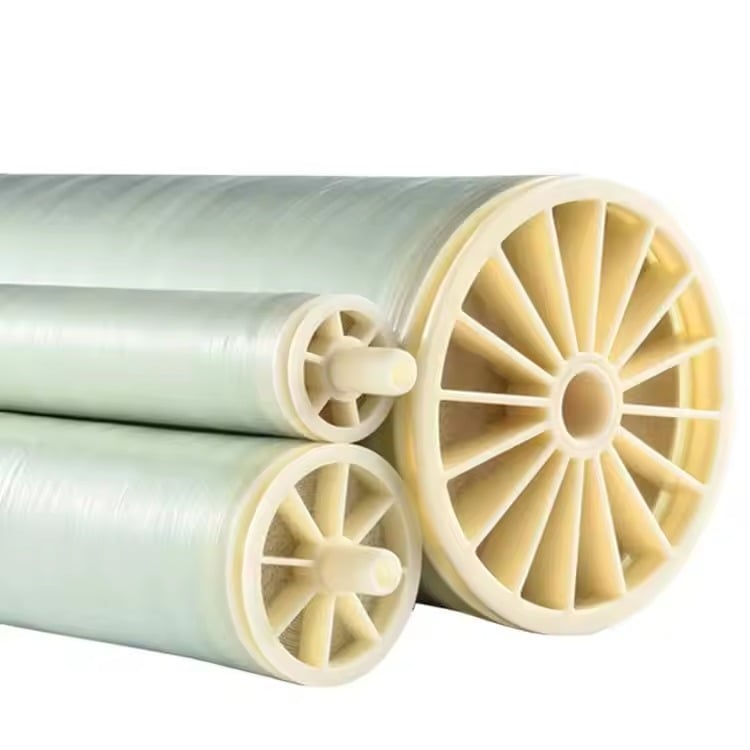
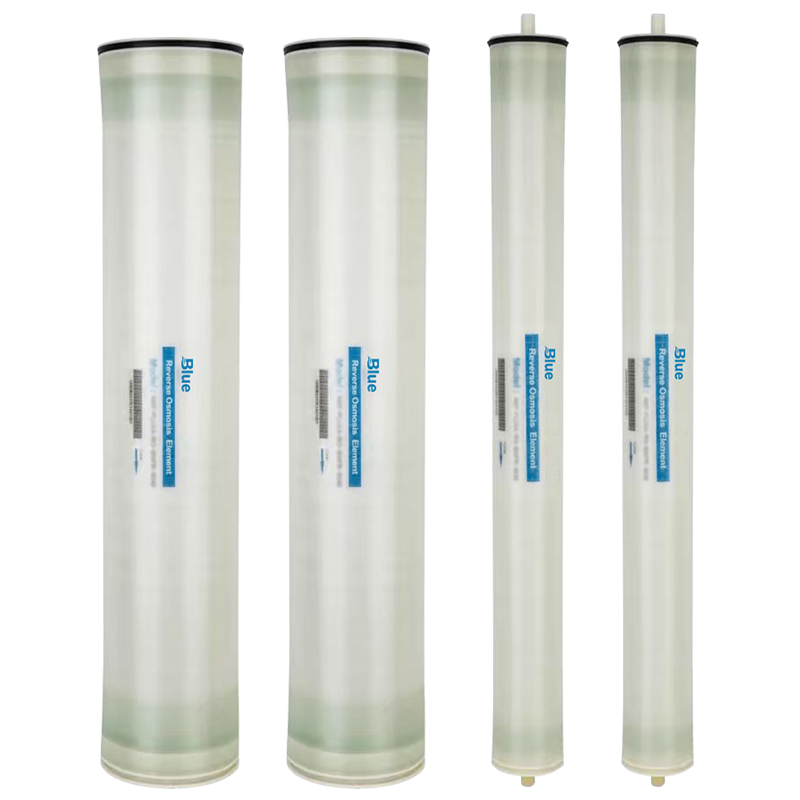
Blue Membrane’s N-Series features a polyamide thin-film composite NF membrane which boasts a MgSO4 rejection performance of 97-98% across 3 performance levels. N1, N2 and N3 elements are a 1-1 fit to FilmTec NF90 and NF270 sized pressure vessels, tested according to ASTM-based protocols (2000ppm MgSO4 at 100 psi, 25°C).
0%
MAX MgSO4 REJECTION
8040 / 4040 / 2540
ELEMENT SIZES
TARGET ACQUIRED
What Drives Divalent Ion Rejection in Standard NF Elements
Engineers selecting a replacement NF membrane often compare MgSO₄ rejection figures from different manufacturers, but those numbers are only comparable when test conditions match. Without knowing feed concentration, pressure, temperature, and recovery, two “97%” figures can represent vastly different real-world performance.
Common procurement challenge in industrial water treatment system design
01
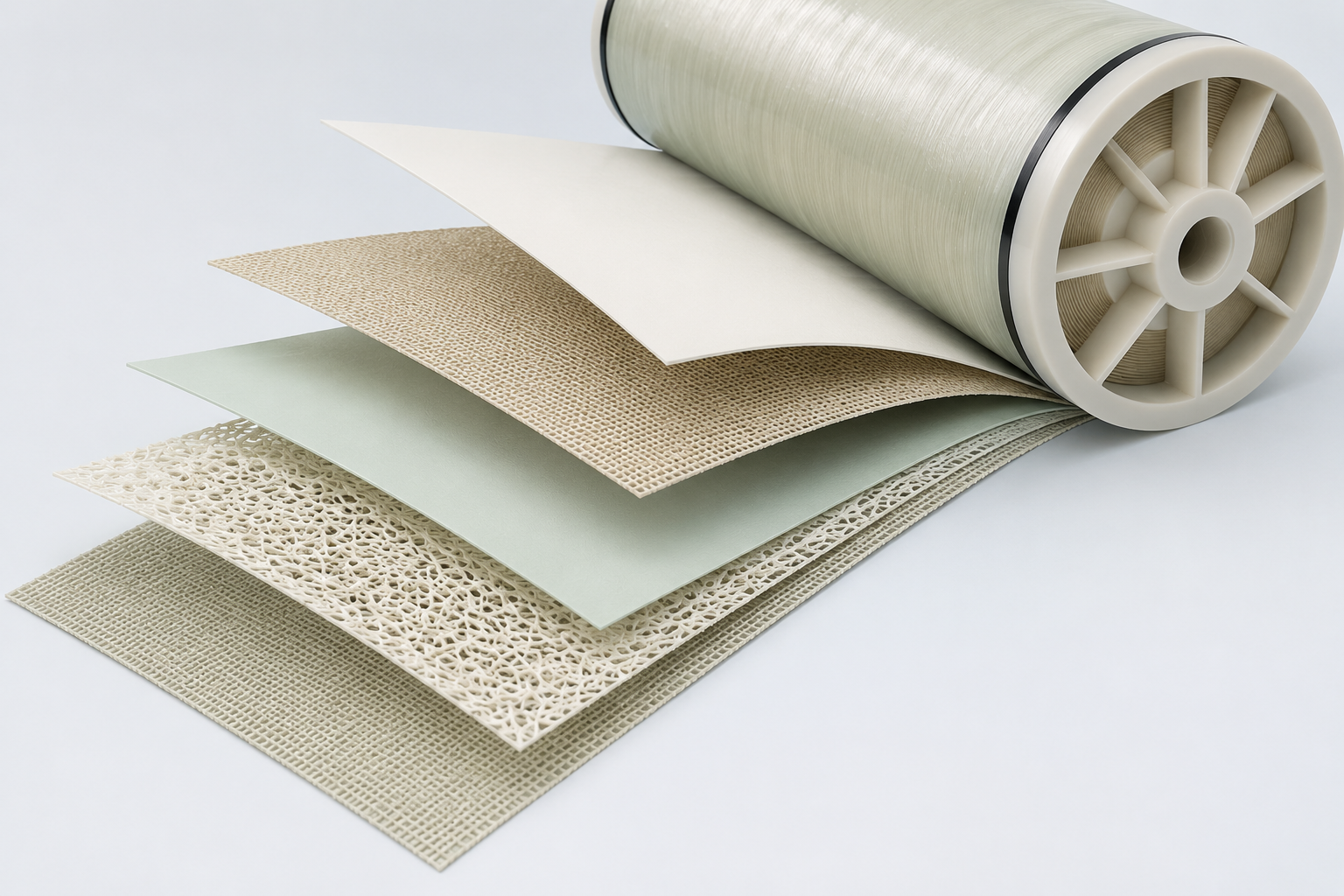
Membrane Structure
Most standard NF membranes are comprised of a thin polyamide film (TFC) layer coated onto a porous polysulfone support that’s wound in a spiral manner.
02
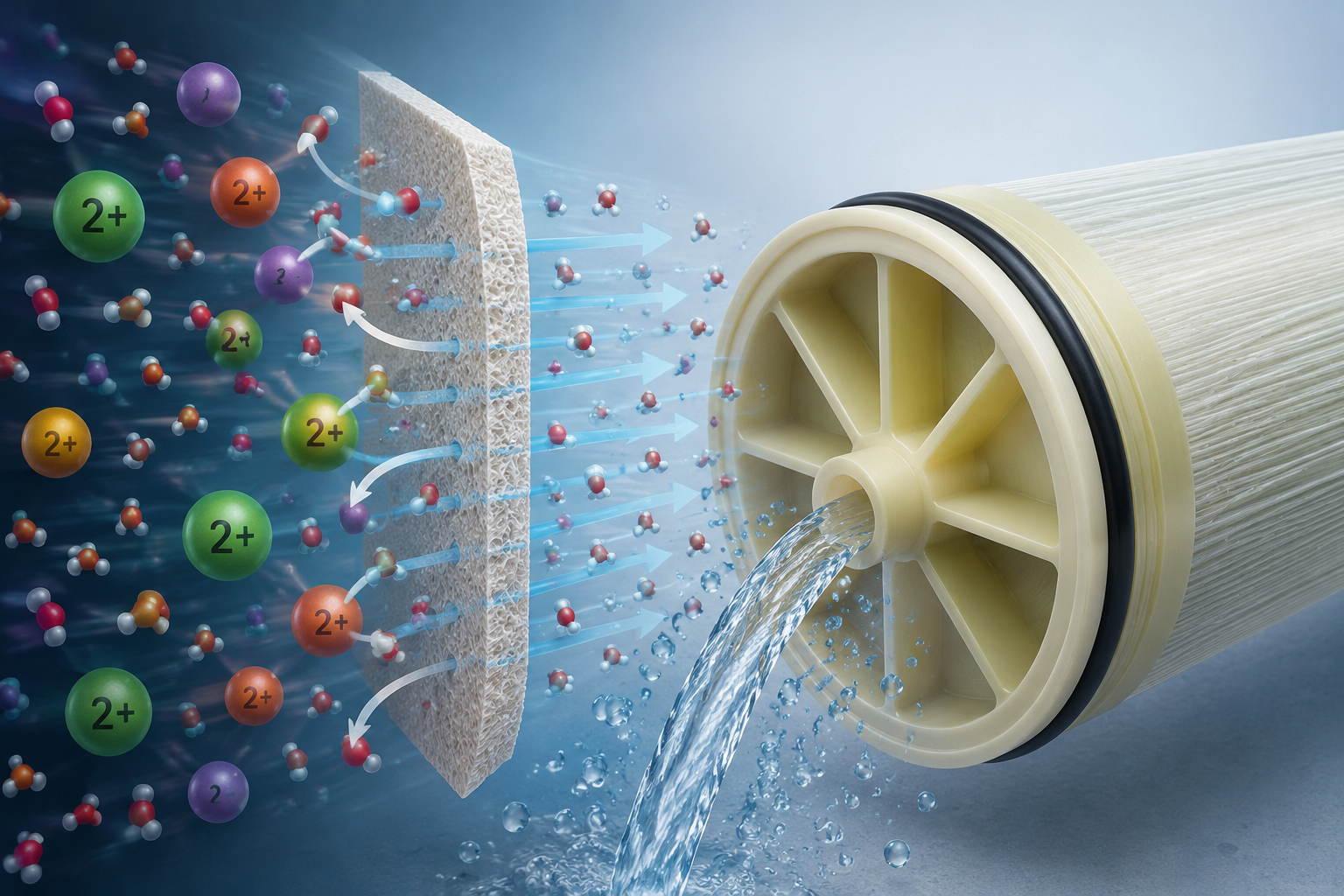
Separation Process
This design separates dissolved components via two processes – both a physical mechanism (molecular weight cut off – MWCO of 200 to 400 Daltons), and an electrical charge-based separation process (Donnan exclusion), enabling retention of divalent ions even if they’re nearly equal to the molecular size limit.[1] A poor comparison is usually a function of differences in the testing process and not differences in membrane performance.
03
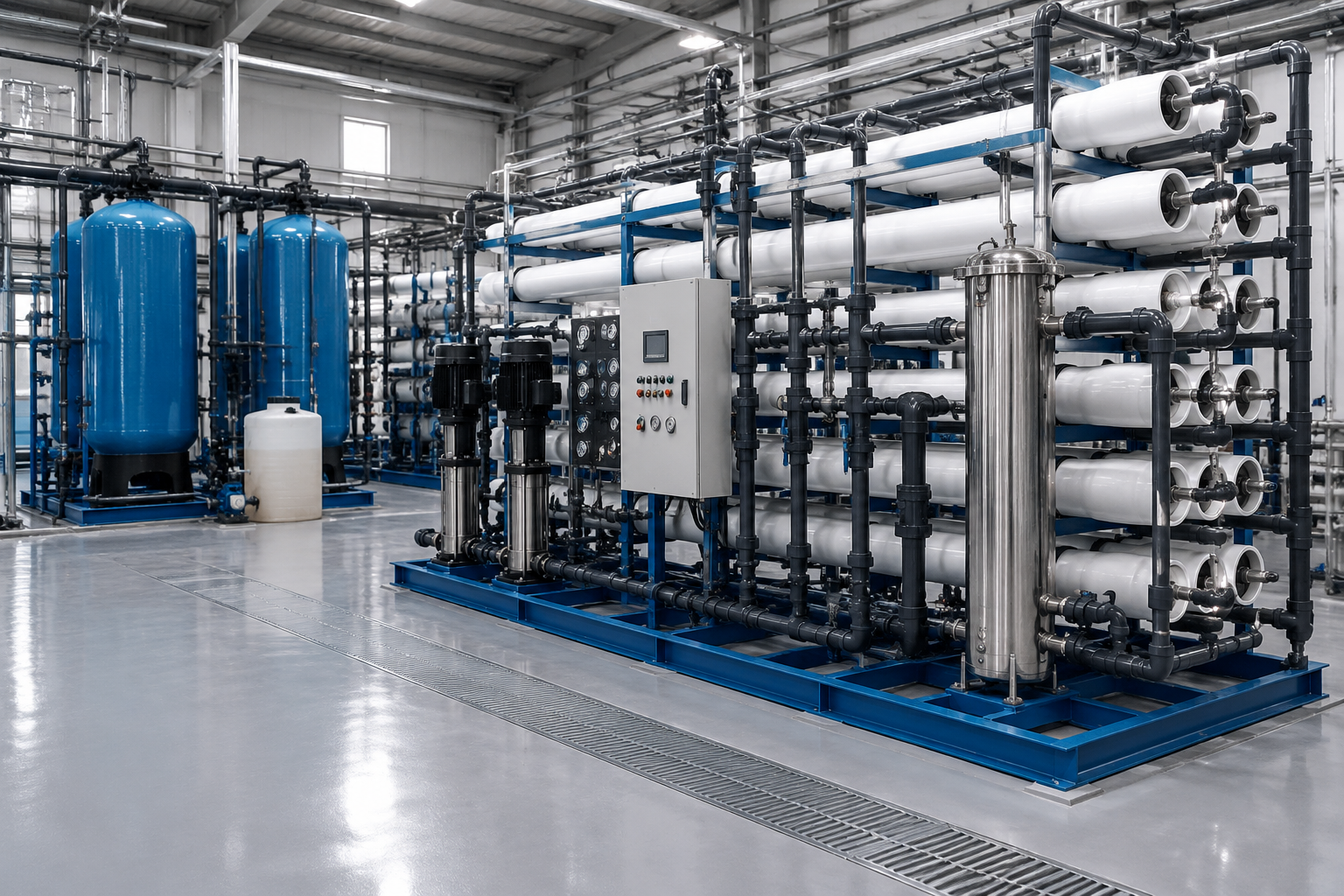
Practical Operations
A practical municipal facility, treating groundwater at 200-400 ppm hardness in CaCO, using N-series technology will reject the same concentration of Ca and Mg at 100 psig as the rest of the NF industry uses to define standard NF operation. Higher charged ions such as the divalent cations Ca, Mg, Ba and the divalent anion SO are more effectively rejected than singly charged Na and Cl across the negatively charged polyamide membrane at 100 psig – while 97% rejection is being observed for the hard-causing ions (monovalent Na and Cl pass from 20% up to 60% depending on feed salinity). This NF performance, along with the 99% NaCl and the 97% Ca and Mg hardness removal, is verified using standard operating conditions so it’s possible to compare N-series to FilmTec’s reference products like NF90 and NF270 without performing a difficult cross-check on the test data.
04
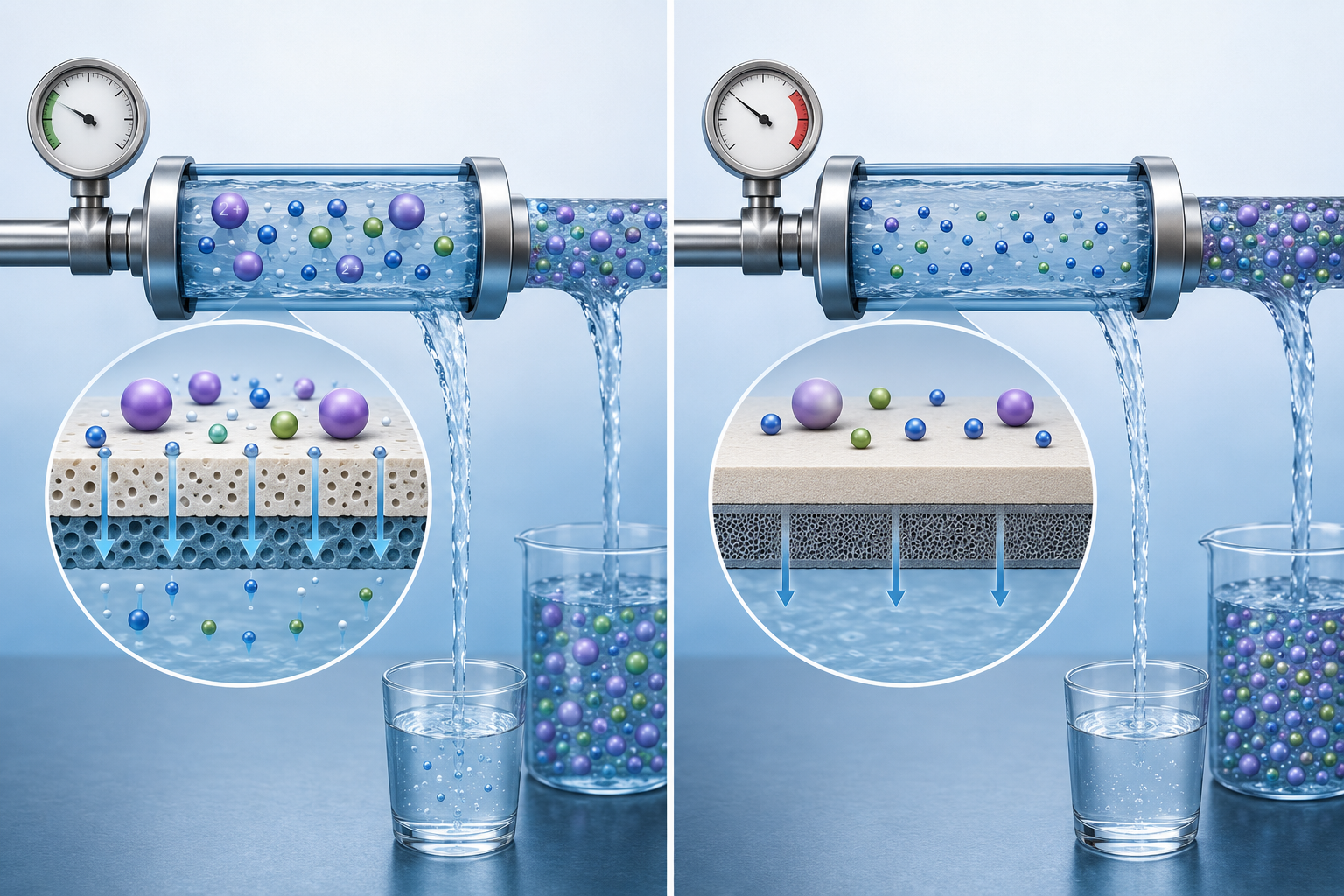
NF vs Reverse Osmosis
This selective ability — high divalent rejection with controlled monovalent pass-through — makes standard NF the preferred technology for water softening and selective salt removal. Unlike reverse osmosis, which rejects nearly all dissolved salts at 150–250 psi operating pressure, standard NF achieves divalent selectivity at 40–60% lower operating pressure. The cost for this is a lower overall TDS reduction as compared to RO; however, this is by design and the fundamental reason nanofiltration technology exists. The N-series from Blue Membrane is just one in our complete family of NF membrane solutions that offer alkaline-resistant and specialty membrane products.
For N-Series specs and operating parameter limits, get the technical spec sheet.
Request a Spec SheetN-Series Model Specifications
Below you’ll find the N-Series Selectivity Matrix encompassing all 9 regular models at three element diameters. Rejection percentages shown represent membrane selectivity and remain consistent across all element diameters. Flow figures for the 8040 models below represent certified values from actual testing at the factory. Values for the 4040 and 2540 models can be found on the detailed datasheet.
N-Series Selectivity Matrix — Standard NF Elements
Buyers compare MgSO₄ rejection without confirming if the test conditions were similar, which is by far the most common mistake made during comparative membrane evaluation. In addition, all data from a given test protocol are published on the web, in an effort to avoid confusion from varying test conditions.
Standard Test Conditions
2,000 ppm
MgSO₄ aqueous solution
100 psi (0.69 MPa)
Feed pressure
25°C
Temperature
7–8
pH Level
15%
Recovery per element
ISO 25175
ASTM-aligned protocol
Evaluation Trade-off: Rejection vs. Flow
We don’t know whether to prioritize rejection (N1) or permeate flow (N3) — lack of selection guidance leads to purchase delays and oversized system budgets. N1 / N2 / N3 designations map directly to this trade-off: maximize rejection at 9,000 GPD (N1: 98.0%), or accept 97.0% MgSO₄ rejection in exchange for 17–33% more permeate per element (N3: 12,000 GPD) without upsizing the pressure vessel. The right choice depends on your feed TDS, target permeate quality, and system recovery rate.

Application engineering guidance: N-series system sizing
Ready to choose N-series elements for your system? Our engineering team will determine the appropriate element for your feed.
Request a QuoteFilmTec NF90 & NF270 Cross-Reference Guide
When purchasing a replacement NF membrane not from FilmTec, the primary risk for end users is housing compatibility: “Will a non-FilmTec NF membrane fit my existing FilmTec NF90/NF270 housing?” For replacement buyers, this is the number one barrier and, for N-series elements, has a clear answer.
N-series elements match standard spiral wound dimensions: 8040, 4040, 2540. These dimensions exactly match the standard footprints of FilmTec NF90 and NF270 elements, as well as standard brine seals and manifold interconnects. This allows the N-series elements to drop into existing FilmTec housing and systems without any modifications to the pressure vessel housings.
Engineering Selection Guidance
If your process requires the highest possible rejection of calcium and magnesium, select the N1-8040 (98.0% steady state rejection / 97.5% minimum rejection). If maximizing flow through a vessel is the engineering goal, select the N3-8040 for the optimum balance between flow and rejection.
NF90 / NF270 Compatibility Guide — N-Series vs FilmTec Reference
(The difference isn’t always highlighted by OEMs: the N2-8040 is a full 17% higher flow element (10,500 vs 9,000 GPD) than the equivalent NF90 while maintaining the same 97.0% rejection tier – no trade off of rejection is made to gain flow. For a high-recovery system, flow dictates stages and pump sizing. And while many cheaper replacement NF membranes make performance claims based on mismatched conditions, we certify all N-series membranes at identical test parameters for apples-to-apples comparisons.)
Applications: Where Standard NF Excels
Operating Cost Comparison — Jafari et al. (2021)
11%
NF FOULING OPEX
24%
RO FOULING OPEX
The smaller fouling cost fraction represents a lower cost penalty for NF due to operating pressure advantage and this is why it’s the economic choice in any hardness reduction / softening application where the lifetime OPEX matters.
Application Decision Matrix
Application-Fit Decision Table — N-Series NF Element Selection
| Application | Recommended Series | Key Performance Criterion |
|---|---|---|
| Municipal water softening | N2 / N3 | Ca²⁺/Mg²⁺ rejection >97%; lower operating pressure vs RO |
| Industrial hardness removal | N1 | 98.0% MgSO₄ rejection; stable long-term membrane performance |
| Drinking water NOM removal | N1 / N2 | TOC and color rejection; potable quality compliance[5] |
| Industrial wastewater desalting | N2 | Selective divalent removal; high permeate throughput for water reuse |
| Seawater sulfate reduction | N1 | >98% SO₄²⁻ rejection at elevated salinity and feed pressure |
| Groundwater softening | N2 / N3 | High permeate flux for moderate-TDS aquifer feeds; lower CAPEX per m³/d vs equivalent RO |
| Semiconductor UPW pretreatment | N1 | Strict rejection standard; low TOC permeate for ultrapure water production |
| Food & beverage clarification | N1 | Organic compounds above 200 Da retained; sanitary-grade permeate quality |
| Textile wastewater color removal | N1 / N2 | Dye molecules (MW >400 Da) rejected; treated water suitable for reuse |
Please check out our alkali-resistant NF membrane elements for your continuous high pH (>pH10) process applications. If the system application is a dedicated municipal or residential softening unit that will achieve a hardness <50 ppm as CaCO, then our water softening NF series is tailored for your feed and recovery requirement.
Contact the application engineers at Blue Membrane to find out the N-Series model that will meet your application’s feed chemistry, target recovery rate, and required permeate quality.
Operating Parameters & Handling Guidelines
Staying within allowable operating limits prevents permanent damage on the polyamide thin-film composite membrane surface. Root causes commonly driving NF system fouling and premature failure include unregulated SDI from poor pre-filtration, and Free chlorine transients that occur during the feed disinfection cycle. Our in-house technical support to help you with system integration, commissioning parameters, and antiscalant choice.
Polyamide membranes do not recover from chlorine exposure above 0.1 ppm, the most common cause of premature NF failure in industrial systems is chlorine exposure above this limit, including brief spikes during disinfection cycles. When chlorine exceeds 0.1 ppm, amide bonds in the polyamide barrier layer undergo irreversible oxidative hydrolysis, permanently increasing salt passage and reducing permeate flux. This is not always highlighted in membrane supplier documentation, but it is a confirmed risk for all polyamide TFC NF and RO membranes including the standard industry architecture.[1] Sodium bisulfite injection or activated carbon filtration upstream is mandatory for chlorinated municipal feeds.
Operating principle confirmed in: Bargeman (2021), Separation and Purification Technology
In fact, this is the honest trade-off you face when designing an NF membrane system: namely lower operating pressure/energy consumption vs. SW or Brackish RO, in exchange for a tighter window of chemical tolerance – a .1 ppm chlorine limit and 3-10 pH for continuous operation. Our N-series 34mil feed spacer was engineered into all of our N-series membranes in an effort to maintain consistent membrane crossflow velocity while ensuring pressure drop per membrane was maintained under 15 psi under clean water operating conditions.
User Misconception: NF fouls up more easily on hard water
The most perfect place for NF to operate on hard water is after hard water is correctly pre-treated – Because rejecting Ca/Mg in preference to salts in the solution at a lower operating pressure is precisely what standard NF membranes were designed for – in hard water treatment from ground water with hardness of >300ppm CaCO at a recovery of >75% – use of an antiscalant prior to the NF unit to prevent carbonate precipitation is needed. Speak to our engineers to determine correct antiscalant choice and application for your unit.
Standard NF Engineering Tools
Accelerate your system design and validation process. Utilize our dedicated application utilities to find the exact N-Series specification, verify feed chemistry compatibility, and compare element performance side-by-side.
TOOL_01
N-Series Selector
Input your system’s target permeate flow, required hardness rejection, and operating parameters to identify the optimal N1, N2, or N3 element configuration for your pressure vessels.
TOOL_02
Feed Compatibility Checker
Verify if your source water chemistry falls within the safe operating limits for standard polyamide NF membranes, preventing premature fouling, scaling, or chemical degradation.
TOOL_03
Model Comparison
Conduct a side-by-side technical evaluation of the N-Series portfolio. Compare active area, stable rejection rates, and factory-certified permeate flow (GPD) across all dimensions.
Frequently Asked Questions
NF Membrane Specifications – Common Questions This Q&A document covers many common issues and risk factors that engineers and procurement teams have come across when designing or replacing an NF membrane element. Should you’ve other questions beyond what’s addressed below, please email sales@Blue Membrane.com.
NF membranes reject multivalent ions (calcium, magnesium, sulfate) at 97-98% while allowing 20-60% of monovalent salts (sodium, chloride) to pass through. RO, by contrast, rejects >98% of nearly all dissolved salts. NF operates at 40-60% lower feed pressure than RO, reducing energy cost per cubic meter for softening applications. NF is the right call for selective divalent removal — not when near-zero TDS permeate is required.
Yes. The N-series element is constructed in 8040 (8×40), 4040 (4×40), and 2540 (2.5×40) sizes and in standard spiral wound element form factor. All N-series element sizes are interchangeable with FilmTec N-series 90 and NF270 elements in standard 8040, 4040, and 2540 membrane houses and with standard FilmTec housings, brine seals and interconnect fittings. There’s no need to modify existing housing or system components.
N1-8040, 98.0% stabilized MgSO rejection (97.5% min) with 9,000 GPD permeate at 400 ft2 active area (34.0 m2). Tested at 2,000 ppm MgSO, 100 psi (0.69 MPa), 25C, pH 7-8, 15% per element recovery per protocol per FilmTec standard for comparison. Submit factory test report for certificate.
No, free chlorine levels must be kept at less than 0.1 ppm. Beyond that, irreversible oxidation and permanent increased salt passage through the polyamide barrier will occur. This is often not listed in distributor data sheets, but it holds true for all polyamide TFC NF membranes. If the municipal water source is chlorinated, then injection of sodium bisulfite, or use of granular activated carbon ahead of the NF stage is mandatory.
All three series reject divalent ions at 97-98% MgSO₄, but trade rejection for flow. N1 delivers maximum rejection (98.0%) at 9,000 GPD per 8040 element. N2 accepts 97.0% rejection in exchange for 17% more permeate (10,500 GPD). N3 maximizes throughput at 12,000 GPD — 33% more than N1 — still at 97.0% rejection. Choose N1 for strict purity; choose N3 when system output and vessel count are the priority.
Trending now