Get in touch with Blue Membrane Company

Quick Specs
| Pore size | 1–10 nm (nanoscale, between ultrafiltration and reverse osmosis) |
| Molecular weight cutoff (MWCO) | ~200–400 Da for neutral organics (operational range; academic sources vary 150–2,000 Da) |
| Divalent ion rejection | 90–98% (Ca²⁺, Mg²⁺, SO₄²⁻) |
| Monovalent ion rejection | 20–80% (Na⁺, Cl⁻) |
| Operating pressure | 50–225 psi (3.5–16 bar) |
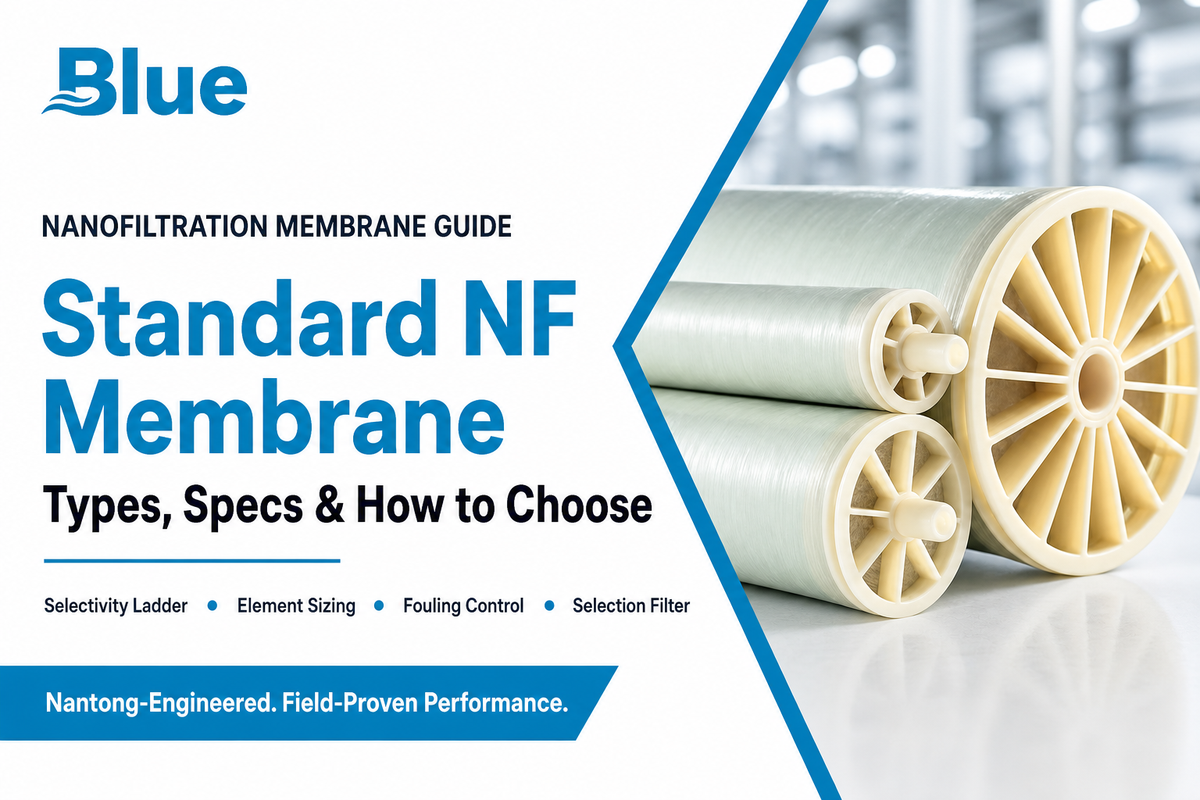
What is a Standard NF membrane? A Standard NF membrane is a pressure-driven separation membrane that sits between ultrafiltration and reverse osmosis, built to reject dissolved divalent ions and larger organic molecules while letting most monovalent salts pass through. The name covers a technology category rather than one fixed specification: actual products span a range of rejection tiers and element formats, so the numbers on any single spec sheet describe one point in that range, not a universal standard.
What Is a Standard NF Membrane?
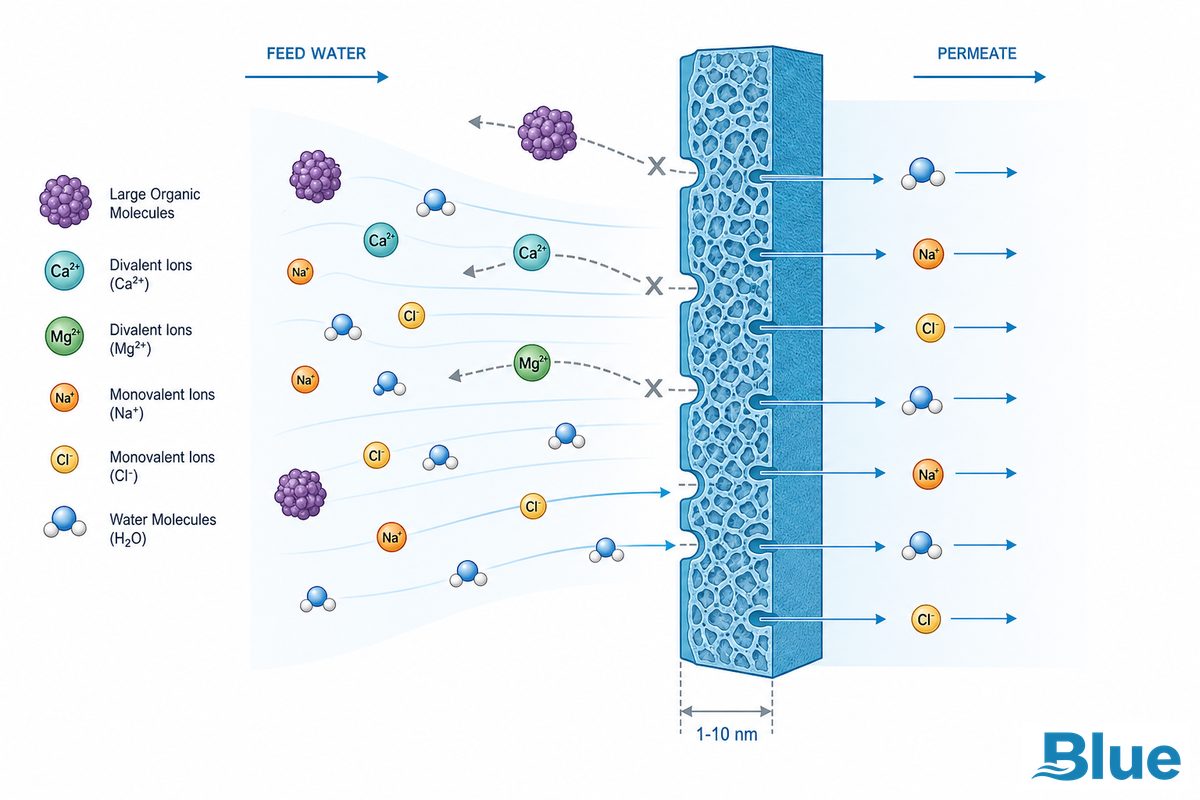
A Standard NF membrane is a pressure-driven separation membrane with pore diameters between 1 and 10 nanometers, positioned between ultrafiltration and reverse osmosis. It rejects dissolved divalent ions and larger organic molecules while allowing most monovalent salts to pass, using a molecular weight cutoff (MWCO) that’s typically cited between 150 and 2,000 Da depending on the source.
No consensus has emerged regarding NF membranes’ exact MWCO in the literature: 150-2,000 Da is the most frequently cited range; some ranges include only 200-1,000 Da; and even DuPont’s documentation for FilmTec membranes indicates the effective MWCO for its organic rejection membranes to be approximately 200-400 Da. It’s not worth trying to identify one particular MWCO value and conceal the divergence; be prepared for MWCO figures, and the associated rejection percentages, to vary by source, by the specific membrane formulation tested, and by the test method used to generate the number – treat any single vendor’s published range (including the DuPont figures used as the practical anchor throughout this guide) as one data point within a broader published range, not a universal constant.
What nf membranes far more frequently agree upon is the trend of ion selectivity: higher salt rejection of multivalent ions (calcium, magnesium, sulfate) than salt rejection of monovalent ions (sodium, chloride). It’s that selectivity, not the raw filtration fineness of pore size, that makes NF effective for water treatment applications like water softening and divalent-ion removal, without the higher pressure and energy demands of reverse osmosis. As a semipermeable membrane, an NF element functions as a membrane separation screen that permits passage of water and small, non-ionic dissolved molecules while excluding large ones and more heavily charged species – basically the same logic as UF or RO, just at a different selection cutoff. A common and expensive mistake, one Blue Membrane’s own engineers field regularly from first-time NF buyers, is confusing this “nano filtration” category with a generic sediment filter because the name sounds similar: NF is a pressure-driven separation technology, not a strainer, and treating it like one leads to badly undersized pretreatment.
Rejection Mechanism: Size and Charge, Not Just Sieving
But NF isn’t a simple physical sieve. Two different mechanisms at play: size exclusion, where large molecules simply can’t fit into the pore structure, and Donnan exclusion, where the charge on the surface of the membrane itself actively repels similarly-charged co-ions. divalent ions are twice as charged as monovalent ions and as such face double the electrostatic pushback at the membrane’s surface-which is why divalent rejection performs better than monovalent rejection on all NF membrane varieties and is hardly coincidental. A peer-reviewed comparison of NF and RO performance confirms this same size-and-charge selectivity pattern holds across real municipal wastewater reclamation systems, not just laboratory conditions.
How Standard NF Membranes Are Built
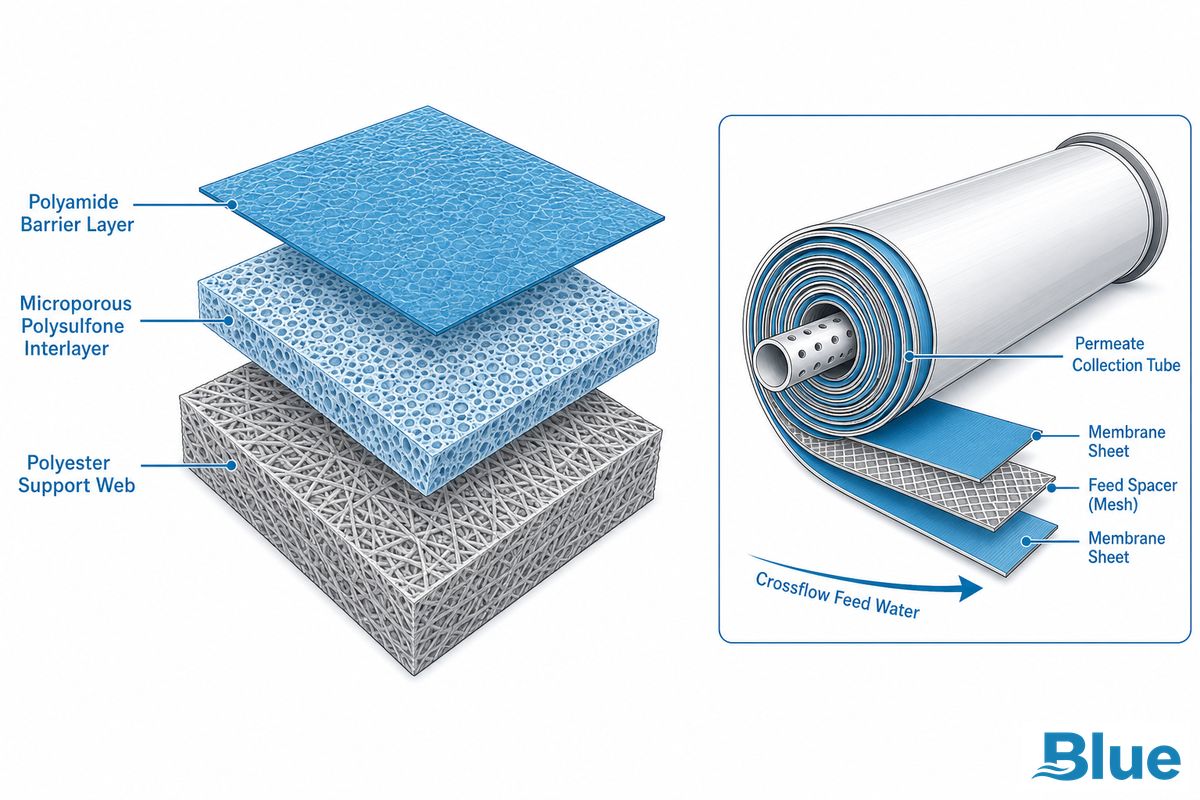
Standard NF membranes are built as a thin-film composite (TFC): a polyester support web for mechanical strength, a microporous polysulfone interlayer, and an ultrathin polyamide barrier layer on top that does the actual selective rejection work. That three-layer structure is chemically similar to reverse osmosis membranes and is the industry-standard construction for commercial NF elements.
That thin-film composite membrane structure is actually chemically quite similar to reverse osmosis membranes: one of the few academic reviews of thin-film composite membranes for NF calls it “usually made of polyamide based Thin Film Composites, relatively close to RO membranes in chemical structure.” The water permeability of such a structure is a direct function of how dense and uniform the polyamide layer is; thinner and more uniform layer means higher water permeability. This is precisely why manufacturing consistency is the real quality gap between suppliers: a thin film composite membrane that varies batch-to-batch will pass a spec check on paper (98.0% rejection, ISO-style test conditions) yet underperform in the field, because the polyamide layer’s density wasn’t actually uniform across the roll. Blue Membrane addresses this with automated casting and precision winding, holding a ±15% tolerance across production runs rather than treating each batch as a one-off. Ongoing work on ultra-permeable NF membrane design is largely focused on refining exactly this layer-uniformity problem to push membrane performance and water permeability higher without sacrificing rejection.
Most commercial NF elements are spiral wound, which is basically flat pieces of membrane wrapped around a hollow central tube (permeate) and with mesh spacers in between so that feed water flows across the membrane surface rather than through it, forming what’s called a spiral-wound element. This flow mode is referred to as crossflow, and it serves to continuously wash rejected material away from the membrane surface, slowing the accumulation of fouling that’s experienced with dead-end filtration processes.
📐 Engineering Note
FilmTec-format elements operate across a pH range of 2–11 in service and can be cleaned at pH 1–13 depending on the specific cleaning chemistry and temperature, Blue Membrane’s N-series elements are speced to the same operating window (continuous pH 3–10, cleaning pH 2–11, max temperature 45°C), a standard industry range for polyamide TFC chemistry rather than a proprietary limit.
Where NF Fits, The 4-Tier Membrane Selectivity Ladder
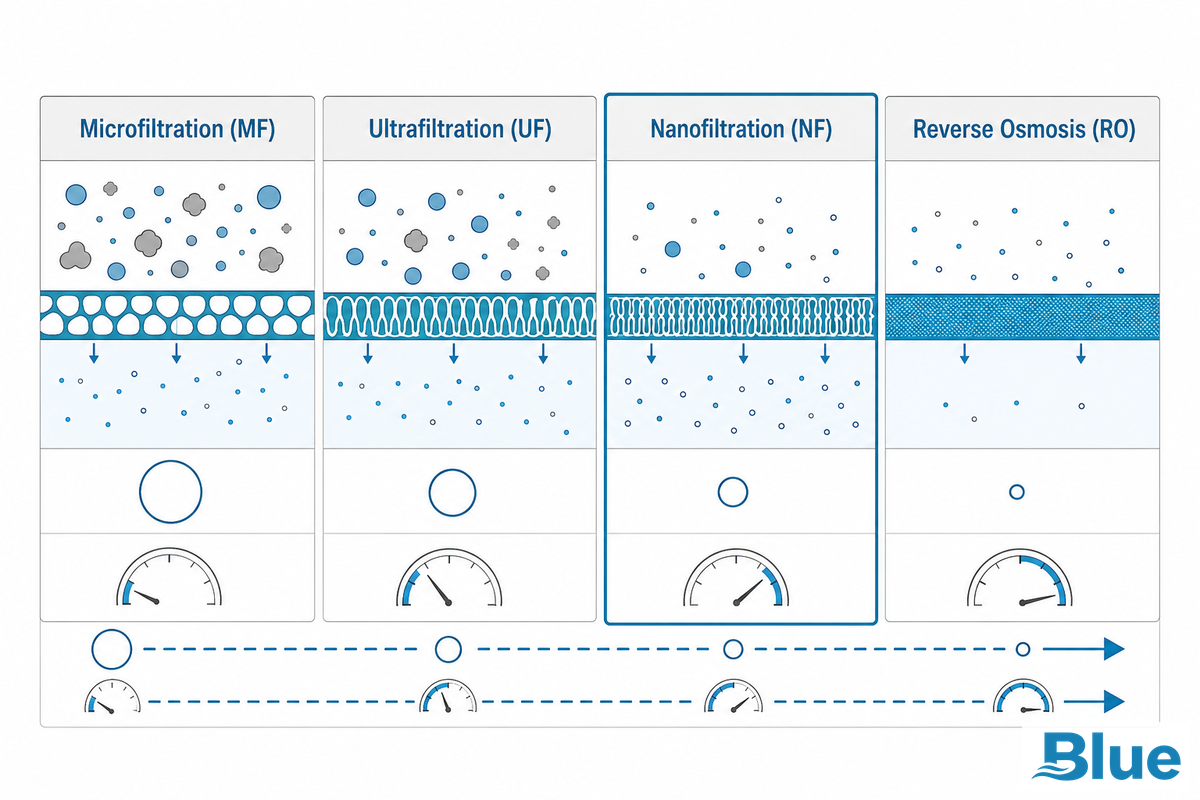
A common side effect of a google search for “nanofiltration” is finding some great web pages explaining NF, but with little discussion of what microfiltration, ultrafiltration, and reverse osmosis reject. Here’s how the four different classes of pressure-driven membrane perform according to the key metrics of decision-making:
| Contaminant / parameter | Microfiltration (MF) class | Ultrafiltration (UF) class | Nanofiltration (NF) class | Reverse Osmosis (RO) class |
|---|---|---|---|---|
| Suspended solids / turbidity | Removed | Removed | Removed | Removed |
| Bacteria | Removed | Removed | Removed | Removed |
| Viruses | Not removed | Partially removed | Substantially removed | Removed |
| Colloids | Not removed | Removed | Removed | Removed |
| Natural organic matter | Not removed | Partially removed | Removed | Removed |
| Divalent ions (Ca²⁺, Mg²⁺, SO₄²⁻) | Not removed | Not removed | 90–98% rejected | >95% rejected |
| Monovalent ions (Na⁺, Cl⁻) | Not removed | Not removed | 20–80% rejected | >95% rejected |
| Dissolved organics (MWCO <200 Da) | Not removed | Not removed | Partially rejected | Rejected |
| Bulk TDS reduction | Not removed | Not removed | Partial | Full |
Source: rejection pattern analysis based on the cross validation of DuPont FilmTec specs and academic publications on membrane technology, including a peer-reviewed NF/RO membrane selection study. Pore size is the typical pore size; MF is 0.1-10 µm; UF is 0.001-0.1 µm; NF is 1-10 nm; and RO is <1 nm. Operating pressure is the typical applied pressure: MF is 1-30 psi; UF is 7-100 psi; NF is 50-225 psi (3.5-16 bar); RO is 100-1,000+ psi.
What Is the Difference Between NF Membrane and RO Membrane?
The core difference is selectivity, not filtration fineness: RO rejects both monovalent and divalent ions at high rates (95%+ on both, in most published specs), making it the standard for complete desalination, while NF rejects divalent ions strongly but allows more monovalent salt through – some engineers call it “loose RO” for exactly this reason.
That selectivity allows NF to operate at less pressure, and therefore with less energy, than RO for applications that don’t actually require removing all the dissolved ions; because the feed osmotic pressure is dependent on the concentration of all dissolved ions and NF’s monovalent salt passage reduces the total concentration it’s working against, it requires less applied pressure than RO to achieve a target membrane result, with softening water being the classic example because the specific ions NF rejects well (calcium and magnesium) are precisely what you’re targeting to remove, and the sodium that NF lets through isn’t problematic for your intended use.
Types of Standard NF Membranes
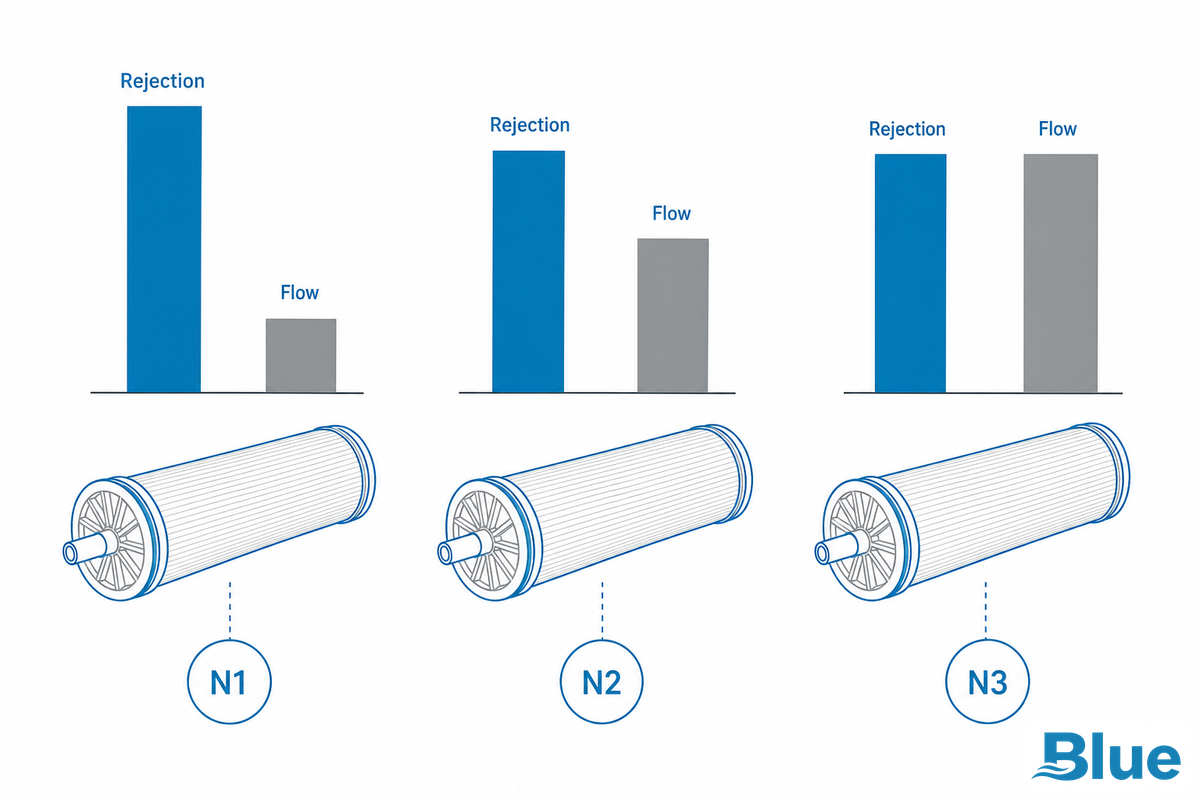
Not all NF membrane elements are specified equally, and picking the wrong tier for an industrial application is a common, costly mistake: manufacturers generally offer a range of rejection/flow tiers rather than a single product, trading some capacity for higher divalent rejection or vice versa. This isn’t a formal “membrane classification system” so much as a practical reality in the marketplace, represented by commercial products such as the FilmTec NF90 (favors rejection, with higher throughput) and NF270 (favors flow and energy savings at slightly lower rejection). Blue Membrane’s own production line follows this same tiered logic, because a one-size-fits-all element would force every customer to overpay for rejection they don’t need or accept flow they can’t use.
What Are the 4 Types of Membrane Filtration?
When people ask about the 4 types of membranes, they’re typically asking about the four pressure-driven membrane categories in the selectivity chart above, not subtypes within NF itself: microfiltration, ultrafiltration, nanofiltration, and reverse osmosis. Within NF elements specifically, the more relevant distinction is rejection positioning, not a formal 4-type system.
For NF elements, the distinction most relevant to the user isn’t so much one of 4 formal types as it’s one of rejection positioning: a higher rejection, lower flow tier versus a lower rejection, higher flow tier, selected based on the user’s feed water and desired permeate quality. As a rough guideline, until you’ve established a specific permeate-quality goal, you can assume a higher rejection tier for your initial test: it’s generally easier to demonstrate that a higher rejection element meets a lower permeate target than it’s to determine late in the game that a higher flow, lower rejection element doesn’t quite reject enough of your target contaminants.
Blue Membrane’s own standard nf membrane N-series has been designed in three tiered products (N1, N2, N3) to address this same need for tiered product choices, including full cross-reference and drop-in housing compatibility information for users choosing replacement or new NF elements from FilmTec (NF90/NF270).
Standard NF Membrane Specifications, Element Sizes, Rejection, and Flow
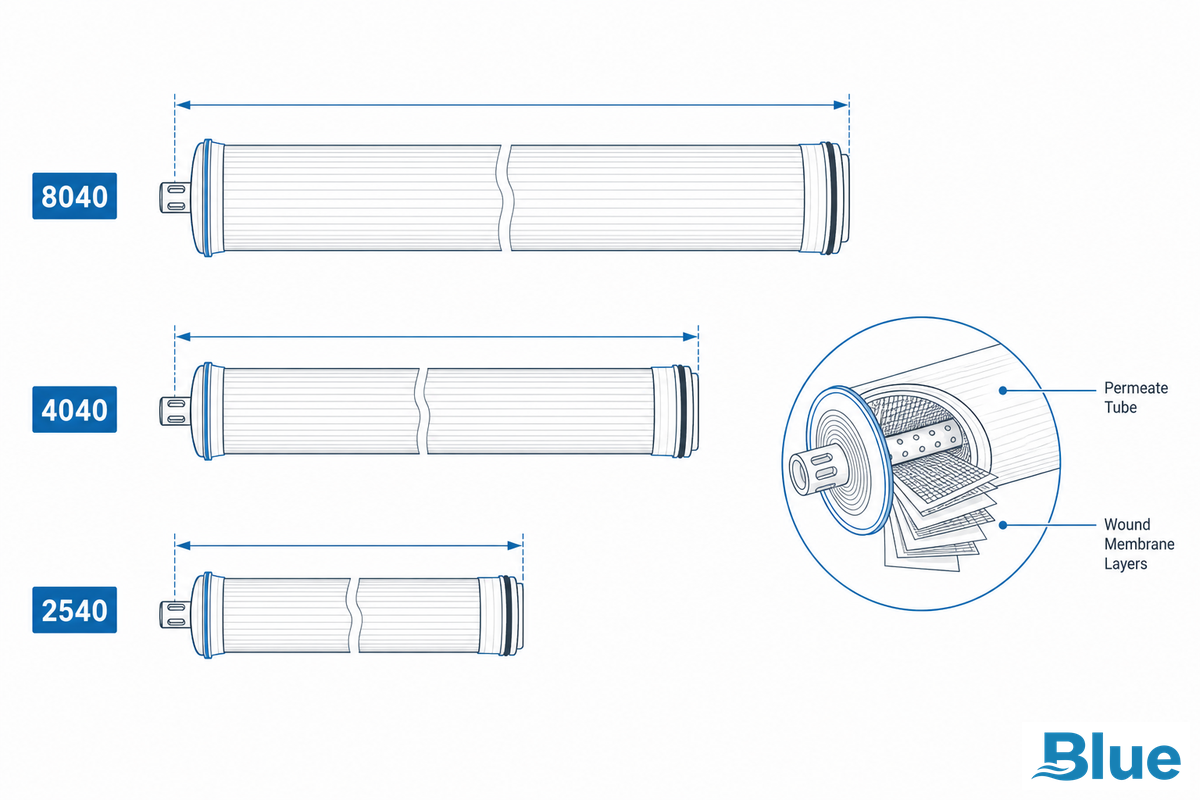
Spec sheets for NF elements generally include housing size (typically 8040, 4040, or 2540, indicating the nominal diameter and length in inches), a rejection value, and a permeate flow rating, all of which are measured under a specific set of test conditions. Here’s an example of the information provided on a typical spec sheet, for a Blue membrane N-series 8040 element:
| Model | Stable rejection | Permeate flow | Active area |
|---|---|---|---|
| N1-8040 | 98.0% | 9,000 GPD (34.0 m³/d) | 400 ft² (37.2 m²) |
| N2-8040 | 97.0% | 10,500 GPD (39.7 m³/d) | 400 ft² (37.2 m²) |
| N3-8040 | 97.0% | 12,000 GPD (45.4 m³/d) | 400 ft² (37.2 m²) |
Test conditions: 2,000 ppm magnesium sulfate (MgSO₄) feed, 100 psi (0.69 MPa), 25°C, pH 7-8, 15% recovery per element.
These rejection numbers are as much molecular-weight-cut-off-dependent as they’re pressure-dependent – a membrane’s molecular weight cut-off and its pore size distribution determine which solutes pass and which are held back – so two elements with the same nominal MWCO may behave differently if their underlying pore size distribution is less uniform. Recent engineering work, including a multi-stage nanofiltration patent for multi-valent ion concentration, illustrates how spec-sheet rejection figures get engineered rather than simply measured.
⚠️ Important
Spec-sheet rejection and flow numbers are measured at fixed reference conditions: a specific feed concentration, pressure, temperature, and recovery rate. Real-world performance can diverge from those nominal values due to concentration polarization: as water flows through the membrane, dissolved solutes are concentrated on the membrane surface more quickly than crossflow can remove them, particularly at high system recovery rates or with poor feed channel hydraulics. This is a phenomenon different from fouling; it occurs on a clean membrane and is a reason why two systems with the same element may have different actual rejection and flux.
Fouling and Scaling, What Shortens a Standard NF Membrane’s Service Life
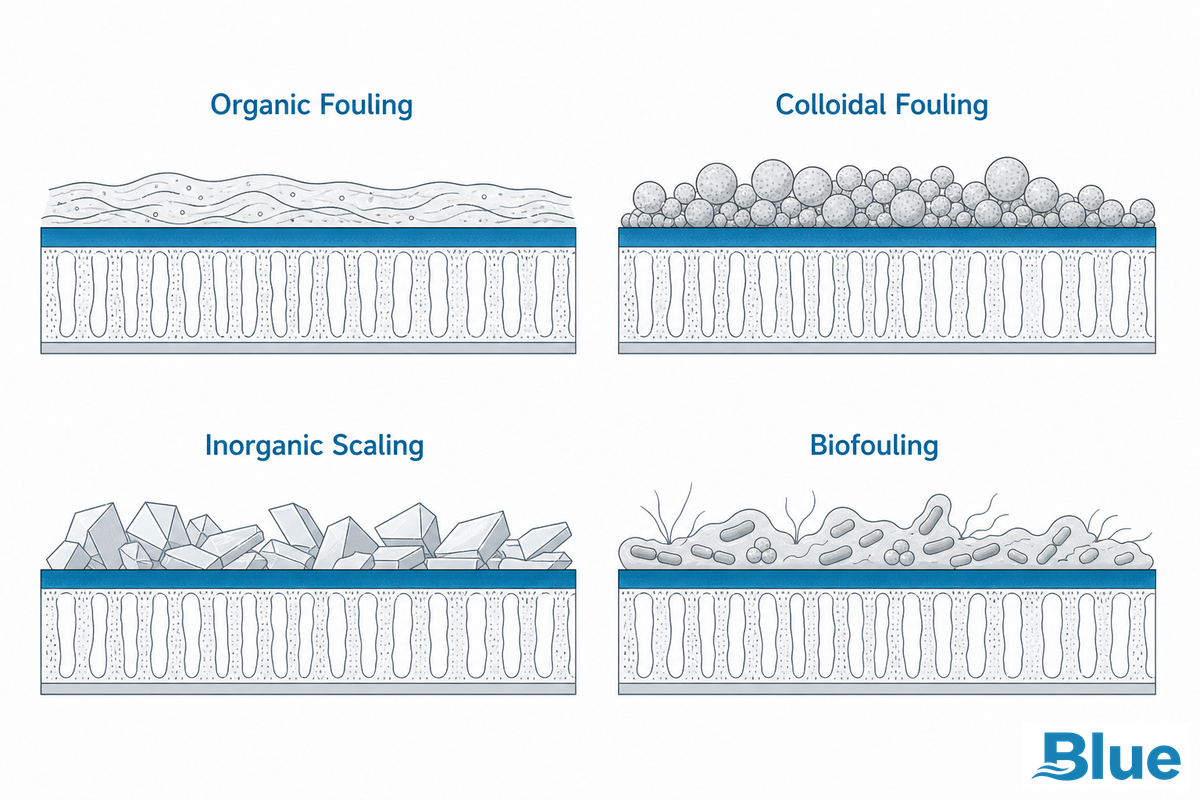
membrane fouling literature tends to divide NF fouling into four specific mechanisms, each with a unique cause and solution:
- Organic fouling – the adsorption of natural organic matter or process organics on the membrane surface which decreases the flux over time
- Colloidal fouling – the accumulation of finely suspended particles on the membrane surface to form a cake layer; a standardized colloidal fouling test protocol exists precisely because this behavior is so feedwater-specific
- Inorganic scaling – the precipitation of sparingly soluble salts (such as calcium carbonate and calcium sulfate) once the local concentration in the water on the membrane surface exceed their solubility limits, the rate of precipitation can be accelerated by concentration polarization
- Biofouling – growth of microbial organisms that form a biofilm on the membrane surface. This is distinct from the other chemical form of fouling, as it affects both hydraulic resistance and cleaning frequency and can be easily underestimated if fouling is considered only in a chemical context
One common question is whether nf membranes handle hard water poorly, expressed in one forum as “a nanofiltration system will plug up quicker especially with hard water.” While this is a valid practical concern related to scaling risk, it should be decoupled from the fundamental function of NF: NF is employed specifically to reject calcium and magnesium (and many other ions) with 90+% rejection. This creates concentration in the reject stream, which can lead to scaling in some circumstances when operating at high recovery; it isn’t an inherent inability of the technology to cope with hardness. Appropriate system recovery design and antiscalant selection can manage this.
Troubleshooting reports tend to reflect this: a common report is of a system engineer struggling to obtain adequate flow from a low-MWCO membrane operating at 100 psi, ultimately determining that a membrane wetting problem was responsible, not fouling, demonstrating that flux can be caused by upstream issues such as the membrane choice or system startup procedures.
Two practices reduce fouling risk before it starts: pretreatment set up according to the feed water silt density index (SDI), and proactive cleaning in place (CIP) rather than a cleaning-on-demand schedule that occurs only after the flux has already been reduced. When applied specifically to a brackish water feed, which given its moderate TDS and hardness, is common to NF, SDI-based pretreatment sizing is generally the most critical factor for controlling long term fouling rates, and membrane scaling risk rises fastest when this step gets skipped.
Applications, Where Standard NF Membranes Are Actually Used
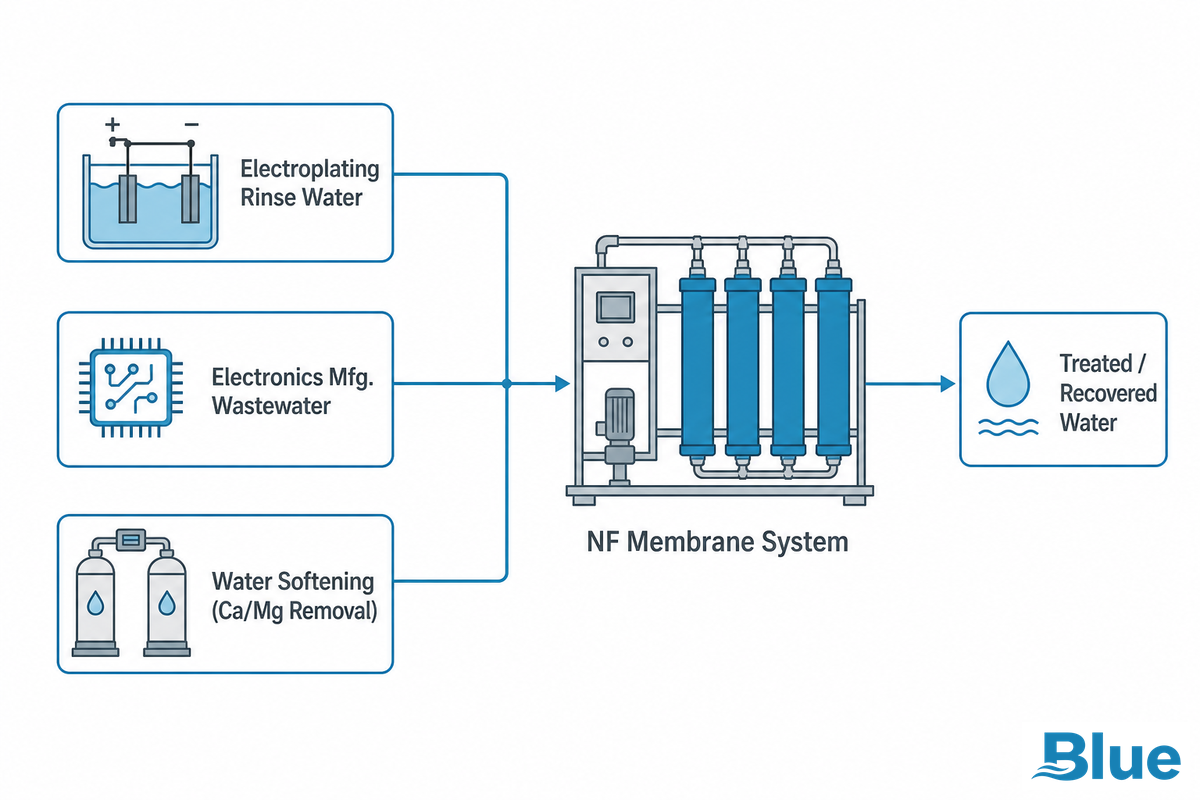
Beyond the typical textbook list of treatment applications (softening, desalination pretreatment, wastewater treatment), here are a few practical examples of NF selectivity at work:
Electroplating Rinse Water Recovery
Color rinse, alkaline pickling rinse, and acid pickling rinse wastewater were all treated with NF, addressing membrane fouling through targeted chemical cleaning procedures using citric acid, NaOH, and Na-EDTA.
Color rinse, alkaline pickling rinse, and acid pickling rinse wastewater were all treated with NF, addressing membrane fouling through targeted chemical cleaning procedures using citric acid, NaOH, and Na-EDTA.
Electronics Manufacturing Wastewater
A comparison study involving a membrane-selected electronics manufacturers’s wastewater stream(Eternal Electronic, Suzhou) highlighted the difference in system performance based onmembrane material selection versus just “adding NF”.
A comparison study involving a membrane-selected electronics manufacturers’s wastewater stream(Eternal Electronic, Suzhou) highlighted the difference in system performance based onmembrane material selection versus just “adding NF”.
In municipal and industrial water treatment alike, water softening remains the highest-volume application specifically because of the selectivity pattern covered above: divalent hardness is removed while total dissolved solids stays largely unaffected, avoiding the sodium-heavy brine waste common with ion-exchange softening. Readers considering NF specifically for water softening will find a deeper, dedicated guide with a full NF vs. RO vs. ion-exchange decision matrix on Blue Membrane’s nanofiltration membrane water softening guide.
How to Choose a Standard NF Membrane, A Decision Framework
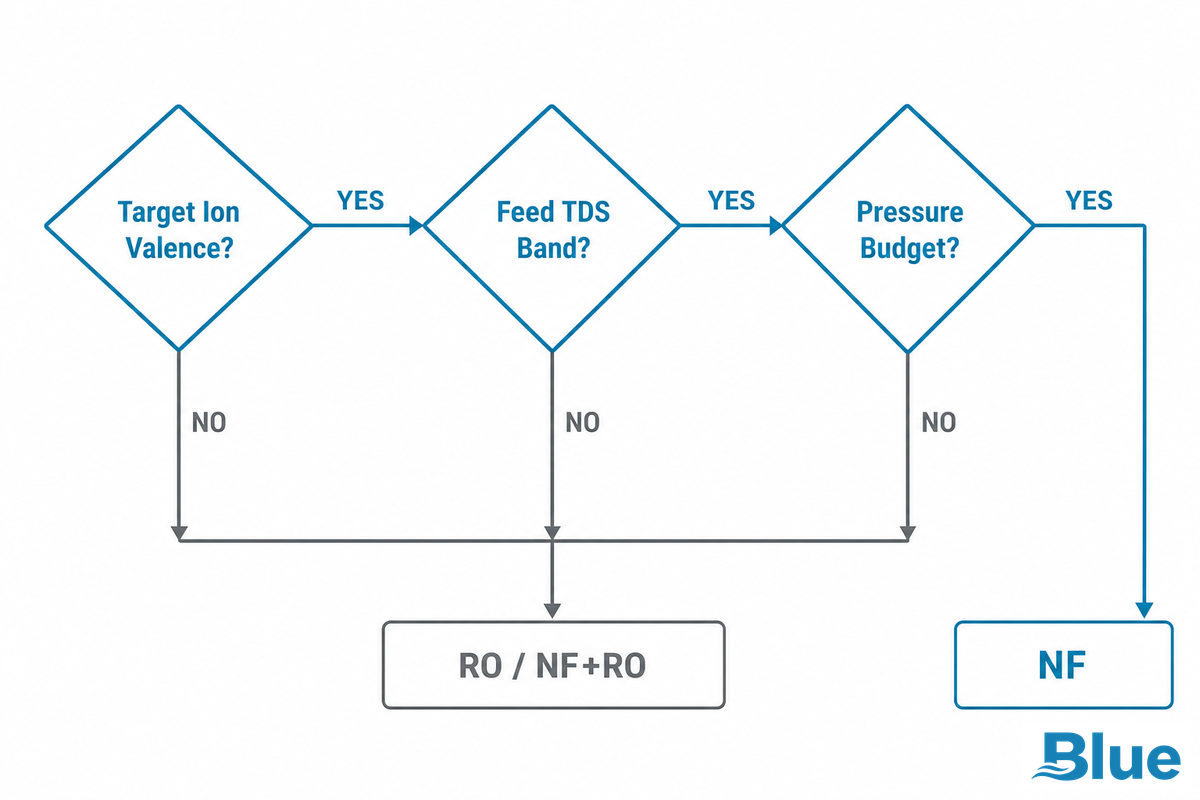
There are 3 basic questions that will establish whether NF is a appropriate solution prior to assessing specific products:
The 3-Question NF Selection Filter
- Is your primary goal removal of a specific ion valence? Should you wish to target specifically divalent(hardness, sulfate) ion with minimal need for monovalent salts removal, then NF is a solid choice. For bulk total TDS removal (e.g., desalination) you wouldn’t select NF alone and must include RO.
- What’s your feed tds band? The sweet spot for NF operation lies in moderate TDS feed streams, and is applied where removal of selective ions rather than bulk TDS removal is the requirement. Higher TDS, brackish and seawater applications generally demand the higher pressure of RO, with NF as an effective pretreatment option.
- What’s the cost and pressure? NF operates in a 50-225 psi operating pressure range, well below RO’s higher range, translating to lower operating cost. When your target separation doesn’t require the full rejection of RO, this provides a cost advantage.
A case in point: Let’s assume we’ve a stream with a TDS level of about 1200 ppm and a high divalent hardness level (mostly Ca and Mg), where the intended application is for boiler feed water softening. If we go through our process, we would find that because we want to remove divalent and only divalent, then the goal is perfectly within NF capability (Q1, answer=yes). Because we only want to remove the divalent and the total TDS level is only 1200ppm, we know we can achieve the desired separation using the pressures required for NF, (Q2 answer=yes), and because the cost savings in lower operating pressures of NF compared to RO will outweigh the added costs for more frequent membrane cleaning and potential additional upstream pretreatment, then the correct solution would be NF water softening (Q3, answer=yes) versus RO water softening unless, as in another case, bulk TDS removal was also required from the same stream for a different application.
“[NF membranes’] separation performance is highly sensitive to feed parameters… the prevalent notion that NF membranes are suitable for precise separations [between similarly sized or charged species] deserves scrutiny, their real, demonstrated strength is coarse, energy-efficient separation between multivalent and monovalent species, not surgical precision between closely related ions.”
paraphrased from R. Epsztein, “Intrinsic limitations of nanofiltration membranes to achieve precise separations,” Frontiers in Membrane Science and Technology, 2022
This distinction matters for buyers: NF’s real, defensible advantage is bulk divalent-vs-monovalent separation at lower pressure than RO – not the ability to precisely separate similarly charged or similarly sized species from each other. Vendors who market NF as universally “precise” are overstating what the underlying transport mechanism reliably delivers; combined with the concentration-polarization effect covered in the specifications section above, real selectivity in the field is a range, not a guaranteed single number.
Common selection mistakes worth avoiding: choosing a membrane without first defining the process objective (leading to an oversized or undersized system), and treating pretreatment as optional rather than integral to the design. A peer-reviewed NF/RO membrane selection study reaches the same conclusion from a different angle: selection performance depends more on matching membrane to feedwater chemistry than on any single spec-sheet number.
Industry Outlook, What’s Changing in NF Membrane Technology
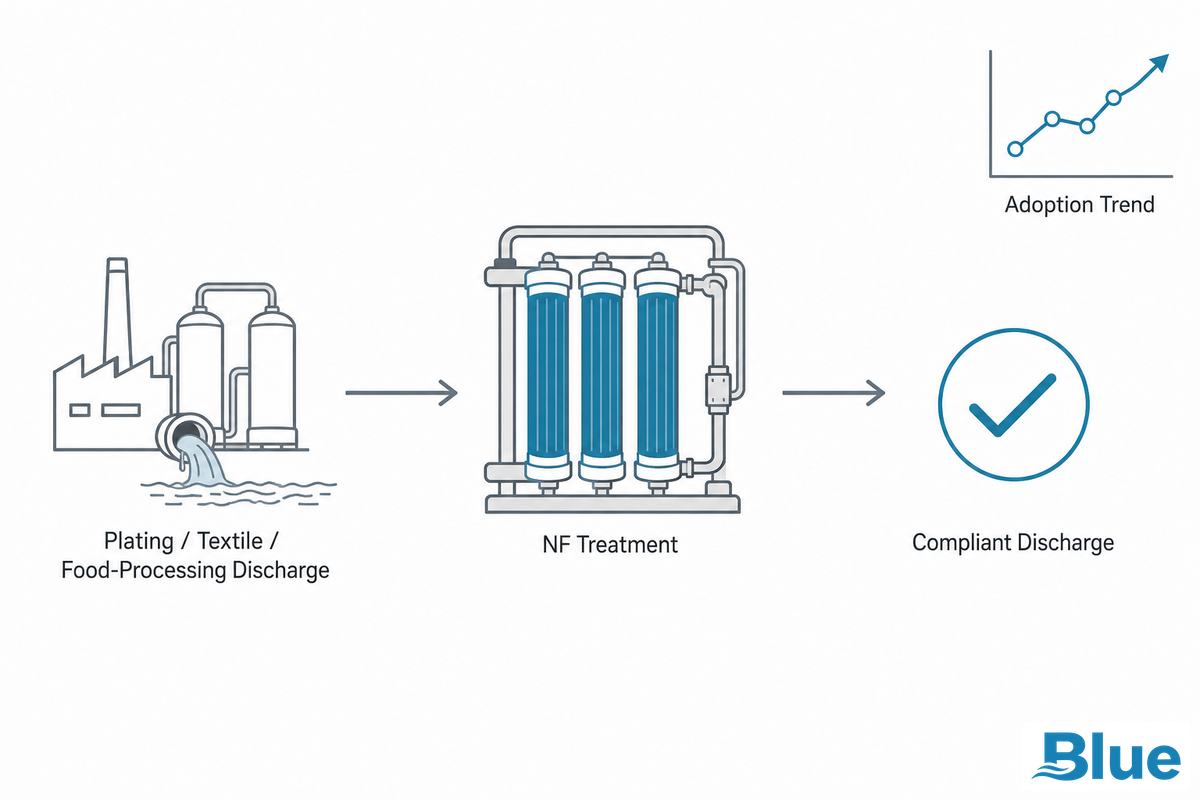
Updated July 2026. The clearest driver reshaping NF adoption isn’t a single dramatic regulatory mandate – it’s the steady tightening of industrial effluent discharge requirements around divalent-ion-heavy waste streams from plating, textile, and food-processing plants, governed at the federal level by EPA’s Effluent Limitations Guidelines framework. That’s regulatory context rather than a direct one-to-one mandate for NF specifically, but it steadily raises the compliance risk and cost of non-selective discharge for industries whose waste streams are exactly what NF is built to target – which is precisely why plating and textile operators are increasingly asking Blue Membrane about NF retrofits rather than waiting for a specific mandate naming their sector.
On the technology side, published research is actively focused on “ultra-permeable” NF membrane designs aimed at reducing specific energy consumption (SEC) further, because every psi of operating pressure saved translates directly into a lower electricity bill at industrial scale – a sign that NF’s energy-efficiency advantage over RO is a deliberate R&D target, not an incidental one.
Market-size estimates for the broader nanofiltration membrane market (low-to-mid single-digit billions USD, double-digit CAGR through the early 2030s) appear consistently across market-research reports – useful as directional context for the category’s growth trajectory, though these figures come from commercial research firms rather than primary regulatory or academic sources and shouldn’t be read as precise. For a buyer today, the practical takeaway isn’t the market-size number – it’s that discharge-side pressure on divalent-heavy effluent is a durable, multi-year trend, not a one-time regulatory event.
Frequently Asked Questions
Q: What is an NF membrane?
View Answer
An NF (nanofiltration) membrane is a pressure-driven separation membrane with pore sizes between 1 and 10 nanometers, positioned between ultrafiltration and reverse osmosis.
It rejects divalent ions like calcium, magnesium, and sulfate at 90-98%, while letting most monovalent ions like sodium and chloride pass through at 20-80% rejection, using both size exclusion and electrostatic (Donnan) charge repulsion as its rejection mechanisms.
Q: What is the NF 80 membrane, and how is it different from NF90/NF270?
View Answer
“NF 80,” “NF 40,” “NF90,” and “NF270” are model-number references used in the industry (originally originating with FilmTec’s product line) that refer to different rejection/flow levels within the NF class – they do not represent an official industry-wide classification scheme. The use of NF 40 membrane naming, for instance, typically points to a looser, higher-flow tier rather than a specific universal standard. Historically, lower numbers in this system generally correspond to looser, higher-flow membranes, while NF90-class membranes are toward the higher rejection end of the spectrum. Blue Membrane’s N-series (N1/N2/N3) and similar manufacturer series have been mapped to these same rejection/flow tiers, so purchasers seeking to replace a membrane element can match performance.
Q: What are the disadvantages of nanofiltration?
View Answer
NF’s main limitations include: reduced monovalent salt rejection compared to RO, meaning it is unsuitable for complete desalination on its own; susceptibility to fouling and scaling like any pressure-driven membrane, which requires pretreatment and periodic cleaning to manage; and concentration polarization, which causes real-world rejection and flux to deviate from spec-sheet numbers at high system recovery. NF also does not provide absolute protection against pathogens and usually requires supplemental disinfection for potable applications.
Q: Does a Standard NF membrane remove bacteria and viruses?
View Answer
While nf membranes can reject some bacteria and larger viruses due to their small pore size size, they do not act as absolute microbial barriers and should not be relied upon as the sole means of disinfection where pathogen removal is paramount.
Q: How long does a Standard NF membrane element typically last before replacement?
Show Answer
Estimates for a well-maintained nf membrane’s service life generally fall between 1.5 and 3 years, but actual longevity depends heavily on feedwater characteristics, the effectiveness of pretreatment, the frequency of cleaning, and operating parameters. Rather than a fixed calendar lifespan, manufacturers generally define performance degradation based on a specific flow-rate tolerance (often around 15%), beyond which replacement is recommended. Consequently, two identical systems operating under different conditions may have widely different component lifespans: a well-pretreated municipal supply could extend beyond three years, while a poorly pretreated industrial feed prone to fouling might necessitate replacement in less than 1.5 years, even with comparable element specifications.
Q: Can a Standard NF membrane be retrofitted into an existing RO housing?
Read Answer
Typically, yes. Since NF elements are manufactured in the same housing dimensions as RO elements (commonly 8040, 4040, and 2540), a correctly chosen NF element can be a direct drop-in replacement for an existing element in a pressure vessel, without requiring housing modifications. Prior to ordering, always verify the external wrapper dimensions and end cap configuration of the desired element against your housing specifications to ensure proper fit, as minor differences can occur between manufacturers.
✔ Advantages
- Lower operating pressure and energy requirements than RO for selective divalent removal
- Effective, targeted hardness (Ca²⁺/Mg²⁺) removal without full desalination
- Standard element sizes (8040/4040/2540) simplify system design and replacement
⚠ Limitations
- Not suitable for complete desalination (partial monovalent rejection is intended)
- Prone to fouling/scaling, necessitating pretreatment and cleaning protocols
- Concentration polarization can lead to real-world rejection/flux values that differ from specification sheets
Related Articles
- Blue Membrane Standard NF Membrane N-Seriesfull spec sheet and FilmTec NF90/NF270 cross-reference for buyers ready to spec a specific element
- Nanofiltration Membrane Water Softening GuideNF vs. RO vs. ion exchange decision matrix for softening applications
- Alkali-Resistant NF Membranefor high-pH streams outside standard NF’s operating window
- Blue Membrane Nanofiltration Membrane Product Range
References & Sources
- DuPont FilmTec Nanofiltration (NF) TechnologyDuPont Water Solutions
- Nanofiltration Membrane, an overviewScienceDirect Topics
- Donnan Exclusion Effect, an overviewScienceDirect Topics
- Colloidal Fouling of Nanofiltration MembranesPMC, National Institutes of Health
- Industrial Wastewater Treatment by Nanofiltration, A Case StudyPMC
- Intrinsic Limitations of Nanofiltration Membranes to Achieve Precise SeparationsEpsztein, R., Frontiers in Membrane Science and Technology, 2022
- Why Do We Need Ultra-Permeable Nanofiltration MembranesYang, Z. et al., PMC, 2023
- Technical Development Document for Effluent Limitations GuidelinesU.S. Environmental Protection Agency
Why We Write This
Blue Membrane manufactures NF, RO, and ultrafiltration membrane elements in Nantong, Jiangsu, and we write these guides using our own spec-sheet data alongside independent academic and regulatory sources, because buyers evaluating NF membranes deserve to know where a manufacturer’s numbers agree with independent research.
The rejection and pressure figures in this guide are cross-checked against DuPont’s published FilmTec specifications specifically so readers aren’t relying on a single vendor’s framing.
Reviewed by the Jiangsu Blue Technology Co., Ltd. technical team