Get in touch with Blue Membrane Company


GW
Industrial RO Membrane Elements: How to Select, Run, and Replace Them
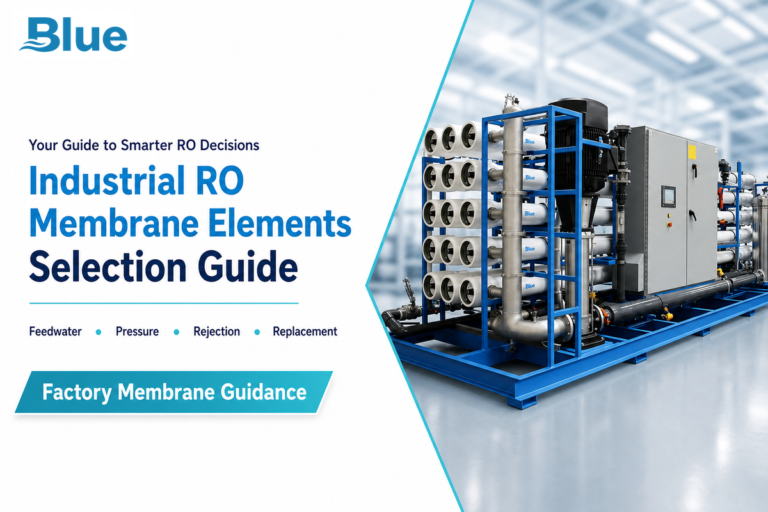
Industrial water treatment guide Industrial RO membrane elements are chosen by operating envelope, not just brand name or diameter. Still, the wrong mechanical fit can make even the correct RO membrane element fail to work with a given feedwater, recovery…
High-Recovery BWRO Design: A Practical Guide to Recovery Limits, Scaling Risk, and Brine Control
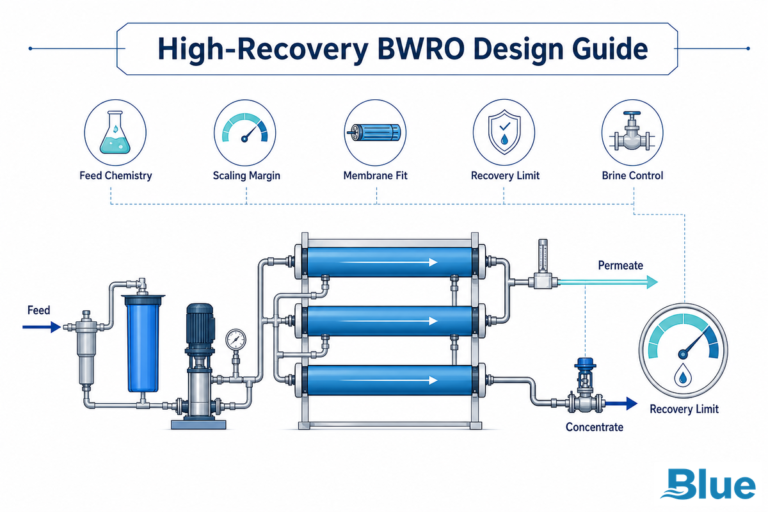
High-Recovery BWRO Design is the decision process for brackish water reverse osmosis systems where recovery, permeate quality, scaling margin, pressure, energy consumption, and concentrate handling all have to agree before the design target is safe. It is not a single…
Compatibility & Cross-Reference Chart Guide for RO Membrane Replacement
![Compatibility & Cross-Reference Chart Guide [2026]](https://bluemembrane.com/wp-content/uploads/2026/07/ro-membrane-cross-reference-guide-featured-1-768x512.png)
A Compatibility & Cross-Reference Chart is a shortlist document for comparing possible RO membrane replacement candidates against an original model. When the original element name, manufacturer, or product line changes, a Compatibility & Cross-Reference chart helps a buyer find possible…
How to Choose the Right RO Membrane Supplier for Industrial Reverse Osmosis
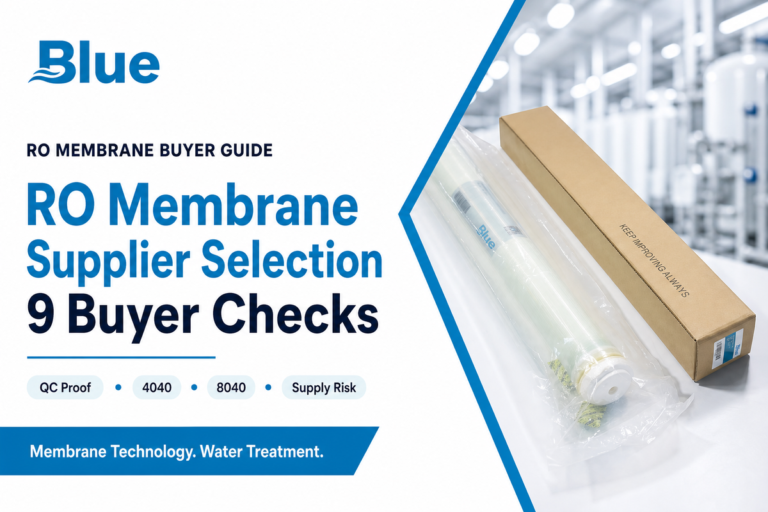
RO membrane supplier selection should start with water quality, not a logo. How to Choose RO Membrane Supplier is a procurement process for matching feedwater duty, test basis, factory proof, element fit, and support depth before price. For industrial, municipal,…
Portable Desalination Units: 2026 Guide to Types, Sizing, Water Quality, and Maintenance
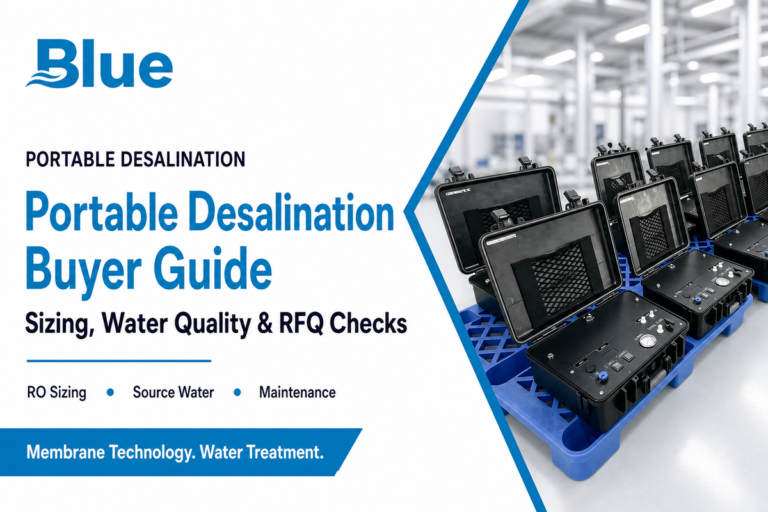
Portable Desalination Units are compact systems that extract salt from seawater or brackish water, usually with reverse osmosis, so remote teams can produce drinking water or treat water near the source rather than hauling in fresh water. Many buyers may…
BWRO Operating Cost per 1000 Gallons: A Brackish RO Cost Stack
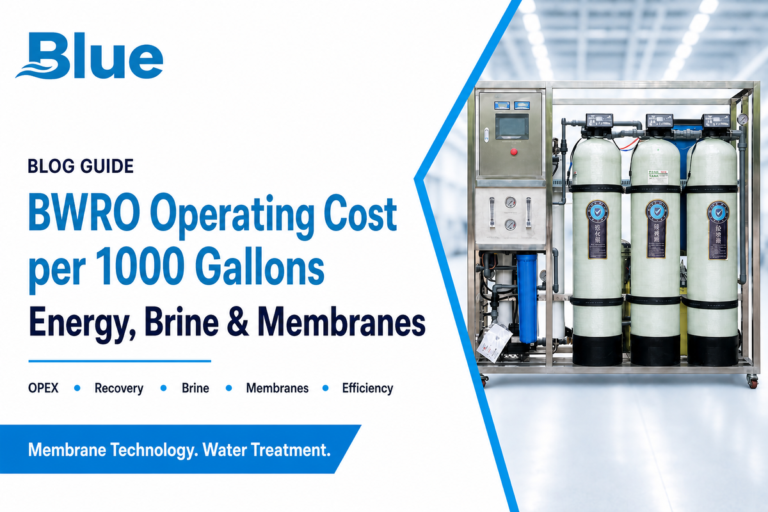
BWRO Operating Cost per 1000 Gallons refers to plant-side operating expense for a brackish water reverse osmosis desalination system, not the delivered water tariff. Public BWRO data often lands around USD 0.39-0.66 per cubic meter, or approximately USD 1.48-2.50 per…
Containerized & Skid-Mounted SWRO Systems: The Engineering, Installation, and Buying Guide
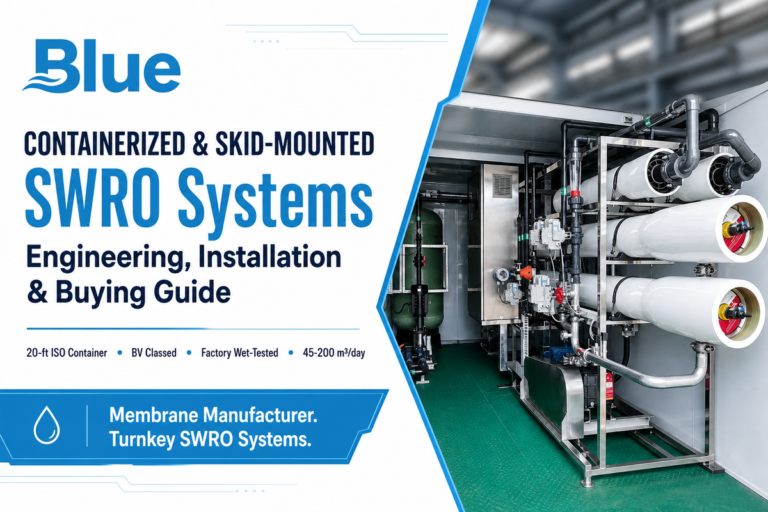
July 2026 Updated | Reviewed by Blue Membrane tech team Quick Specs Format 20-ft / 40-ft ISO container or open skid frame Typical capacity 20-2,500+ m³/day per unit (industry range); Blue Membrane field platforms: 45, 65, and 200 m³/day Operating…
Marine Water Makers: How They Turn Seawater Into Fresh Water, and What Wears Out First
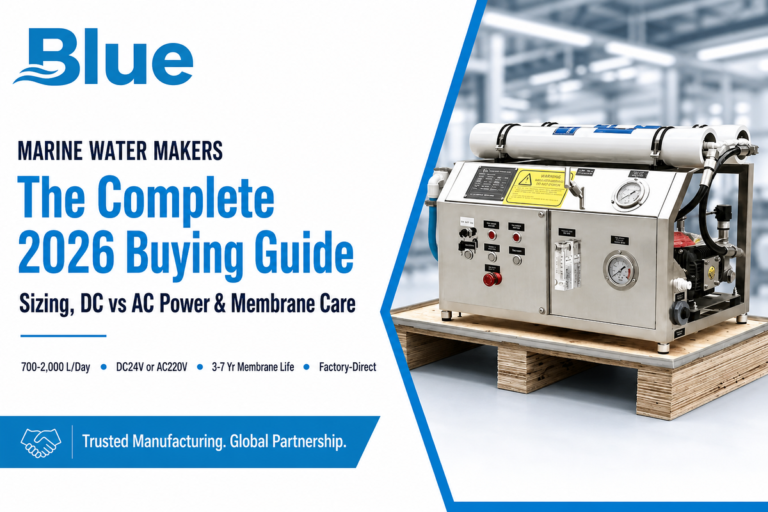
Updated July 2026 | Reviewed by Blue Membrane technical team. marine water makers are the gear that give a boat its own water source, converting a cruising sailboat, fishing boat, or oil rig from an object that has to keep…
Seawater RO Systems: How SWRO Works, Costs, and Specs
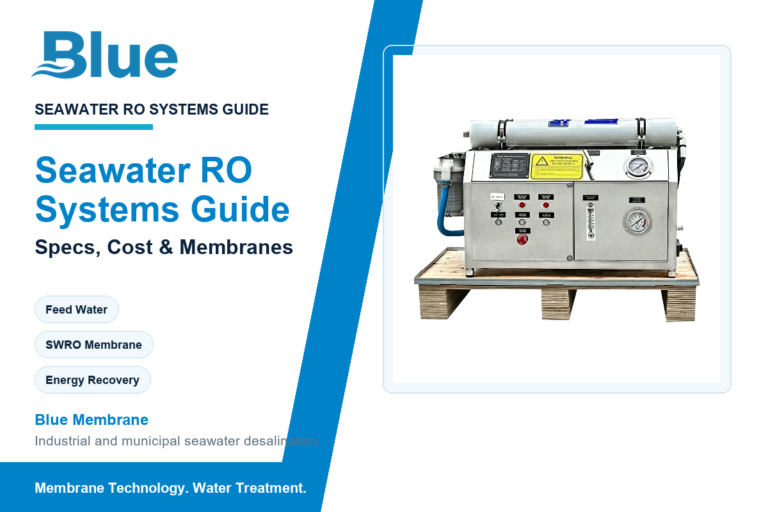
Revised July 2026 | Reviewed by Blue Membrane technical team Seawater RO systems turn salt water into usable fresh water by pushing high-salinity feed through a seawater-rated reverse osmosis membrane. This seawater RO systems guide is written for engineers, system…
Nanofiltration Membrane (NF) Guide for Water Treatment and Water Purification
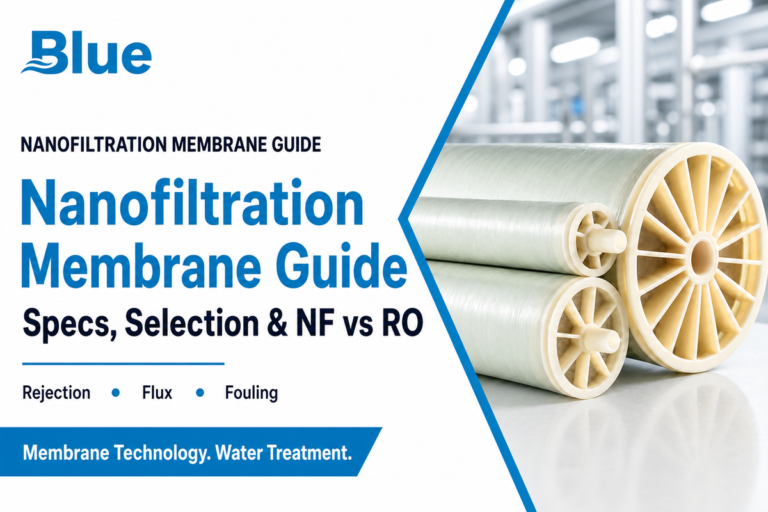
A nanofiltration membrane is best understood as a selective separation layer, not a weaker version of reverse osmosis. Within plant design, nanofiltration usually sits between ultrafiltration and full desalting designs: it can reduce hardness, color, sulfate, larger organics, and some…
Trending now